‘Panic’ selling hits Indonesian markets on MSCI expulsion threat
Potential removal from MSCI’s global indices sharpens focus on how Jakarta intends to allay the index provider’s concerns
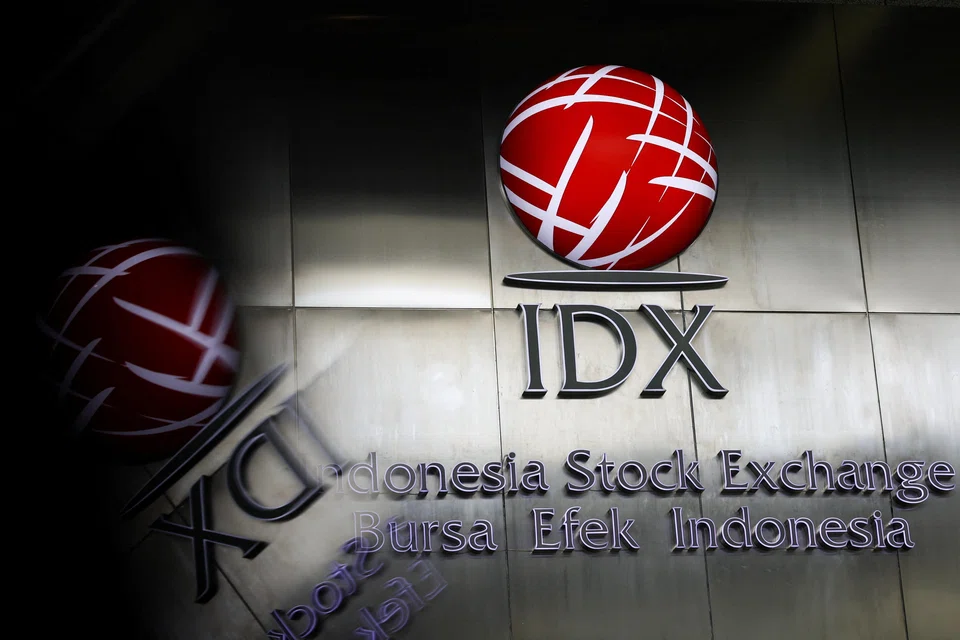
[SINGAPORE/JAKARTA] Indonesian capital markets were battered on Monday (Oct 19), with stocks hit by a record two-day rout as an expulsion warning from MSCI scared off investors, heaping pressure on Jakarta to respond to the index provider’s long-standing concerns.
Jakarta’s benchmark stocks fell over 5 per cent on Monday to a six-year low after plunging 11.6 per cent on Friday, as the world’s worst-performing share market reeled from MSCI saying it was considering shifting Indonesia to “standalone” status from its current “emerging markets” mantle.
A shift to standalone status would risk cutting South-east Asia’s biggest economy off from international capital, relegate it to an investment backwater and club it with a group of standalone markets that includes Lebanon and Zimbabwe.
“The MSCI announcement was unexpected to us, causing a market panic,” Indonesia Stock Exchange’s chief executive Jeffrey Hendrik said, ahead of a meeting between the exchange leaders and MSCI executives later on Monday.
Jitters over the threat flowed through to the rupiah and bond markets. The rupiah weakened to 18,048 per dollar, not far from the record low of 18,190 hit in June, while a slide in Indonesian government bonds pushed the 10-year yield to 7.4 per cent, according to traders, from 7.169 per cent on Friday.
The more-severe-than-expected move by MSCI, which first flagged concern in January over ownership transparency, has intensified pressure on Indonesia’s regulators and finance officials as investors reevaluate their exposure to Indonesian assets more broadly.
It has also raised the spectre of capital flight risk for a one-time emerging market favourite that has been grappling with eroding investor confidence over Indonesia’s fiscal health and central bank independence under President Prabowo Subianto.
Prabowo is expected to meet with top financial officials in the afternoon to discuss the “current economic condition”, according to two government sources with knowledge of the matter.
The meeting will include sovereign wealth fund Danantara and Indonesia’s Financial System Stability Committee, made up of the finance minister, Bank Indonesia governor, and the heads of the Financial Services Authority and Indonesia Deposit Insurance Corp, the people said.
SEE ALSO




S&P Global Ratings sovereign analyst Rain Lin said MSCI’s latest warning was likely to result in additional capital outflows but did not anticipate them to be of a magnitude that would materially increase financing costs.
“More concerning is the potential damage to investor confidence and the risk that sentiment weakens more broadly across government bond markets and foreign direct investment.”
Wider risks from MSCI threat
MSCI’s warning on Friday marked the latest in a string of setbacks for Prabowo’s government this year, after Moody’s and Fitch cut their sovereign rating outlooks to negative.
The market’s nosedive came ahead of a policy decision from Bank Indonesia this week. While the central bank is widely expected to stand pat, some analysts have raised the possibility of a rate hike to stem the selloff in the bond market.
MSCI had threatened to downgrade the Jakarta market to “frontier” status in January but said on Friday a lack of progress in remedying its concerns about opacity in ownership and trading behaviour meant even a drop to that status would not reflect the severity of the issues.
“The burden of proof has shifted: avoiding reclassification will require clear evidence that the announced reforms have been consistently implemented and materially improved market functioning,” strategists at Goldman Sachs said in a note.
On Monday, the stock exchange halved its down limit to 7 per cent to try to slow the selling.
Indonesia’s financial regulator on Friday unveiled sanctions against those linked to alleged trading manipulation in shares of three firms, with the fines totalling 2.1 trillion rupiah (US$116.4 million).
“The fines are a positive move, but there needs to be concerted action to stamp the authority of the OJK and take direct action against certain well-known players who have been involved in market abuse,” said Angus Mackintosh, an Asean specialist at Aletheia Capital in Singapore.
Goldman Sachs estimates a full MSCI removal could trigger US$5.6 billion of passive outflows. Active funds benchmarked to these indexes hold more than US$8 billion, although any selling would be discretionary rather than benchmark-driven, they wrote.
Foreign investors have net sold US$4.88 billion worth of Indonesian stocks so far this year, on track for the biggest annual outflow in at least 16 years. REUTERS
Decoding Asia newsletter: your guide to navigating Asia in a new global order. Sign up here to get Decoding Asia newsletter. Delivered to your inbox. Free.
Share with us your feedback on BT's products and services