



Philippine annual inflation slows to 6.2% in July, easing pressure on rates
This remains way above the central bank’s tolerance range
[MANILA] Philippine inflation eased for a third month in July, but remained way above the central bank’s tolerance range, with attention set to turn to critical economic growth data due on Friday (Aug 7).
Consumer prices rose 6.2 per cent from a year earlier, the Philippine Statistics Authority said on Wednesday. That is lower than the median estimate in a Bloomberg News survey, where economists expected inflation to remain at June’s 6.4 per cent level.
The headline reading eased mainly due to slower inflation in transport, which factors in petrol prices. Core inflation meanwhile decelerated for the first time in six months.
The Bangko Sentral ng Pilipinas (BSP) has yet to comment on the latest data, which landed within its forecast range. Governor Eli Remolona has signalled the need for further monetary tightening to rein in price gains, with the next policy meeting scheduled for Aug 27.
“We maintain our expectation for the BSP to carry out measured rate increases,” Metropolitan Bank & Trust said. “The downward trajectory suggests that BSP was correct in holding off on over-zealous aggressive rate tightening.”
The central bank may, however, stand pat if second quarter gross domestic product data due on Friday will show further weakening, according to Alvin Arogo, head of research and economist at Philippine National Bank.
The peso led gains in emerging Asian currencies on Wednesday, rising as much as 0.7 per cent to 60.72 per US dollar. Stocks were flat, as investors assessed the impact of inflation numbers on the rate outlook, Philstocks Financial said in a note.
The Philippines has had among the fastest inflation and among the slowest growths in South-east Asia in 2026.
The BSP has raised its key interest rate by 50 basis points in 2026 to rein in inflation that is well above its 3 per cent target for 2026.


The central bank has pledged to remain vigilant and to be guided by incoming data in its decisions, particularly on inflation and growth prospects.
Economists expect growth to be just marginally higher in the second quarter after sliding to 2.8 per cent in the first three months of 2026, leaving the country a laggard within the region.
Philippine prices are still rising at around twice the pace of any other major country in South-east Asia due to the country’s dependence on Middle East oil, which has spiked in price due to the protracted Iran war.
Weakness in the peso, which fell to a record low of 61.85 to the US dollar in July, is also increasing the cost of imports.
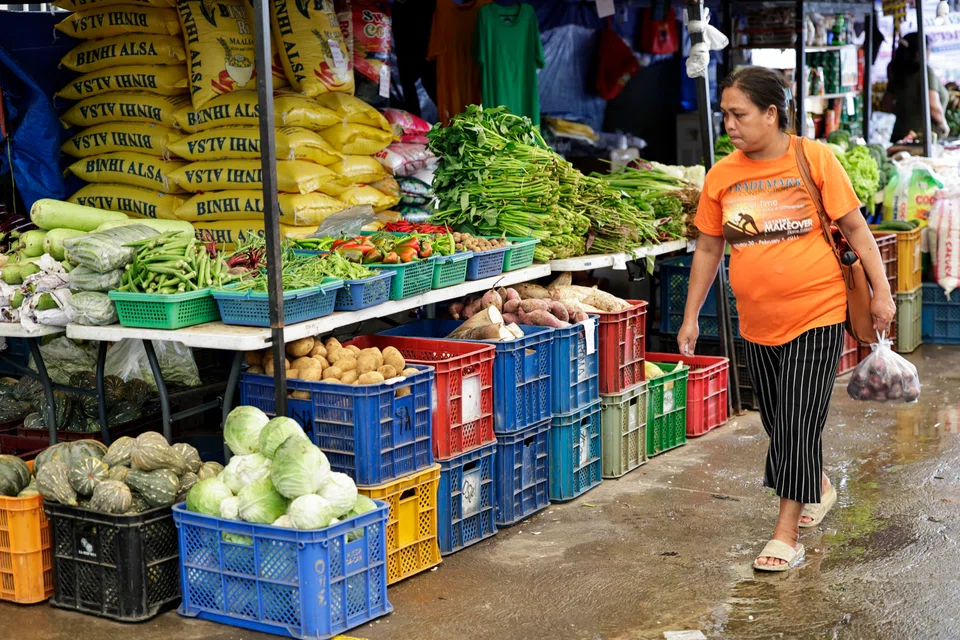
Rice prices rose 17.1 per cent in July from a year earlier following declines in 2025, underlining the cost of living pressures afflicting the country of around 113 million people. BLOOMBERG
Decoding Asia newsletter: your guide to navigating Asia in a new global order. Sign up here to get Decoding Asia newsletter. Delivered to your inbox. Free.
Share with us your feedback on BT's products and services
TRENDING NOW

DBS, OCBC, UOB rout lops billions off STI as inflation, rate concerns spook investors

Grab CEO’s wife Chloe Tong on life with Anthony Tan and finding her purpose

OCBC sheds S$8 billion in value as shares close nearly 6% down; analysts cautious on banks

Deal between tycoon friends sparks scrutiny of Philippine power sector

