



Philippines sees slower growth, weak peso beyond end of Marcos’ term in 2028
Government seeks to expand 2027 national budget to US$117b – 6% above 2026’s – to boost economy
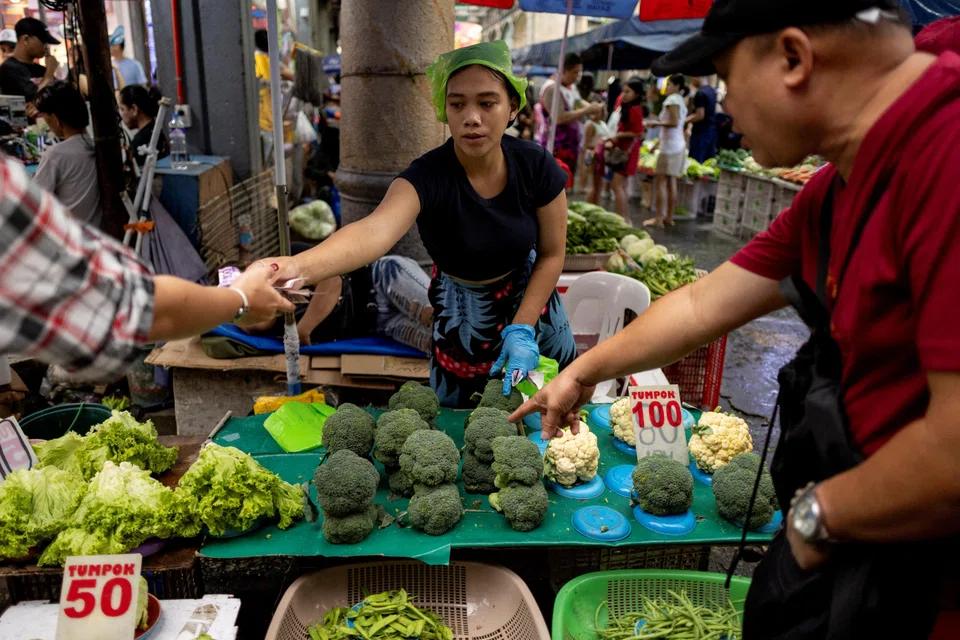
[MANILA] The Philippines has cut its economic growth targets and sees a weaker peso beyond the end of the term of President Ferdinand Marcos Jr in 2028 amid headwinds such as the Middle East tensions and an intense El Niño weather event.
The South-east Asian nation’s economy is seen growing by 3.5 to 4.5 per cent in 2026, before picking up to 5 to 6 per cent annually from 2027 to 2030, according to a memorandum by the Development Budget Coordination Committee.
Economic Planning Secretary Arsenio Balisacan had earlier flagged the 2026 growth outlook that’s slower than the previous goal of 5 to 6 per cent made in December. The latest goal for 2027 is also slower than the previous estimate of 5.5 to 6.5 per cent as well as those for 2028 through 2030 which were earlier pegged at 6 to 7 per cent.
The government “remains aware of downside risks such as a possible escalation of the Middle East conflict, weak consumer and business confidence, and the intensification of El Niño”, acting Budget Secretary Kim Robert de Leon said in the memo.
The Marcos administration is seeking a national budget of 7.2 trillion pesos (US$117 billion) for 2027, six per cent higher than this year’s allocation as it hopes to revive an economy that’s one of the hardest hit by the Iran war. Marcos’ single six-year term ends in 2028.
The latest numbers were approved by the Development Budget Coordination Committee which is composed of the country’s economic managers.
The implementation of mitigating measures by the government including aid to sectors hit by the Middle East conflict and other infrastructure projects would support economic activity.
“Together, these interventions are expected to cushion emerging risks and support the country’s medium-term growth prospects,” de Leon said.
The committee also tweaked the foreign exchange assumptions to 60 to 62 pesos against the dollar from this year through 2030, from the previous projection of 58 to 60 pesos for the period. The local currency touched a record low of 61.75 to the dollar earlier in June.



The “depreciation pressures could persist amid prolonged Middle East tensions, elevated domestic inflation risks, and subdued growth prospects that may weigh on market sentiment,” de Leon said.
The panel also adjusted its inflation assumption for this year to 6 to 7 per cent and to 4 to 5 per cent for 2027 compared with the December estimates of 2 to 4 per cent for this year up to 2030. The assumptions for 2028 to 2030 were maintained.
The Iran war pushed inflation in the Philippines, which imports nearly all of its oil requirements from the Middle East, to one of the hottest in Asia and curbed household spending.
Coupled with slower government spending due to a graft scandal involving billions of pesos in flood infrastructure projects, the Philippine economy grew just 2.8 per cent in the first quarter – the slowest pace outside the pandemic since 2009 – after expanding by 4.4 per cent in all of 2025.
Growth in exports of goods is seen at 3 per cent for this year and at 4 per cent from 2027 through 2029 before picking up at 5 per cent in 2030, according to the latest assumptions. Imports of goods are seen rising by 5 per cent this year and next, 4 per cent in 2028 and 2029 and 5 per cent in 2030. BLOOMBERG
Decoding Asia newsletter: your guide to navigating Asia in a new global order. Sign up here to get Decoding Asia newsletter. Delivered to your inbox. Free.
Share with us your feedback on BT's products and services
TRENDING NOW
Companies still in search of AI use cases with worthwhile ROI, says Broadcom’s CEO

Malaysian king buys stake in Singapore-listed mining firm expanding into rare earths

Once staunchly pro-China, Malaysian Chinese businesses are now distancing themselves from Beijing
Singapore’s wealth management success should extend to everyday families

