Philippine developers turn defensive as Middle East crisis threatens residential and retail market
The beleaguered market could worsen on lagged effects, but analysts remain upbeat on property giants’ strategies

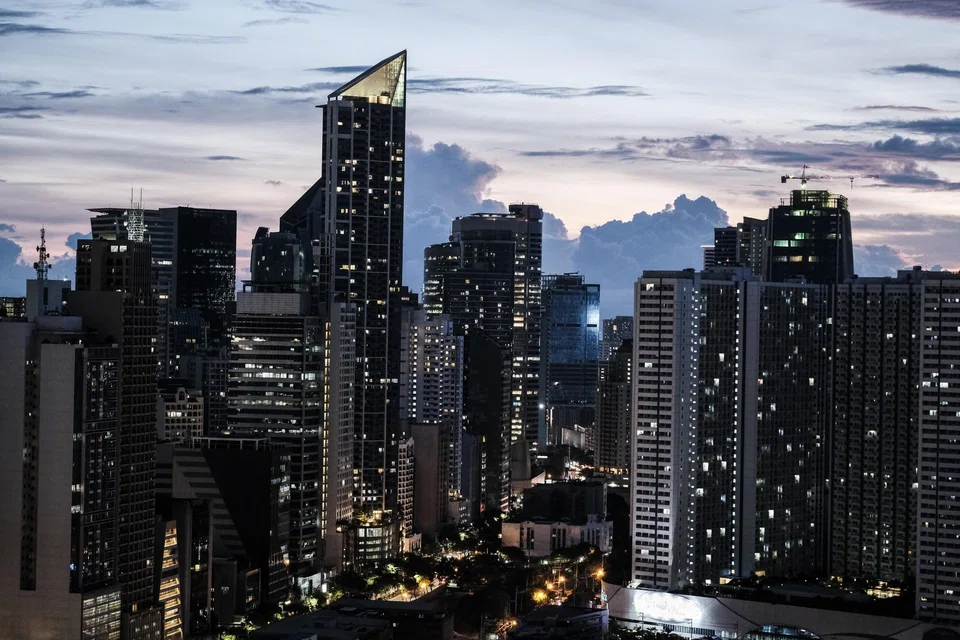
[SINGAPORE] Some of Metro Manila’s property giants have turned defensive as higher construction costs, rising interest rates and weakening purchasing power from the Middle East crisis dampen an already unstable market.
Key residential and retail segments in the Philippines’ capital area have struggled to shake off a post-pandemic slump, as the industry grapples with weak demand and soaring oversupply amid the country’s escalating economic woes.
Residential condominium sales in the country’s largest and most populated metropolitan area are already on pace to reach record low take-up rates in the first quarter of 2026, according to data from Colliers Philippines.
But there might be worse to come for the sector, with analysts suggesting that the lagged impact of the crisis might show its hand fully only in Q2.
The Philippines’ top homebuilder, Ayala Land, posted on Apr 30 a 22.7 per cent decline in Q1 earnings to about 5.4 billion pesos (S$112.3 million) from seven billion pesos a year ago, as property development revenues fell 26.9 per cent.
Early signs of strain have hit the developer, as it announced it would pause the development and sale of a luxury residential tower in Manila’s central business district. The developer also cancelled sales of a mid-market offering in Katipunan, Quezon City; sales for this project were launched just weeks before the onset of the conflict.
CEO Anna Maria Margarita Bautista Dy said during the company’s earnings call that these decisions were made due to a lack of visibility surrounding construction costs.
She also noted in a May 1 statement that the company would cut its capital expenditure deployment to 50 billion pesos, down from an earlier guidance of up to 80 billion pesos.
“The current environment requires a more deliberate approach to how we deploy capital and manage our pipeline,” she said.
Meanwhile, leading mall and property developer SM Prime said it would cut back on capital deployment by up to 35 per cent in view of volatile conditions in the upcoming months.
“The spillover effects of the Middle East conflict have been swift, broad and severe,” said chairman Henry Sy Jr during the company’s annual shareholder meeting in late April. “Given these conditions, we expect more measured growth for our company in 2026.”
The Philippines has been among the South-east Asian economies that have been hardest-hit by surging energy and food prices, with most of the country’s oil needs coming from the Middle East.
Inflation across the archipelago has spiked to its highest rate in more than three years, with prices rising 7.2 per cent in April from a year earlier – breaching the Bangko Sentral ng Pilipinas estimates for the month as the central bank’s inflation target band of 2 to 4 per cent slides further out of reach.
The Philippines was the first country in South-east Asia to hike rates following the Gulf conflict. In an off-cycle meeting in April, it raised its policy rates for the first time since 2023 – and likely not for the last as inflation intensifies.
Public markets suggest waning investor confidence in the sector – both Ayala Land and SM Prime are trading at their lowest share prices in more than a decade, while their peers Robinsons Land and Megaworld have also experienced significant declines since the beginning of the crisis.
Beleaguered market
Brent Respicio, research analyst at Colliers Philippines, told The Business Times that property development in the country’s capital could face several potential setbacks in the year ahead, particularly for residential and retail properties.
“If we annualise the take-up rate in Q1 of this year, we are actually reaching a record low for residential sales,” he said, noting that the projected net take-up rate of about 8,000 residential units for the year falls far short of that in previous crises, including the 2009 global financial crisis and the Covid-19 pandemic in 2021.
“We don’t have any major demand driver right now,” Respicio said.
Despite this, there was some hope that things were turning around in Q1. Resale demand in the residential property market was beginning to pick up, with take-up rates vastly outperforming a particularly poor showing in Q1 2025.
Concurrently, the remaining inventory life of unsold condominium units – a key indicator of appetite – reached its lowest in about 18 months during the quarter. At the current pace, it would take 6.8 years to sell out all condominium units in Metro Manila, down from a peak of 13.4 years in Q2 2025.
But the Iran war could leave these hopes in jeopardy, noted Respicio. He said that the impact of the conflict might be felt through multiple channels, as rising inflation and surging construction material prices keep purchasing power weak, while lower remittances and elevated mortgage rates could delay big-ticket purchases.
“We have yet to see the full impact of the conflict, but the property market is volatile and hard to predict,” he added.
“It also depends on the strategy the developers take,” he said.
For instance, aggressive promotions and discounts offered by homebuilders in Q3 2025 helped to temper lacklustre demand early in the year. Respicio believes that it remains too early to tell what upcoming quarters will hold.
Meanwhile, retail properties in the capital are similarly under pressure as the effect of the war swells, with mall vacancies still struggling to drop to pre-pandemic levels.
Colliers Philippines projected that such a recovery may be delayed to as far as Q1 2027, as retail businesses struggle with higher shipping costs, dwindling footfall and waning consumer discretionary spending as inflation persists.
The country’s energy burden could also weigh on the segment’s rebound. Mall operators including SM Supermalls and Robinsons Malls announced in late March that they would shorten operating hours to conserve energy, following the government’s declaration of a national energy emergency.
Nor have industrial properties been spared, with elevated oil prices pushing logistics surcharges higher. These higher costs have affected demand unevenly, with Respicio noting that several warehouses further away from toll roads and ports have been abandoned for others located nearer to such infrastructure.
But he added that strong growth in the e-commerce sector has kept occupancy rates for industrial properties relatively resilient despite the conflict.
Strategic pivots
Nevertheless, recurring income from leasing in developers’ portfolios could provide a cushion to weaker residential sales, including for SM Prime, which derives about 60 per cent of its earnings from mall operations, according to a Maybank report.
Indeed, developers have largely turned their attention to more stable revenue drivers from the leasing of office, industrial and retail properties.
“If they’re not doing well in the residential market, they’re focusing their capex on other segments which are less affected by the crisis,” Respicio said.
Strategic moves are increasingly being made to diversify property development beyond the Metro Manila area, in areas such as Metro Cebu, Iloilo and Davao.
“Land cost dynamics are more favourable (in these areas), infrastructure investment is accelerating, and end-user demand remains strong,” said Rick Santos, chairman and CEO at local real estate consultancy Santos Knight Frank.
But the dovetailing headwinds of weak residential sales and an uncertain geopolitical situation may prove a steep hill to climb, despite these strategic shifts. Ayala Land’s weaker profits amid a stronger pivot into its leasing portfolio may suggest that the beleaguered residential development market – which still makes up most of the company’s revenue – has still placed strain on its bottom line.
Even so, Santos cautioned against an overly pessimistic outlook as developers go on the defensive, noting that capital recalibrations can be read as strategic prudence instead of signalling weakening demand.
“These are cycle-tested developers making deliberate portfolio decisions, and the direction of their capital tells a constructive story,” he said.
“What looks like defensiveness on the surface is, in practice, disciplined capital allocation, positioning these developers to outperform when conditions normalise.”