



Philippine taxis hit by fuel price hikes get electric lifeline from VinFast, Grab
Manila’s cab industry is turning a volatile energy crisis into an opportunity for modernisation
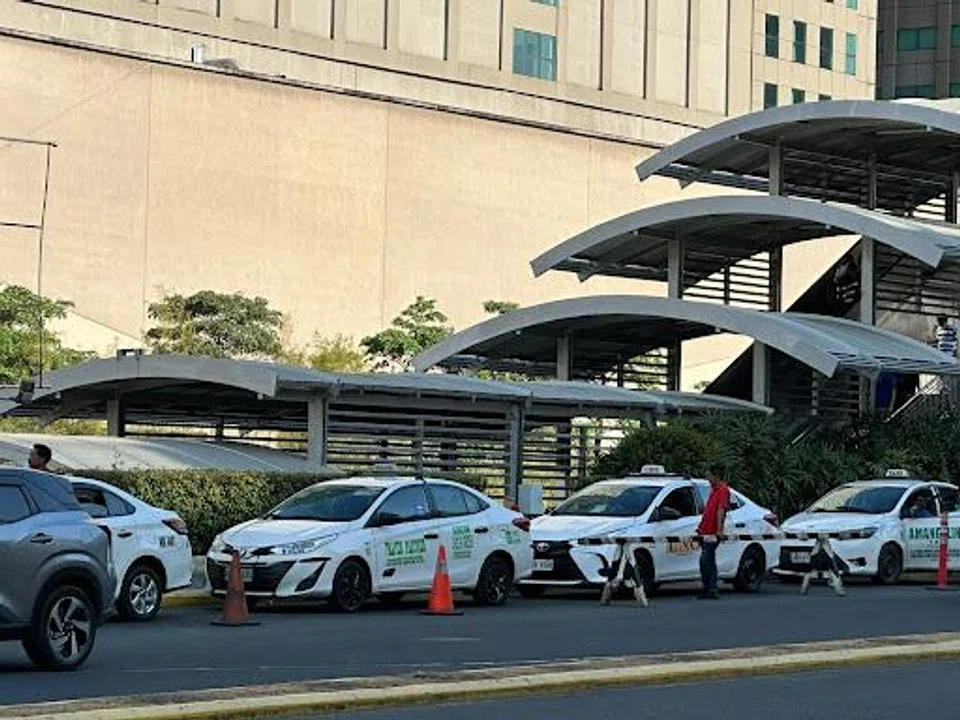
[MANILA] Grab Philippines, the country’s dominant ride-hailing platform, and Green GSM, VinFast’s electric taxi arm, are offering a lifeline to operators hit by soaring fuel prices by rolling out hundreds of electric taxis to replace combustion engine vehicles.
In doing so, they are nudging one of South-east Asia’s more fragmented transport sectors towards cleaner, modern fleets.
The shift comes as oil prices climb on renewed tensions in the Middle East, squeezing transport workers and causing them to bleed cash at the pump because of overreliance on fossil fuels.
The deployment of GrabTaxi Electric units by Grab Philippines and Green GSM comes as the country’s cab industry moves away from ageing combustion-engine fleets, many of which are due to be phased out.
Electric fleet transition
Seven taxi operators in Metro Manila recently invested in electric vehicle fleets, with a few scaling back their fossil fuel-dependent units as the fuel crisis began eating into their margins.
They said the shift has allowed them to cut down their per-kilometre costs by 75 to 87 per cent, compared with driving combustion-engine vehicles.
Despite the cost savings, smaller electric-cab operators, which have long relied on curbside pickups, struggle to reach consumers who prefer to book private-hire cars through mobile apps.
Grab Philippines integrated the taxi operators into its ecosystem to deploy hundreds of their EV units under the banner GrabTaxi Electric.
These smaller EV players now secure 80 per cent of their daily bookings via the platform, said Grab.
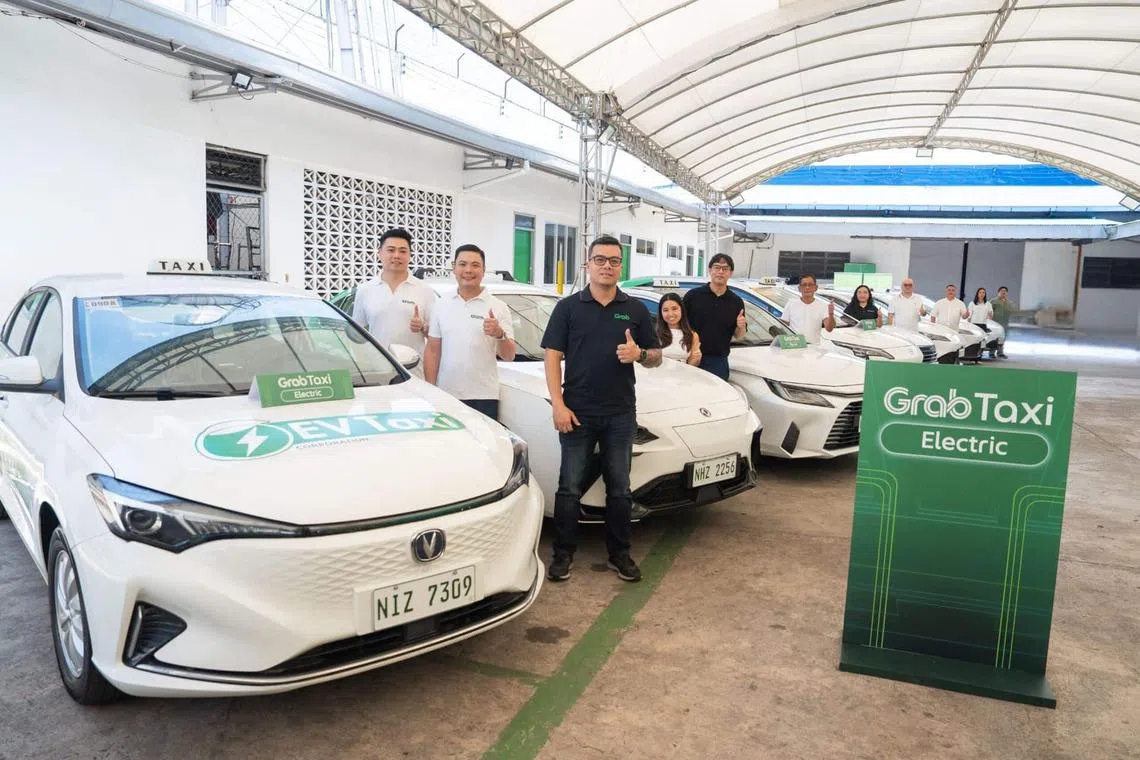
The ride-hailing company is also partnering EV makers and the country’s largest banks to underwrite preferential car loans for its drivers.
Through the Eco-Drive Initiative, Grab has brought together carmakers BYD, Toyota and GAC alongside local lenders BDO Unibank and the Bank of the Philippine Islands to offer drivers with ageing vehicles discounted financing, lower upfront costs and flexible daily repayments.
Grab said the move aligns with the Electric Vehicle Industry Development Act, a legislative push to spur domestic EV adoption.
Predictable cost structure
Vingroup’s Green and Smart Mobility (GSM) company is also lowering entry barriers to the EV taxi space by expanding its driver-partner network through the shared service platform Green SM and ride-hailing business, Green GSM Philippines.
Drivers who purchase or lease from Vingroup’s EV brand VinFast and become a Green GSM partner retain up to 90 per cent of their gross earnings through the company’s revenue-sharing model.
While official figures are yet to be released, Green GSM said there has been an uptick in the number of drivers enlisting as its partners.
Francis Mark Lacuna, managing director of Green GSM Philippines, attributed this increase to the “stable and predictable operating cost structure” of driving for Green GSM.
One driver-partner interviewed by The Business Times said he charges his unit at one of the company’s depots for free. A full charge is said to give the unit enough power for a 10 to 12-hour shift and a driving range of about 300 km.
When charging a unit like his – a VinFast Nerio Green – at home, he would have to spend about 600 pesos (S$12.49) for a full charge. Overall, the cost comes down to two pesos a kilometre, he said.
In contrast, for a diesel taxi that gets 10 km for every litre – at the high end of 112 pesos a litre – the driver will have to pay 11.20 pesos a kilometre to refuel.
Access to greener fleets
Green GSM already deploys 2,500 of its signature cyan-coloured VinFast taxis across Metro Manila as part of its initial investment of US$500 million into the Philippine market.
Meanwhile, the company’s ride-hailing app has had more than a million downloads since the EV taxi-hailing service launched in June 2025.
“This trend is gradually translating into steady growth in service usage, particularly in high-density urban areas,” Lacuna told BT.
“This is not merely a short-term response to fuel price volatility, but also reflects a broader shift in market behaviour. Both passengers and drivers increasingly prioritise mobility solutions that are efficient, sustainable and less dependent on traditional fuels,” he said.
Lacuna pointed out that the company’s vehicle leasing and driver partnership programmes give drivers and operators easy access to greener fleets.
This same sentiment is reflected by GSM’s global CEO Nguyen Van Thanh.
While the company’s expansion bolsters the number of EVs on the road, an important goal for GSM is to “accelerate the transition to green mobility across South-east Asia,” Thanh said.
EV adoption in the Philippines
In Metro Manila, more than 16,700 taxis in circulation run on fossil fuels, indicated the latest available data from the Philippines’ transportation regulator.
Only a handful of services – such as Green GSM, GrabTaxi Electric, EV Taxi Corp, EnviroCab and TaxiKo Transport Services – offer four-wheel EVs that can compete for the same consumer base as combustion-engine taxis.
Of the estimated 3,000 electric taxis operating in Metro Manila, the largest fleet comes from Green GSM at an estimated market share of more than 80 per cent. Meanwhile, a few hundred EVs belong to smaller taxi operators.
For years, the Philippines lagged Asean peers in EV adoption. In Singapore and Vietnam, for example, EV sales for each country hit 40 per cent in 2025, noted global energy think tank Ember.
The Philippines, however, is slowly opening up as a market. In March, the same month when President Ferdinand Marcos Jr declared a national state of energy emergency, EV sales doubled to 6,148 units from 3,054 in February.
The market share for electrified options has surged to more than 17 per cent, up from just 7.4 per cent a year ago.
TRENDING NOW

LTA proposes combining car COE categories, adding rebate-surcharge system

StarHub to acquire MyRepublic’s mobile business amid ongoing telco consolidation

DBS, OCBC, UOB rout lops billions off STI as inflation, rate concerns spook investors

Grab CEO’s wife Chloe Tong on life with Anthony Tan and finding her purpose

