Polished streets, hidden costs: Manila puts on its best face for the Asean Summit
The Philippine capital’s preparations bring anticipation and disruption for local communities

[MANILA] The Philippines is putting on its best face as it prepares to welcome South-east Asia’s leaders – and US President Donald Trump – to Manila for the 49th Asean Summit.
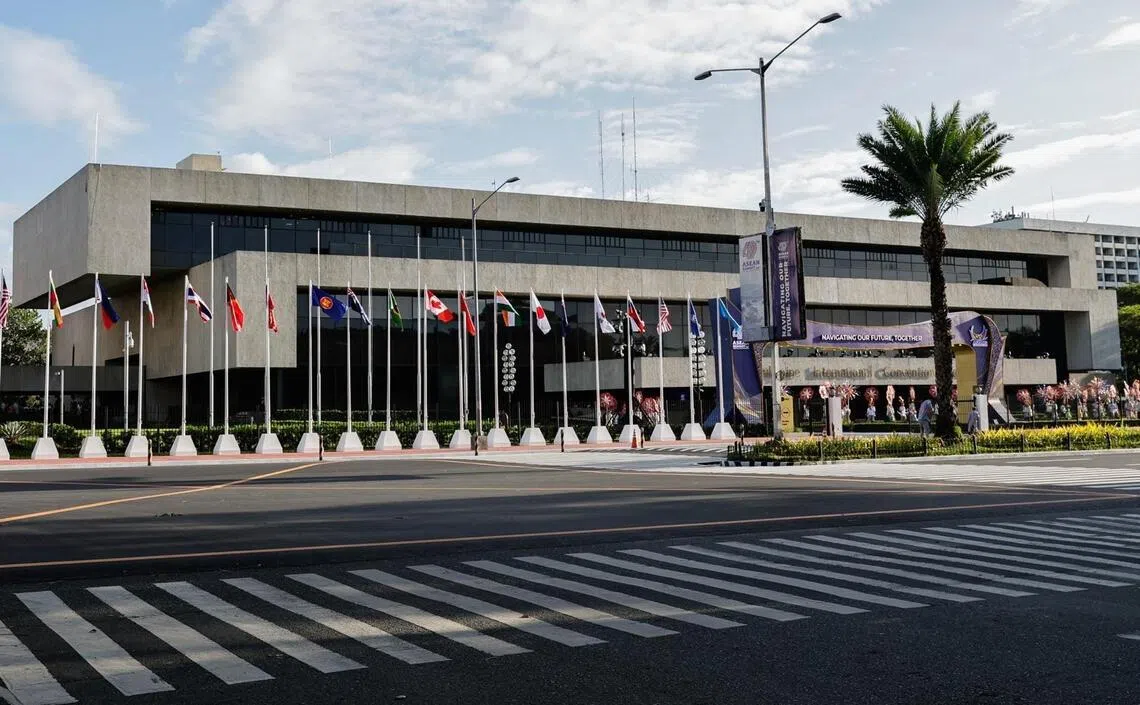
Roads are being spruced up, billboards installed and welcome arches erected around the Philippine International Convention Center, the summit’s main venue.
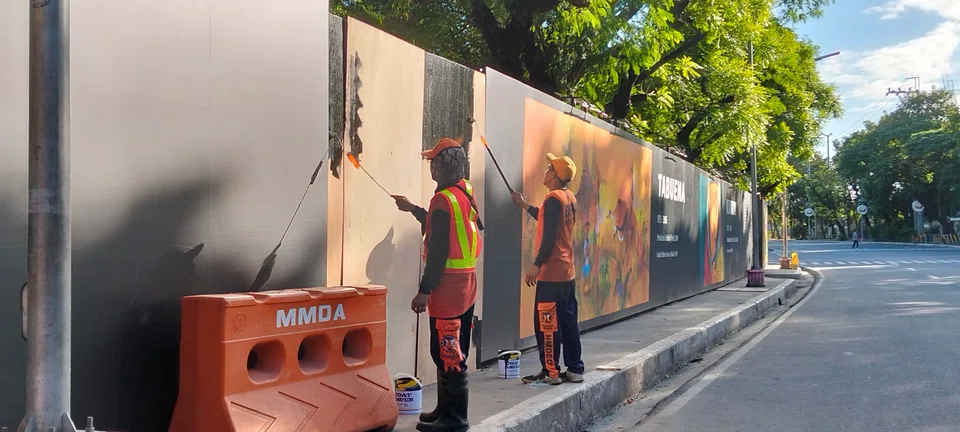
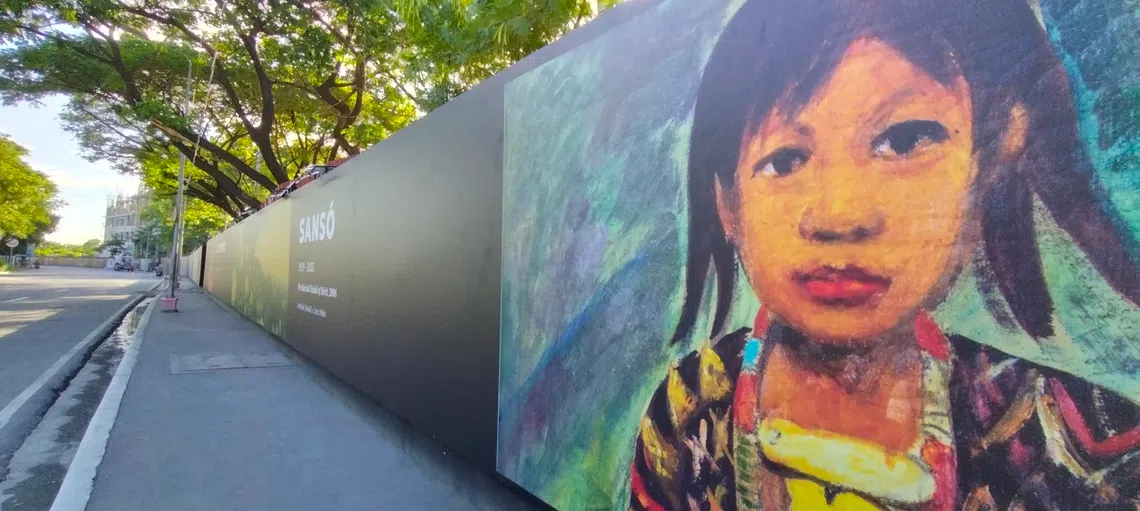
Along JW Diokno Boulevard in Pasay, one of the key cities hosting activities for the summit, temporary barriers have been transformed into an impromptu open-air gallery.
Reproductions of works by Philippine national artists line the route: Fernando Amorsolo’s luminous rural scenes, Vicente Manansala’s fractured cubist figures, and Arturo Luz’s austere geometric forms.
But behind the earnest preparations lie concerns over the cost of hosting.
Food vendors, for instance, have been ordered to halt operations from the end of October in the run-up to the summit.
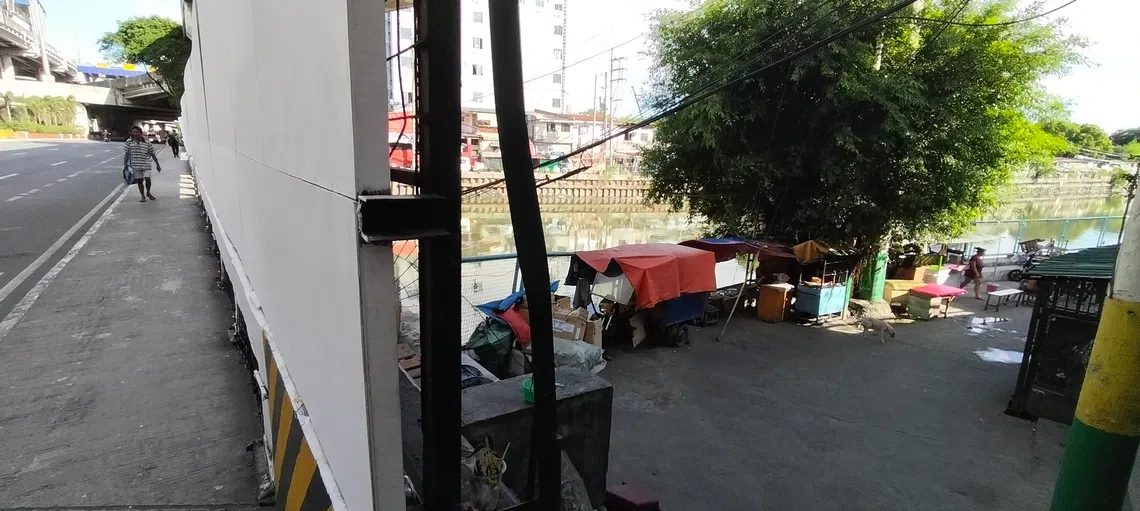
Before the art-covered barriers went up, these vendors would set up hawker-style stalls along the stretch, where ride-hailing drivers stopped to rest between fares. This week, the usually bustling food centre has fallen quiet.
A supervisor from the Department of Public Works and Highways, who declined to be named because he was not authorised to speak to the media, said the barriers also covered informal settlements. A small passage between the barriers remains to let settlers move in and out of their homes.
In Tambo, a district of Paranaque that is also hosting summit-related activities, plain white billboards conceal a creek and street vendors.
The screens have drawn criticism that authorities are hiding Metro Manila’s poverty from visiting dignitaries. The government says the preparations are intended to ensure security and showcase the country.
Antonio Tinio, representative of the progressive ACT Teachers party list and a deputy minority leader in the House, put it bluntly.
“Five decades after Imelda Marcos whitewashed Manila’s slums for the Miss Universe pageant, the IMF (International Monetary Fund)-World Bank meeting and the papal visit, her son is staging the exact same production,” he said, referring to President Ferdinand Marcos Jr.
“The script,” he added, “has not changed.”
National pride
Marcos Jr asked Filipinos to endure the disruption in the name of national pride, urging the public to show respect to foreign delegates, tolerate traffic restrictions and postpone protests until after the summit.
“I am certain the benefits we will gain from the policies that will be agreed upon, and the jobs that will be created will outweigh these inconveniences,” he said in a video posted to social media on Thursday (Nov 12).
The president said the Philippines’ chairmanship could advance concerns close to Filipino households: food and oil prices, security, agriculture, jobs and livelihoods.
He added that summit preparations had generated work for micro-enterprises, weavers, performers, hospitality workers and transport operators, although the administration is yet to release an estimate of the business generated.
Claire Castro, undersecretary for the Presidential Communications Office and the Palace press officer, said the preparations were intended to present the Philippines as a country where foreign investors could confidently place their capital.
She defended the 22.9 billion peso (US$358.7 million) budget for the country’s 2026 Asean chairmanship as “money well spent” on security and venue upgrades, adding that the outlays would be subject to review by state auditors.
The uneven cost
Vendors closer to the main summit venue were ordered to suspend operations from Nov 1 to 18, leading to the loss of days of income. The government has offered affected vendors up to 10,000 pesos and food packs; critics say they are inadequate against weeks without earnings.
Public expectations are grounded in daily survival. A Social Weather Stations survey conducted from Mar 24 to 31 found that 91 per cent of Filipino adults expected the Philippines to benefit from hosting the 2026 Asean leaders’ meetings.
Yet, the same survey showed that Filipinos’ expectations were anchored in everyday pressures. Asked what the country should prioritise as Asean host, respondents most often cited rising prices and inflation (19 per cent), followed by the West Philippine Sea dispute (16 per cent), oil prices and supply (12 per cent) and poverty (9 per cent).
In other words, Filipinos are assessing the summit from the lens of their everyday living costs.
The Philippines is chairing Asean under the banner of “Navigating Our Future, Together”, with priorities that include “prosperity corridors” and “people empowerment”. The chairmanship promises economic integration, digital transformation and inclusive development that benefits “all Asean peoples”.
Asean Business Advisory Council Philippines chair Joey Concepcion sees the summit as a national investment pitch.
“We have to create greater visibility with our country. We have to show them where the opportunities are for investment,” he said, arguing that a successful chairmanship would help investors see the Philippines as “worth investing” in.
Rafael Consing, president and CEO of sovereign wealth fund Maharlika Investment, took a longer view, saying that the weak growth currently faced by the country could create attractive entry points for investors. He added that the fund’s infrastructure investments address long-term needs, regardless of short-term economic performance.
The divide reflects a broader concern over whether Asean-led investment translates into secure jobs, affordable food and stable incomes, or remains confined to conference rooms, industrial corridors and balance sheets.
Echoes of an old campaign
During the Philippines’ martial-law years, Imelda Marcos’ urban-beautification campaigns became associated with walls, fences and cleared streets that made Manila presentable to foreign visitors while keeping poverty out of sight.
Nearly half a century later, critics see echoes of that campaign in the art-covered barriers along summit routes and the temporary suspension of street trading.
For urban poor groups, the issue is exclusion. Kalipunan ng Damayang Mahihirap, an association, said rising prices and the temporary displacement of informal workers were pushing vulnerable families into greater risk.
Civil society groups, led by Bayan, a political movement marginalised societies, plan to hold protests throughout the summit, arguing that courtesy to foreign leaders should not come at the expense of Filipinos’ welfare.
The Asean National Organizing Council, meanwhile, has framed its appeal to protesters in familiar domestic terms: Just as a household prepares for a guest, the country should prepare for its visitors.