



Singapore, Asia stocks rebound after oil prices fall, reversing on Trump comments on Iran war
The STI closes 2.2% higher while the FTSE Bursa Malaysia KLCI advances 1.6%
 Add BT as a preferred source
DeeperDive is a beta AI feature. Refer to full articles for the facts.
[SINGAPORE] Asian markets rebounded on Tuesday (Mar 10) as oil prices dipped from their peak the day before.
The Straits Times Index closed 2.2 per cent higher while the FTSE Bursa Malaysia KLCI rose 1.6 per cent.
Japan’s Nikkei 225 was 2.9 per cent higher, while the broader Topix rose 2.5 per cent. South Korea’s Kospi gained 5.4 per cent.
In Jakarta, the IDX Composite closed up 1.4 per cent. Hong Kong’s Hang Sang Index rose 2.2 per cent and the CSI 300 in Shanghai advanced 1.3 per cent.
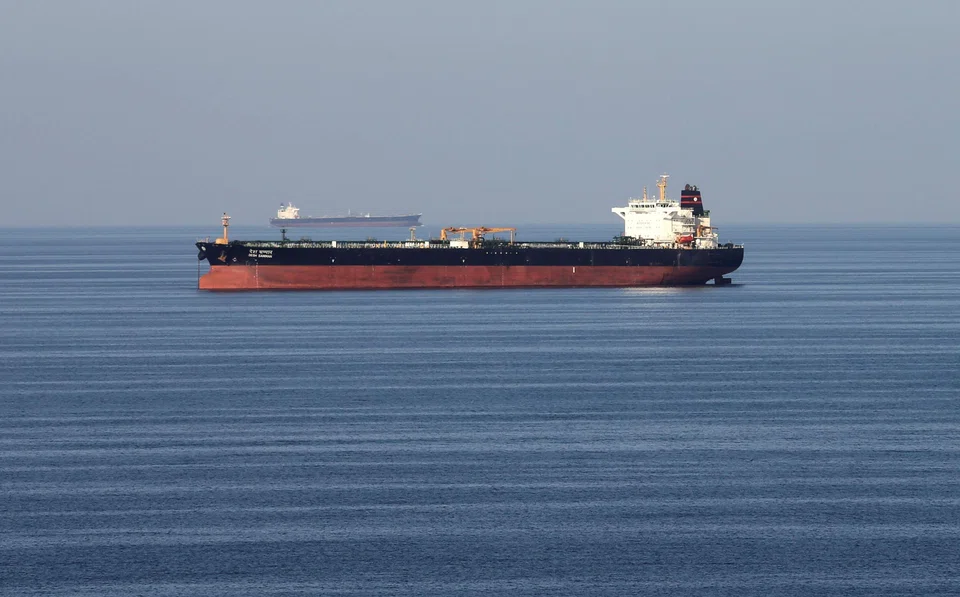
As Asian markets opened on Tuesday, the price of Brent crude had fallen to US$89 per barrel, and West Texas Intermediate had dropped to US$85.70 per barrel, as markets made significant reversals after US President Donald Trump told CBS News that the war is “very complete”.
On Monday, the price of Brent crude surged briefly to US$119.50 per barrel, and US-produced West Texas Intermediate hit US$119.48 per barrel.
Navigate Asia in
a new global order
Get the insights delivered to your inbox.
The Strait of Hormuz remains effectively closed, severely curbing shipments by Gulf oil exporters including Saudi Arabia. Trump said at a news conference in Florida that he plans to waive oil-related sanctions and have the US Navy escort tankers through the Strait of Hormuz.
In Europe, governments are discussing whether to release oil reserves to mitigate the price spiral.
The rise in oil prices had sent shockwaves across Asean. It raised transport and food production costs in the Philippines and threatened electricity prices in Thailand. It also swelled subsidy bills in Malaysia and Indonesia, and pushed pump prices in Singapore towards levels last seen during the 2022 energy crisis.


Oil-driven inflation is expected to continue to trickle down to companies and consumers.
For transport and logistics players on the Singapore Exchange and regional bourses, where fuel represents a large, often volatile slice of the operating pie, analysts had warned that the spike could have led to significant margin pressure across air, sea and land transport.
At market close on Tuesday, Singapore Airlines was up 2.5 per cent or S$0.16 at S$6.65. ComfortDelGro gained 0.7 per cent or S$0.01 to S$1.43.
Local banks also gained ground, with DBS closing 2.5 per cent or S$1.34 higher at S$55.65. OCBC increased 2.3 per cent or S$0.47 higher to S$20.93, and UOB rose 2.1 per cent or S$0.74 to S$36.25.
Oil exploration and production company Rex International was the most heavily traded counter, closing 7.8 per cent or S$0.015 lower at S$0.178 after over 82.1 million shares changed hands.
Decoding Asia newsletter: your guide to navigating Asia in a new global order. Sign up here to get Decoding Asia newsletter. Delivered to your inbox. Free.
Copyright SPH Media. All rights reserved.
TRENDING NOW
‘Boring’ is the new black: The stars are aligning for a Singapore stock market revival
Near sell-out launches in March boost developer sales to 1,300 units after four slow months

China pips the US if Asean is forced to choose, but analysts warn against reading it like a sports result

Genting Singapore’s Lim Kok Thay receives S$7.5 million pay package for FY2025

