Singapore, Thai stocks are 2026’s top picks, El Nino a mixed bag for Asean food stocks: Macquarie
Analysts pick Singapore’s tech supply chain stocks and Malaysian palm oil planters to outperform

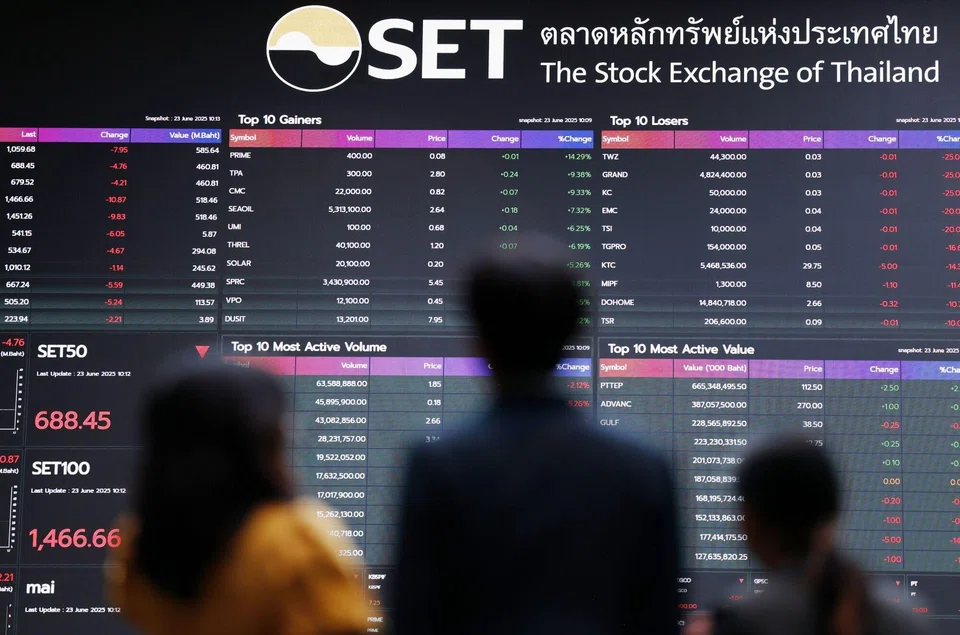
[SINGAPORE] For investors in South-east Asia, the stock markets in Singapore and Thailand offer the strongest opportunities, given that these two markets are backed by resilient currencies, attractive dividend yields and exposure to the global technology supply chain, Macquarie Capital has said.
The Australian bank also expects investor appetite for Indonesian and Philippine stocks to remain subdued as macroeconomic and policy uncertainties continue to weigh on both markets.
These views were shared by analysts at a media briefing held in Macquarie’s Singapore office on Wednesday (Jul 29).
Jayden Vantarakis, Macquarie’s head of Asean equity research, said: “The two markets we’re seeing on the positive side of the artificial intelligence trade have been Singapore and Thailand.”
He attributed the preference to their stronger currencies, with both the Singapore dollar and Thai baht maintaining relative stability against the greenback, relative to regional peers this year.
Strong dividend yields have drawn investors to both these countries’ markets – particularly among large-cap financial stocks, noted Vantarakis.
He added that greater political stability in the kingdom has boosted investor confidence in Thai equities, pushing the Stock Exchange of Thailand index to outperform most of its Asean peers this year. Following a torrid 2025 plagued by conflict and political scandal, a Bhumjaithai Party-led coalition has been seen to offer the country’s economy relative stability.
Vantarakis said the Singapore equity market remains ripe for opportunities. In a July report, Macquarie upgraded its 12-month price target on the Straits Times Index to 6,000.
“At the start of the year, we saw the index trading sideways. But we’ve become more constructive and see a good case for growth,” he said.



“We’ve seen very strong gross domestic product numbers come out for Singapore, which creates upside.”
He added that the bank expects investors to turn to larger names on the Singapore Exchange for income, noting that dividend yields remain attractive, relative to Singapore government bond yields.
While the market is no longer cheap with a forward price-to-earnings ratio of 15 times, he added that Singapore’s equities remain reasonably valued, considering the market’s growth outlook relative to global markets.
Andrew Hill, Macquarie’s head of institutional equity sales in Singapore, highlighted growing investor interest in Singapore’s small and mid-cap stocks, particularly for technology hardware companies exposed to the semiconductor supply chain.
Singapore-listed firms such as UMS Integration and Frencken Group have benefited from rising investment in the AI hardware supply chain, while Thailand’s Delta Electronics remains one of the region’s standout beneficiaries.
In contrast, the analysts noted that Indonesia and Philippine stocks have gained less from the global AI investment cycle, given their markets’ relatively limited listed exposure to technology supply chains.
Macquarie had previously tipped tickers in the Philippines to be among the region’s top value plays, following an underwhelming 2025 and strong price-to-earnings multiples.
But headwinds from geopolitical conflict and rising energy prices have now dampened this thesis, said Vantarakis.
“Valuations are still attractive, but this view has been tested by the global macroeconomic events that have unfolded since then,” he told The Business Times.
Indonesia’s market experienced a rally in the last month after hitting a five-year low in June. The government’s efforts to restore confidence in the market and rupiah have driven a recovery in the benchmark index by about 20 per cent since early June.
Still, Vantarakis observed that few investors have become optimistic about the region’s worst-performing market this year.
Despite a number of companies – particularly the large banks – displaying steady corporate performance, he said that investors remain uncertain about policy direction and macroeconomic weakness in the Indonesian economy.
“A lot of our investors have reduced their exposure to Indonesia and have been focused more on markets like Singapore, Malaysia and, to some extent, Thailand,” he said.
El Nino
Beyond market rotation, Macquarie expects a strong El Nino event to become another major investment theme for South-east Asia.
“We’ve seen a lot of interest in this from our investor base,” Vantarakis said. “It’s going to affect a lot of sectors here.”
Macquarie said in a Jul 23 report that crude palm oil producers are likely to experience higher earnings. Lower rainfall results in a lagged impact on yield, supporting the commodity’s prices as markets price-in expectations of tighter supply.
It named the Bursa Malaysia-listed SD Gurthrie and Kuala Lumpur Kepong as their top picks among palm oil planters.
“We maintain a preference for Malaysian planters, which offer cleaner exposure to the upside while carrying relatively lower policy and regulatory risk versus Indonesian peers,” said Macquarie.
Seafood producers such as Century Pacific Food in the Philippines, Bangkok-listed Thai Union and Thai pet food producer i-Tail Corporation could also experience a windfall as catch rates improve amid warmer waters, reducing costs.
But the bank also noted that other food manufacturers with exposure to agricultural products could experience tighter margin pressure as input costs rise, while power companies with exposure to hydropower generation will be more vulnerable to reduced rainfall.
Decoding Asia newsletter: your guide to navigating Asia in a new global order. Sign up here to get Decoding Asia newsletter. Delivered to your inbox. Free.
Copyright SPH Media. All rights reserved.