Soaring tungsten adds impetus to Vietnam mine sale effort
The country is home to the world’s sixth-largest reserves of rare earths
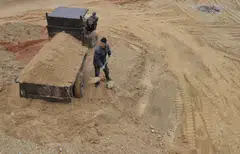
SOME 80 km north of Hanoi, in Thai Nguyen province, a massive open-cut mine tears into the landscape. Ringed by dense, green hills, the vast, stepped crater is raw grey and brown. Along its sides, huge trucks creep along, while a murky pool lies stagnant at the bottom.
This is Nui Phao, a mine that is key to Vietnam’s foothold in the global critical minerals market. It contains one of the world’s most important, and largest, non-China sources of tungsten, a metal essential for everything from chips and drilling equipment to armour-piercing weaponry.
With the value of the super-dense material soaring as countries ramp up defence budgets, it is little wonder Nui Phao’s owner, Masan High-Tech Materials, a unit of Masan Group, is amping up its search for strategic investors.
“We’ve been talking to Japanese, Australian, European and American strategic” investors, Masan Group deputy chief executive officer Michael Hung Nguyen told Bloomberg News after a media tour of the mine on Friday (Apr 17). “A lot of interest is coming from people who want to secure supply.”
With Masan looking to conduct a public listing at some point, “anybody with a strategic equity stake we would obviously be providing a progressive offtake agreement to sweeten the deal and make it long term.”
Masan High-Tech is currently preparing to transfer its shares from Vietnam’s Unlisted Public Company Market, or UpCom, to the Ho Chi Minh City Stock Exchange and hopes that can be done as early as the first quarter of 2027, Masan Group CEO Danny Le told a shareholder meeting on Thursday.
China is the world’s main producer of tungsten and also holds the largest reserves. In February 2025, it tightened tungsten export controls to protect its own domestic stash. As the Trump administration intensifies efforts to reduce reliance on Chinese supply chains, the material has become one of the metals caught in the crossfire.
“Tungsten is in many ways the model ‘critical mineral’ – production is dominated by China, Beijing has implemented export controls, the US has no domestic mine production, and it is an essential and difficult-to-substitute input to important commercial and defence technologies,” said Chris Kennedy, economic statecraft lead, Bloomberg Economics.
The 921-hectare Nui Phao project, which is licenced until 2034, is one of the biggest producers of tungsten outside China, according to the mine’s operator. With an estimated 3,000 tonnes in total, Vietnam was the world’s No 2 producer of tungsten behind Beijing in 2025, according to the US Geological Survey.

Although Masan is seeking to reduce its stake in Masan High-Tech and bring in a strategic partner, with tungsten central to advanced manufacturing and defence supply chains, any transaction will carry geopolitical significance.
Prospective investors will likely be evaluated not only on financial terms but also on their alignment with party chief and newly appointed President To Lam’s broader industrial policy objectives, including technology transfer, downstream processing and long-term value creation within the domestic economy.
“Critical minerals are a highly sensitive area in Vietnam, so bringing in a partner is in many ways also about choosing a long-term technological partner,” Nguyen Khac Giang, a visiting fellow at ISEAS-Yusof Ishak Institute said. “The government is likely to look beyond the financial terms and ask whether a prospective investor fits Vietnam’s broader ambitions.”
Even though Masan is a private company, it will “still need to take those considerations into account,” he said.
Vietnam holds other significant critical minerals deposits too, notably bauxite and titanium, and it is home to the world’s sixth-largest reserves of rare earths. This could provide Hanoi with leverage as it seeks to develop an industry essential to powering cutting-edge technologies, electric vehicles and the broader green transition.
Masan High-Tech’s mine also produces fluorspar, an industrial mineral that is used in lithium-ion batteries, bismuth, a metal that is used in green energy and high-tech electronics, and copper.
But despite its abundant reserves, Vietnam has so far failed to capitalise well on its natural resources.
Complex regulatory hurdles and opaque licensing processes have deterred investors, along with a corruption scandal involving one of the biggest Vietnamese rare earth firms. A new Geology and Mineral Law in 2024 was aimed at improving access to more foreign investors.
In December, the law was amended to restrict exports of unprocessed rare earth ores, signalling a shift toward higher-value domestic processing. That fits with To Lam’s desire to move up the value chain as the country strives for 10 per cent growth.
The European Union, the US and Australia are all positioning themselves to access Vietnam’s critical materials. In January’s upgrade of ties with the EU, both sides agreed to deepen cooperation, including through promoting sustainable mining and processing technologies.
“The EU is ready to support Vietnam in developing its own independent value chain to ensure its strategic autonomy and ensure that both the EU and Vietnam have the necessary critical raw materials for the energy and digital transitions,” EU Ambassador to Vietnam, Julien Guerrier, said. “This is very much in line with what we agreed on in January as we upgraded our partnership with Vietnam to a comprehensive strategic one.”
The US meanwhile, when then-President Joe Biden visited Hanoi in 2023, highlighted improving technical cooperation to support Vietnam’s efforts on rare earth reserves. In August 2025, Australia hosted a Vietnamese fact-finding delegation aimed at expanding sustainable mineral development as part of its deepening cooperation with the South-east Asian nation.
While Vietnam is seeking foreign capital and technical overseas know-how, the sector remains dominated by state-owned groups such as Vinacomin, with international investors typically limited to joint ventures.
Australia’s Blackstone Minerals holds a majority interest in the Ban Phuc Nickel Mine in Son La province. However, the mine was suspended between 2016 and 2018 due to financial losses.
In the company’s latest half-year financial report, it said it had struck an agreement with Xuan Loc Tho to progress development, although it classified the mine and planned refinery as a “discontinued operation.”
Masan has had some success wooing overseas suitors before. In 2024, it sold its stake in H.C. Starck’s global tungsten business to Japan’s Mitsubishi Materials and used the proceeds to pay down debt and refocus on its core business.
Masan High-Tech reported preliminary net profit after tax of 537 billion dong (US$20.4 million) in the first quarter, surpassing what it cleared for all of 2025.
The company plans to tap into a further 28 million tonnes of underground reserves in the current complex, and another 20 to 21 million tonnes in the mine’s west pit.
“We have already submitted the application for the exploration licence that we are expecting to get within this year,” Aditya Agarwal, Masan High-Tech Materials deputy CEO said. BLOOMBERG
Decoding Asia newsletter: your guide to navigating Asia in a new global order. Sign up here to get Decoding Asia newsletter. Delivered to your inbox. Free.
Share with us your feedback on BT's products and services