



South-east Asia offers opportunities for squeezed Singapore firms, says head of SME body
Malaysia is one potential target amid an ‘increasingly difficult’ domestic business landscape
Annabeth Leow
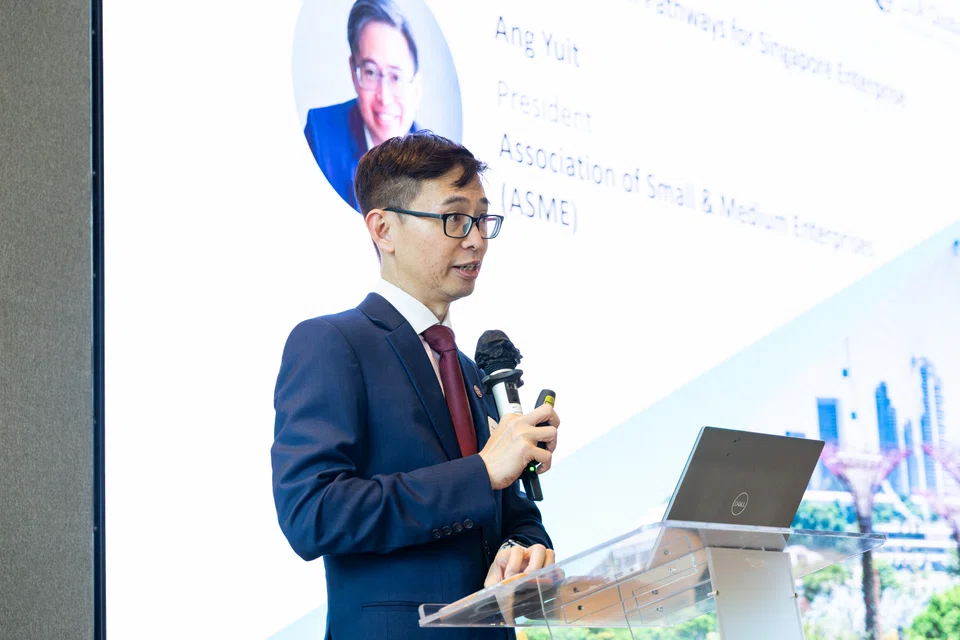
[SINGAPORE] Small businesses in Singapore can look to Asean for more growth opportunities, given domestic constraints such as a small local market and rising costs, Association of Small and Medium Enterprises president Ang Yuit said on Tuesday (Sep 29).
He noted that “the operating environment has become increasingly difficult” for small and medium-sized enterprises (SMEs) in Singapore, which he said must contend with high local staff and rental costs, on top of global energy prices and supply chain shocks.
Fingering the emergence of a “two-speed economy” with unequal outlooks for different types of companies, Ang said that larger firms may benefit from trade tensions or technology opportunities, “but many of the smaller and micro-businesses actually see a reversal”.
“Competition for customers and talent is very intense,” he commented, adding that local SMEs are also increasingly competing with international companies in the Singapore market.
But he also noted that Singapore businesses still have access to opportunities in South-east Asia, naming Vietnam, Indonesia and Malaysia as growing markets for expansion.
He further highlighted the newly set-up Johor-Singapore Special Economic Zone as a location that “may actually provide a more integrated operating model” for Singapore-based companies, based on Johor’s proximity, similar legal framework and lower manpower costs.
Remarking that internationalisation could bring down business costs, grant access to new capabilities and supply chains, and allow for greater market diversification, Ang said: “Looking overseas can really provide access to new customers, revenue streams, talent.”
He was speaking at an event by professional services firm CLA Southeast Asia, which was known as Nexia TS before joining the CLA Global network as CLA Global TS in 2022.
The firm’s latest rebranding reflects its “commitment to helping businesses navigate opportunities across South-east Asia, China and beyond” as part of its regional strategic focus, said group CEO and chief innovation officer Henry Tan in a statement.


Separately, CLA Southeast Asia inked a memorandum of understanding on Tuesday to launch a regional initiative for artificial intelligence and workforce transformation.
Aimed at boosting capabilities in the accounting, business advisory and other professional services industries, the new CLA Artificial Intelligence Centre of Excellence for Southeast Asia was set up in partnership with the Institute of Singapore Chartered Accountants, industry body AI Robotics and Cybersecurity Singapore, and several institutes of higher learning.
“Through collaboration with industry leaders, professional bodies, educators and technology partners, we aim to accelerate AI adoption, strengthen capabilities across the profession and create lasting value for businesses and communities across the region,” said Tan.
Decoding Asia newsletter: your guide to navigating Asia in a new global order. Sign up here to get Decoding Asia newsletter. Delivered to your inbox. Free.
Share with us your feedback on BT's products and services

