



South-east Asia’s push to keep seniors working faces work-health mismatch
A study finds that policy gaps in Asean leave healthy seniors without jobs, and unwell ones still working

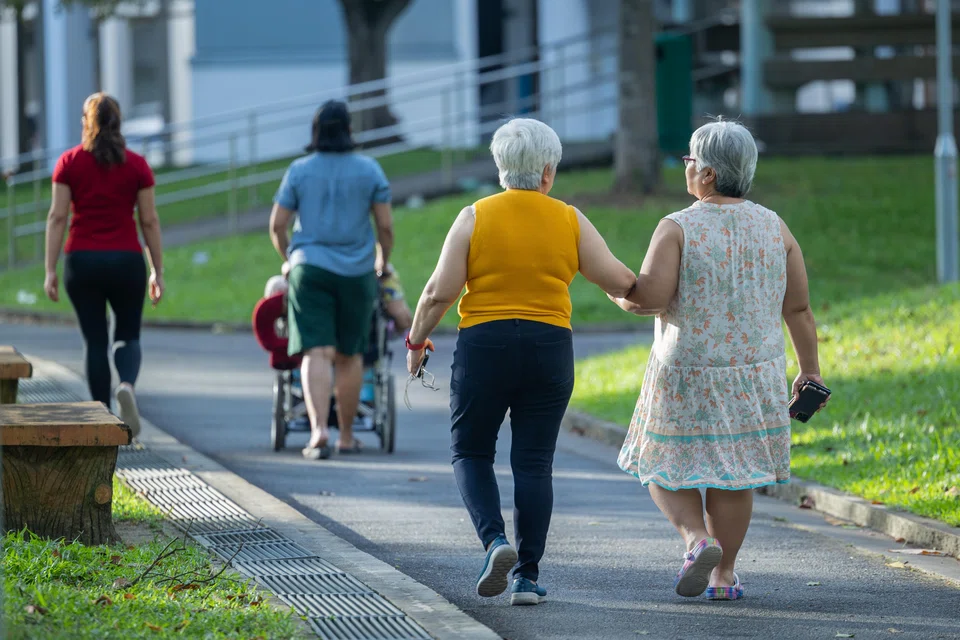
[KUALA LUMPUR] South-east Asia’s drive to keep older citizens in the workforce faces a mismatch: Healthy seniors are finding themselves out of work, while those in poor health cannot afford to retire, research by the Economic Research Institute for Asean and East Asia (ERIA) has found.
Other speakers at the Silver Economy Forum in Kuala Lumpur, also noting this imbalance, said it casts a spotlight on the difficulty of translating longer lifespans into economic gains. They added that countries in the region are confronting gaps in healthcare, retirement protection and support for older workers.
Liem Nguyen, ERIA’s programme manager for social welfare, said its longitudinal studies on ageing and health in the Philippines and Vietnam found that roughly 30 to 50 per cent of older people were still working. Among this group, about a third wanted to continue working until they no longer had the energy.
But willingness and ability to work are not always aligned. The research identified older people with no functional limitations who were not working, alongside those in poor health who still had to work, which points to gaps in employment opportunities and financial security.
Capturing the silver dividend therefore requires attention to employment as well as older people’s savings and spending, Nguyen said.
The issue goes well beyond healthcare, because Asean nations typically have large informal workforces that complicate policy efforts.

And add to that the stark differences in wealth and readiness for a greying society among the Asean nations.
Supporting longer careers demands coordinated action in policies that span health, labour and social protection, he added.
Nguyen pointed to Japan’s longer experience in preparing for ageing, including long-term care insurance and support for older workers.
SEE ALSO






ERIA is also studying the financial sustainability of integrated care for older people under a project endorsed by Asean member states.
The care economy opportunities
Perak’s Sultan Nazrin Muizzuddin Shah, the guest of honour at the Silver Economy Forum, said in his opening address that addressing these gaps would create jobs and drive growth.
Citing analysis referenced in Malaysia’s Care Strategic Framework, he said every ringgit invested in care could generate RM7 in wider economic returns through gains in growth, employment and income.
“We must never treat age and dependency as synonymous. They are not,” he said.
The ruler urged governments to connect housing, healthcare, financial security and technology, and to help older people remain independent while beefing up support for them, which will need to increase as their needs change.
Asean’s rapidly ageing population leaves less time to prepare, but also offers an opportunity to design systems suited to longer lives, drawing on traditions of family solidarity and community responsibility, he said.
“Healthy ageing cannot become a commodity available only to those who can afford it,” he added.
Apac’s growing role in medicine
For businesses, the demographic shift is expanding demand for healthcare while strengthening the role of the Asia-Pacific in developing treatments.
Simon Rosof, head of Bayer’s pharmaceuticals division in the Asia-Pacific, cited scientific advances in China and South Korea and partnerships in Singapore and Japan that are working towards this end.
The Asia-Pacific accounted for more than a quarter (about 26 per cent) of Bayer’s pharmaceutical sales in the first nine months of 2026.
German-based Bayer’s third-quarter revenue rose 4.1 per cent to 10.05 billion euros (US$11.2 billion), driven by stronger pharmaceuticals sales, which climbed 8 per cent to 4.68 billion euros.
The company’s Ebitda (earnings before interest, taxes, depreciation and amortisation) before special items rose 6.9 per cent to 1.62 billion euros.
Its net loss narrowed to 672 million euros from 963 million euros in the year before.
Separately, Rosof said the Asia-Pacific contributed to a quarter of the participants in Bayer’s global clinical trials, from early-stage research through Phase III programmes.
In an interview with The Business Times, he said Malaysia and Singapore were important to Bayer’s regional business, citing their scientific capabilities, established healthcare systems and predictable regulatory processes.
Bayer’s priorities include earlier screening, diagnosis and treatment, widening access to medicines for heart and kidney disease, cancer, retinal conditions and other health challenges.
AI for faster drug development
Bayer is also turning to artificial intelligence to bring new treatments to patients sooner; it aims to shorten development timelines by about 30 per cent.
Rosof said developing a medicine typically takes 12 to 15 years and more than US$2 billion, and that about 90 per cent of potential compounds fail during clinical trials.
Bayer’s gene therapy company AskBio, for instance, used AI to screen 98 million literature records and narrow down potential early-research targets to just five prioritised pipeline opportunities within 90 days.
Screening a 10th as many targets would ordinarily have taken about a year, he said.
“Saving that kind of time can help us, you know, discover new drugs faster and get them into testing,” he said.
Decoding Asia newsletter: your guide to navigating Asia in a new global order. Sign up here to get Decoding Asia newsletter. Delivered to your inbox. Free.
Copyright SPH Media. All rights reserved.
TRENDING NOW

Higher rates, weaker spending: Is the Philippines entering stagflation?

Protect people, not prices: How Asean+3 can build resilience to energy shocks

Cabin fever: Airlines are rushing to refurbish plane interiors, but will their bets pay off?

DBS, OCBC or UOB? Investors urged to be selective as Q3 reveals widening performance gap

