



South-east Asia’s top EV startups draw US$622 million in funding since 2016: report
Singapore accounts for more than 60% of the total capital raised by the 16-company cohort
SOUTH-EAST Asia’s leading electric-vehicle (EV) startups have raised a combined US$622 million in disclosed equity funding since 2016, with Singapore emerging as the region’s main centre for both companies and capital.
The figure covers 16 startups founded in 2016 or later across Singapore, Indonesia, Vietnam and Thailand, indicated a report released on Monday (Aug 24) by Tracxn, a data intelligence platform for private market research.
The ranking includes companies that have raised at least US$5 million in cumulative equity funding and spans electric motorcycles, commercial and marine vehicles, battery services, charging infrastructure and mobility platforms.
Tracxn described South-east Asia as a “dynamic hub for EV innovation”, supported by urbanisation, government EV programmes, rising adoption and a growing regional ecosystem.
Globally, 843 firms in this sector have raised US$113.3 billion in all-time funding, with Asia accounting for 271 startups and US$43.7 billion, according to the data platform.
Dominating the list
Eight of the 16 South-east Asian companies are based in Singapore, compared with four in Indonesia and two each in Vietnam and Thailand.
Its lead is even larger by funding. Adding the company-level figures in Tracxn’s ranking shows that Singapore-based startups have raised about US$387 million, equivalent to roughly 62 per cent of the total.
Indonesia follows with US$165 million, Vietnam with US$56 million and Thailand with US$14 million.
Capital is also concentrated among a small number of companies.
SEE ALSO









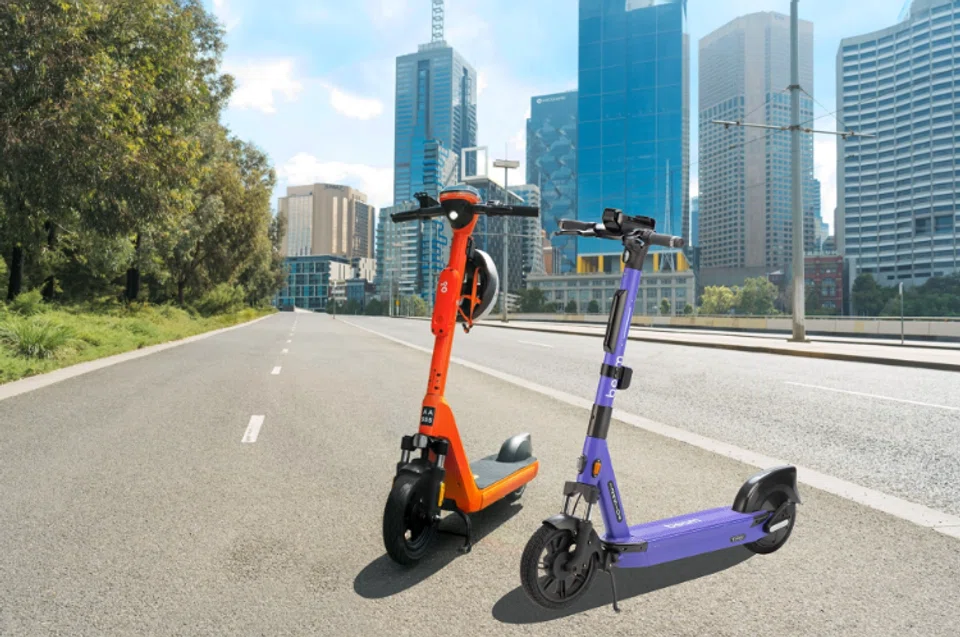
Singapore-based Beam Mobility tops the list with US$135 million, followed by commercial-EV company SingAuto with US$95 million, and Neuron Mobility with US$78 million.
Together, the three Singapore startups account for US$308 million, or just under half of all funding in the cohort.
In Sep 2025, Beam Mobility officially completed its merger with Neuron Mobility to form Neuron Mobility Holdings.
Vietnam’s Dat Bike, based in Da Nang, ranks fourth with US$51 million, ahead of Indonesia’s Alva with US$50 million and Charged with US$48 million. Hanoi-based Selex Motors, Vietnam’s other entry, has raised US$5 million.
Electric two-wheelers lead
Electric two-wheelers make up the biggest cluster by company count, reflecting the importance of motorcycles across South-east Asian transport.
Dat Bike, Alva, Charged, Maka Motors, ION Mobility, Scorpio Electric, Sleek and Selex all operate in the segment, while several pair vehicle manufacturing with battery services.
The funding mix shows investors are also betting on the infrastructure around electrification.
Beam and Neuron operate mobility-as-a-service models and have raised a combined US$213 million. Indonesia’s Swap and Singapore’s Oyika focus on battery-as-a-service, while Singapore’s Charge+ and Thailand’s Haup target charging infrastructure.
The investor base is also broad. Peak XV Partners, Jungle Ventures, GSR Ventures, TVS Motor and Horizons Ventures are among the institutional and strategic investors backing the companies in the cohort.
Other investors named in the ranking include Affirma Capital, Hana Ventures, Square Peg, AC Ventures, East Ventures, Qiming Venture Partners and ADB Ventures.
Despite the capital raised, the sector remains in an early stage. Eight of the 16 companies are at Seed or Series A.
Tracxn added that the profile reflects “a young ecosystem shaping the next generation of mobility”. THE BUSINESS TIMES
Decoding Asia newsletter: your guide to navigating Asia in a new global order. Sign up here to get Decoding Asia newsletter. Delivered to your inbox. Free.
Share with us your feedback on BT's products and services
TRENDING NOW

Government to bring forward raising of retirement age, give employers more financial support to create flexi-load jobs

If Europe goes to war, the fallout will be felt in East Asia

Indonesia stocks suffer worst plunge in nearly 30 years as MSCI proposes standalone status

Vietnam’s northern provinces, not Hanoi or Ho Chi Minh City, are powering near 10% GDP growth

