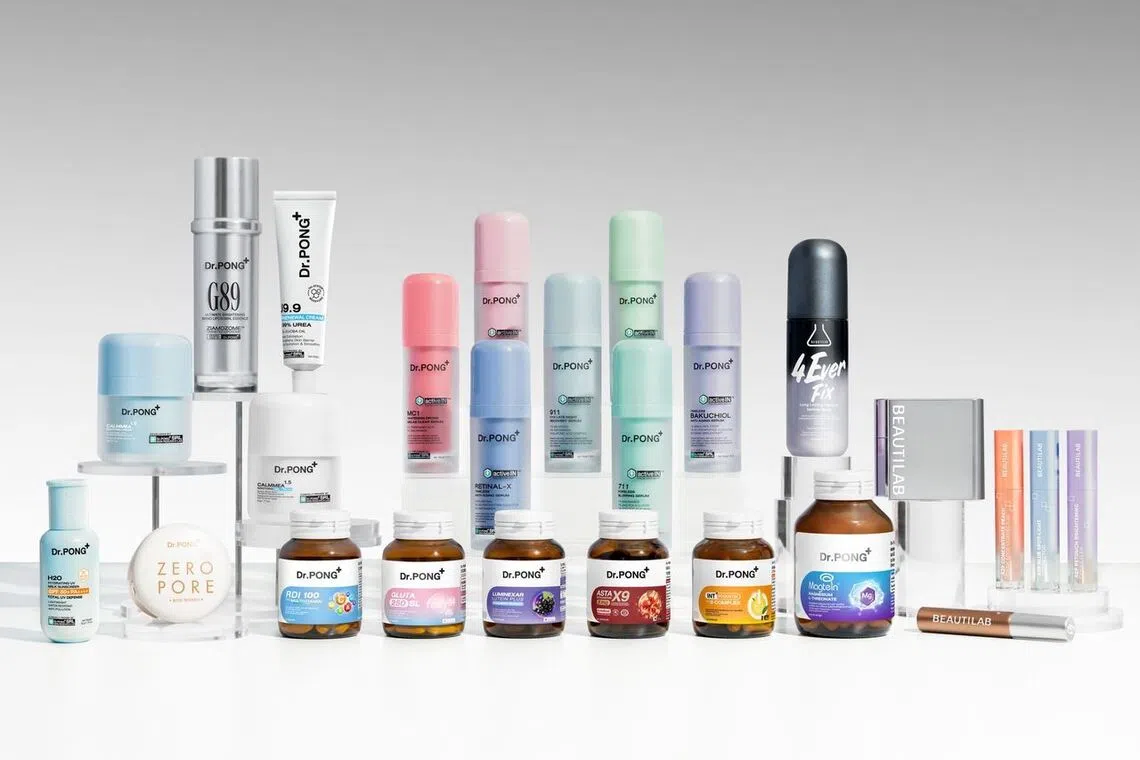
Thai brand Dr Pong takes T-beauty ambitions to Singapore as part of South-east Asia push
Also in the works: opening of its first Vietnam retail outlet; entry into Indonesia, the Philippines


[SINGAPORE] Thai skincare brand Dr Pong is making its Singapore debut as part of a wider South-east Asian push, buoyed by “exponential growth” in Vietnam, where it plans to open its first physical store by the end of the year.
The regional roll-out will also see entries into Indonesia and the Philippines, according to its top executive.
Founder and CEO Yuvapong Suthinand told The Business Times in an exclusive interview that the beauty brand set up a newly established subsidiary in Singapore in September.
The regional expansion comes as T-beauty takes the market by storm, as Thai brands challenge the dominant South Korean, Japanese and American players by tailoring their products to tropical markets and riding the kingdom’s entertainment boom.
Dr Pong is one of two health and beauty brands under Thailand-based First Class Innovation, founded in 2019. The Dr Pong brand spans skincare, bodycare, dietary supplements and colour cosmetics, while its sister brand Beautilab targets younger consumers with trend-driven cosmetics.
Singapore a strategic base
For its Singapore debut, Dr Pong is banking on a tried-and-tested model honed in Thailand and Vietnam, using e-commerce platforms such as Shopee Mall and TikTok Shop as its beachhead before making the leap into bricks-and-mortar retail.
By conservative estimates, Yuvapong expects its Singapore operations to bring in some US$30 million in revenue within five years and foresees the city-state to account for no more than 10 per cent of total sales.
Asked about a timeline for a physical storefront in Singapore, he said the brand must first break even in e-commerce, allowing it to gauge local product demand.
This roll-out will serve as a test case for replicating its headquarters-led expansion model overseas, he added.
When Dr Pong opened its flagship store in Bangkok in 2021, the business broke even in an hour and achieved payback in two weeks, the CEO noted. Its Thailand stores now typically have a payback period of around seven to eight months.
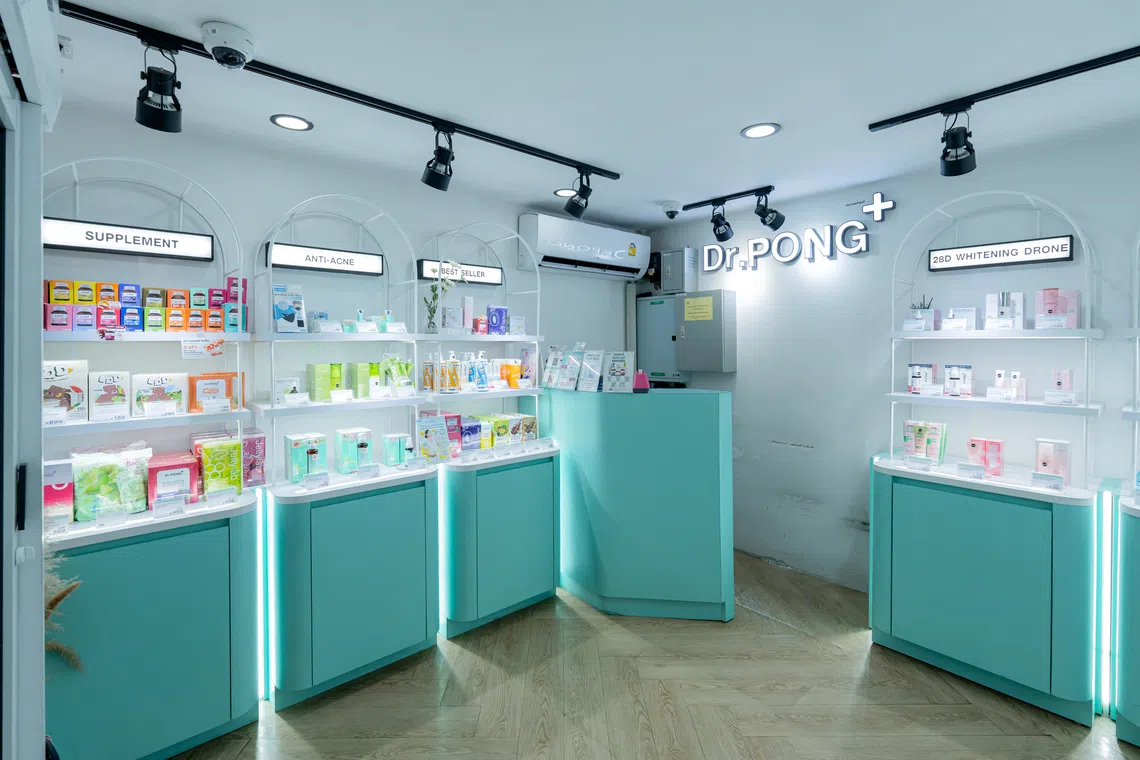
Dr. Pong and sister brand Beautilab currently have 44 stores across Thailand as at the second quarter, with over half located in Bangkok.
Vietnam calling
For its upcoming retail store in Ho Chi Minh City, Dr Pong is working with its existing local distributor in Vietnam. Having entered the market online in 2023, Vietnam now generates around 5 per cent of total revenue.
Describing the brand’s growth there as “exponential”, Yuvapong expects its Vietnamese business to match – or even surpass – its Thailand operations in five to six years, despite the market currently having a smaller gross merchandise value than its neighbour.
Expansions into Indonesia and the Philippines – via a hybrid-distribution model involving local partners – are also under way, pending product licensing approvals, said the 34-year-old dermatologist.
The company is also on the hunt for a suitable local partner in Malaysia, he added.
The science behind its success
Several years of double-digit growth, including consecutive years of triple-digit expansion, buoyed First Class Innovation’s revenue to 3.2 billion baht (US$94.9 million) in 2025, according to public business records.
This was up from revenue of around US$139,000 in 2019, Yuvapong told BT.
He expects this year’s revenue to climb roughly 70 per cent year on year to US$162 million.
The company’s net profit in 2025 stood at 308.5 million baht, compared with 16.5 million baht in 2021. The 2025 figure represented year-on-year growth of 71.1 per cent.
Yuvapong estimates that, by the year end, it will have around 700 employees – up from 573 in Q2. It is a sharp contrast to the brand’s early days, when he relied on “free labour” from his mother and siblings to pack and dispatch orders.
The CEO attributes the brand’s success to channel disruption. Lower commissions on online platforms allowed the brand room to invest in R&D and clinical testing rather than distribution margins.
As a result, its cost of goods sold makes up 35 to 40 per cent of retail selling price, compared with an estimated 10 per cent at rival companies. “We try to disrupt the market by having a very (high) value-to-cost ratio,” he said.
Dr Pong’s R&D efforts are led by subsidiary Skin Research Lab.
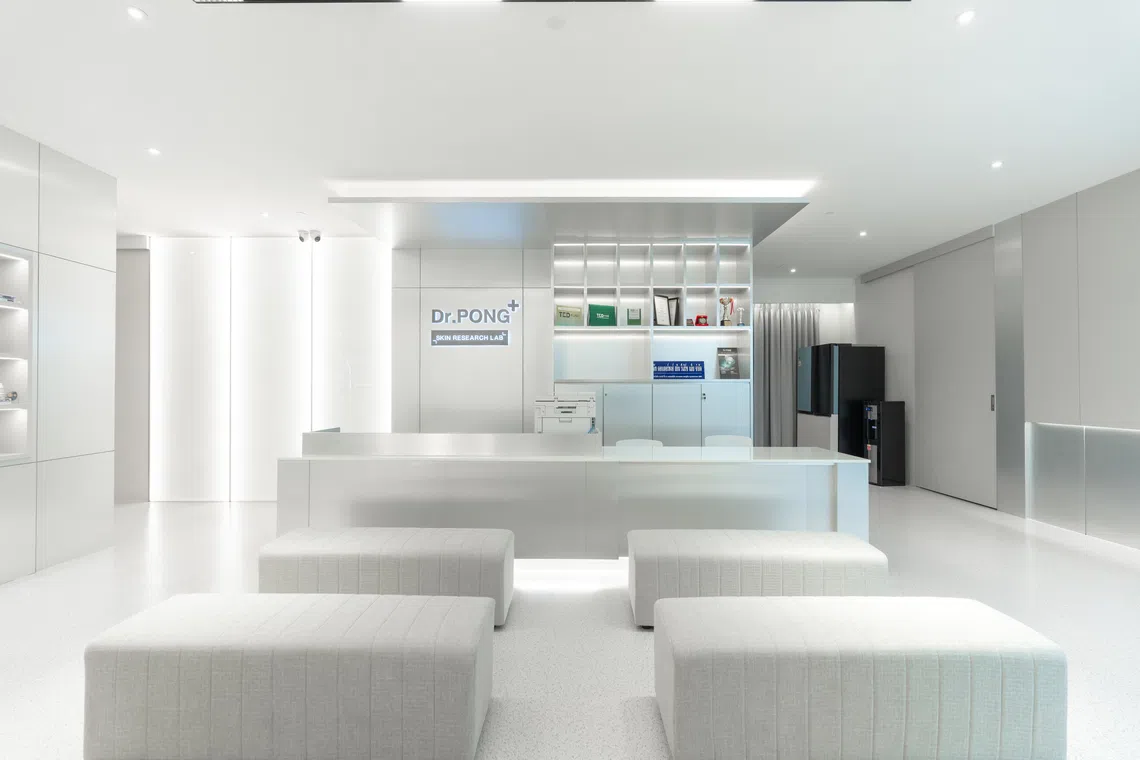
Facing clinical testing costs of up to US$10,000 per outsourced product test, the company eventually founded its own research lab and analytical testing firm.
Last year, it acquired Nabsolute, a Bangkok-based biotech spinoff from the Faculty of Pharmaceutical Sciences at Chulalongkorn University.
The group is developing a new research centre at Thailand Science Park, the kingdom’s first and largest fully integrated R&D hub. It has invested more than US$3 million in the facility, Yuvapong told BT.
A new facility under construction in Pathum Thani, slated for completion by the year end, will handle ingredient manufacturing, production and tech trials.
T-beauty turns heads
Thai brands have been giving the big boys in the heavily saturated beauty market a run for their money.
About two-fifths of Thailand’s beauty and skincare production is exported, according to data from the commerce ministry.
The Thai cosmetics market is forecast to exceed US$10 billion by 2030, growing at a consistent annual rate of 5 per cent since 2022, said the circular.
Cost competitiveness is a major draw, Yuvapong noted, alongside the pull of Thailand’s booming “boys’ love” drama industry, which has helped popularise Thai beauty brands.