



Thai finance minister sees 2.5% growth next year on investment-led policies
He emphasises the need to ‘reduce reliance on export sectors’
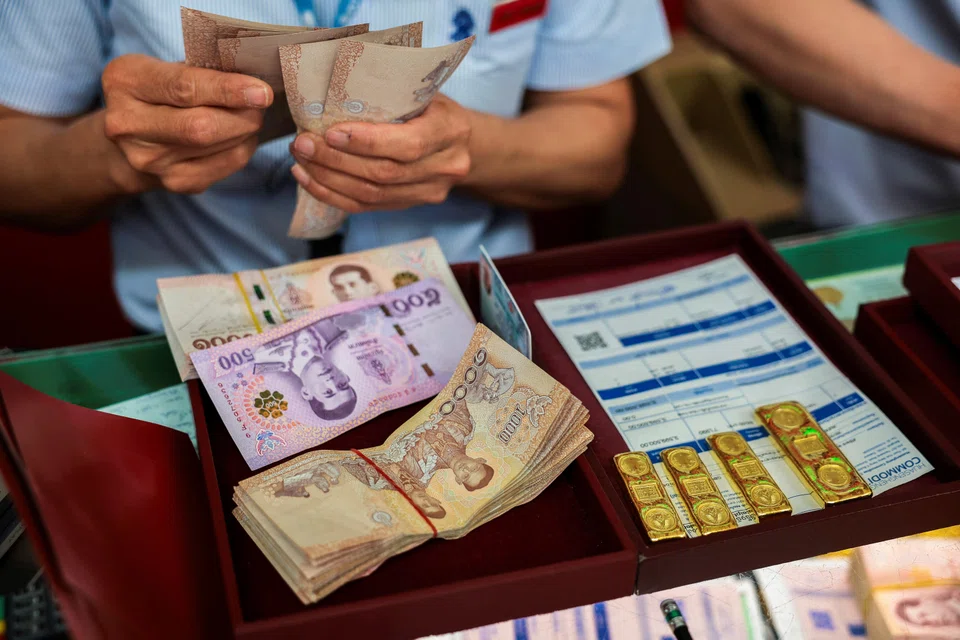
[BANGKOK] Thailand’s economy is expected to retain its momentum and grow by 2.5 per cent in 2027, Finance Minister Ekniti Nitithanprapas said on Friday (Sep 25).
It could reach 3 per cent expansion within the next three years, he added, as the government pushes for new investments into key sectors.
He told Reuters he was confident of achieving 2.5 per cent economic expansion in 2027, in what was his first growth projection for next year.
Top of the government’s agenda, he noted, was to court more foreign and domestic investment, including in niche semiconductor segments.
“In my opinion, growth might be likely to be higher than what maybe the Bank of Thailand or other people forecasted,” he said, two weeks out from the annual meetings of the International Monetary Fund and World Bank, taking place in Bangkok.
“We need to keep pushing domestic investment to grow further and reduce reliance on export sectors.”
Last week, assistant central bank governor Don Nakornthab told Reuters the bank was maintaining its growth forecasts of 2.3 per cent for this year and 1.8 per cent for 2027.
He put potential growth at 2.7 per cent and said it could take four to five years to return to that rate.
Inflation and baht volatility
Southeast Asia’s second-largest economy expanded 1.9 per cent year on year in the second quarter, down sharply from 2.8 per cent growth in the previous quarter.

The economy, which grew 2.4 per cent in 2025, has been struggling with weak productivity, subdued demand, high household debt and low investment.
Ekniti said he was not concerned about inflation, which should stay within 3 per cent this year and the next.
Meanwhile, the weaker baht might be better for the Thai economy, but it should not be volatile, he said.
The baht has weakened by 5.6 per cent against the US dollar so far this year.
Headline inflation accelerated to 2.53 per cent in August, but stayed within the central bank’s 1 to 3 per cent target range.
The government’s consumer subsidy scheme, which has been in operation for four months, would account for 0.4 to 0.5 per cent of gross domestic product growth in 2026, Ekniti said.
The scheme was extended until November this week, with 43 billion baht (US$1.3 billion) allocated, part of a broader 400 billion baht borrowing programme.
“We target to give subsidies to help people affected by the rising cost of living. So that’s why we expect it to be short-term,” said Ekniti, who is also deputy prime minister.
“We plan to lower it down, and we’re trying to push investments going forward.”
Niche semiconductors
Thailand is targeting US$80 billion in semiconductor investment by 2050 and more than 230,000 new jobs under a national strategy announced on Thursday, which aims to build a fully integrated domestic-chip ecosystem and generate US$150 billion in annual revenue.
“We are quite good in photonics. We are quite good in sensing and power units. So, we aim to move in that direction,” he said.
“We will provide lots of incentives and work with (the) private sector so that we can bring in more investment.”
Ekniti said the government was also working with the central bank to try to boost credit access to small businesses.
The public debt-to-GDP ratio would rise to 68 to 69 per cent this year, he added, but still be under the 70 per cent ceiling.
A positive factor for Thailand was its political stability, he said.
“Never before have we had good coalition parties with only two parties,” he noted. “That could provide stability for the government to continue credible policies.” REUTERS
Decoding Asia newsletter: your guide to navigating Asia in a new global order. Sign up here to get Decoding Asia newsletter. Delivered to your inbox. Free.
Share with us your feedback on BT's products and services
TRENDING NOW

Once staunchly pro-China, Malaysian Chinese businesses are now distancing themselves from Beijing

Looking beyond looming CEO succession, should UOB potentially pursue a transformative merger?

Could stablecoins be the future of money?

Grab CEO’s wife Chloe Tong on life with Anthony Tan and finding her purpose

