Thai inflation accelerates again with floods adding price risk
Despite the pickup, inflation remains within the Bank of Thailand’s 1% to 3% target range
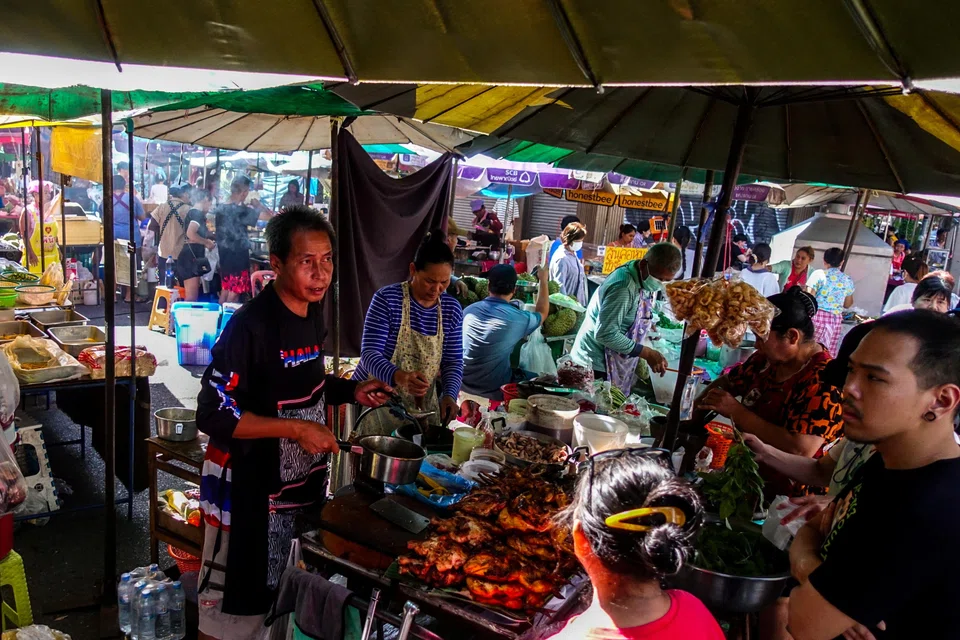
THAILAND’S inflation accelerated for a second straight month in September, moving closer to the central bank’s upper limit as severe flooding adds to the risk of higher food prices.
The consumer price index rose 2.82 per cent in September from a year earlier, accelerating from 2.53 per cent in August, Commerce Ministry data showed on Tuesday (Oct 6).
Still, the reading was below the 3.1 per cent median estimate in a Bloomberg survey of economists.
Despite the pickup, inflation remains within the Bank of Thailand’s 1 to 3 per cent target range, but brings it closer to the upper bound after a prolonged period of subdued price pressures.
Higher oil and processed food prices drove much of the acceleration, reflecting elevated raw material costs and the conflict in the Middle East, according to Nantapong Chiralerspong, director general of the Commerce Ministry’s Trade Policy and Strategy Office.
Prices of eggs, chicken, vegetables and fruit also increased as changing weather conditions affected supplies.
Food and energy together make up the largest share of Thailand’s consumer price basket, making households particularly sensitive to swings in oil prices and disruptions to agricultural supplies.
Those pressures are unlikely to fade quickly.
The ministry expects inflation to continue accelerating in the fourth quarter as elevated oil prices feed into transportation and processed food costs.




Recent flooding is expected to add about 0.1 percentage point to inflation by disrupting fresh food supplies.
The ministry now expects full-year inflation of 1.8 to 2.2 per cent, compared with its previous range of 1.5 to 2.5 per cent.
Thailand is facing similar price pressures to other energy-importing economies in South-east Asia.
Inflation in the Philippines accelerated for the first time in five months in September and remained above its central bank’s 3 per cent target after the Middle East conflict drove up global oil prices.
For Thailand, floods are emerging as an additional risk.
Severe inundation in Bangkok and dozens of provinces has disrupted transportation and businesses, while further heavy rain could damage crops and complicate food distribution, putting upward pressure on prices.
The acceleration is unlikely to materially change the Bank of Thailand’s policy stance for now.
Officials have signalled they are prepared to look through temporary price spikes while maintaining support for an economy expected to grow only about 2 to 2.5 per cent in 2026.
The central bank kept its benchmark rate at 1 per cent for a third consecutive meeting in August. Its next decision is scheduled for Oct 28.
On a monthly basis, consumer prices increased 0.25 per cent in September, compared with 0.56 per cent in August.
Core inflation, which strips out volatile food and energy prices, rose 1.5 per cent from a year earlier, up from 1.44 per cent. BLOOMBERG
Decoding Asia newsletter: your guide to navigating Asia in a new global order. Sign up here to get Decoding Asia newsletter. Delivered to your inbox. Free.
Share with us your feedback on BT's products and services