



Thailand mulls higher public debt for US$30 billion borrowing
Lifting the debt cap by 5 percentage points will open up room for about one trillion baht of fresh borrowing
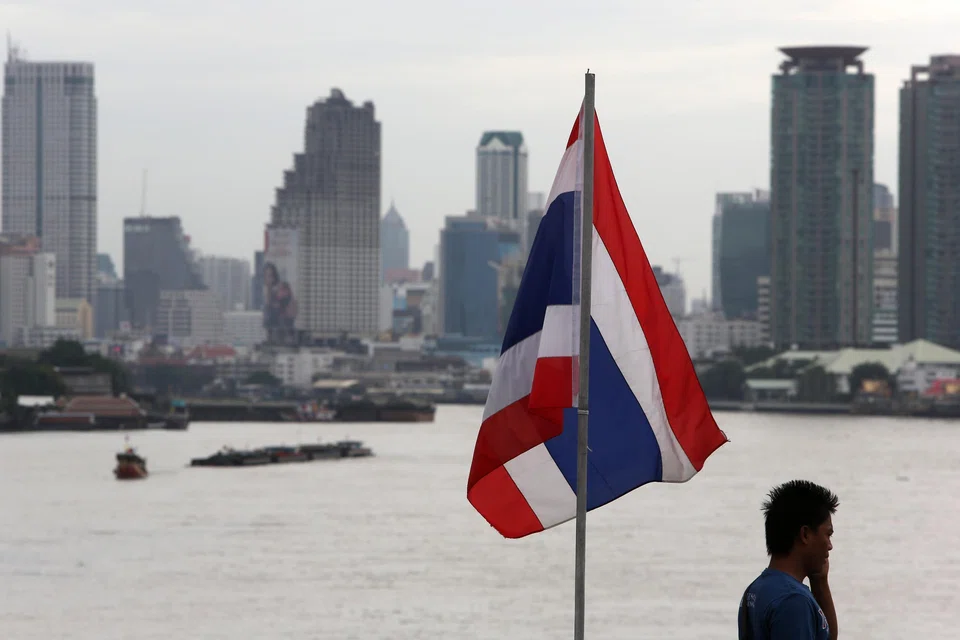
[BANGKOK] Thailand’s government may lift a voluntary ceiling on public debt to open room for additional borrowing of about US$30 billion to fund measures to shore up an economy hit by global energy shocks, said people familiar with the matter.
Officials from the finance ministry and Prime Minister Anutin Charnvirakul’s office are discussing raising the ceiling to 75 per cent of gross domestic product from the current 70 per cent, said the people, who requested anonymity ahead of an official announcement.
A higher debt cap is among several options under discussion, and a decision will need the approval of the fiscal and monetary policy committee headed by Anutin, they said.
Lifting the debt cap by five percentage points will open up room for about one trillion baht (S$39.6 billion) of fresh borrowing, Thai-language Krungthep Turakij newspaper reported earlier. How the new funds would be raised and spent has not been finalised, the people said.
Government spokesperson Rachada Dhnadirek declined to comment on the increase in the public debt ceiling, saying Anutin’s administration “will explore all options to ease the hardship of the public in this situation” and “carefully consider the sources of funding”.
The government was preparing to issue an emergency decree to borrow as much as 500 billion baht, Deputy Prime Minister Pakorn Nilprapunt said on Monday (Apr 20).
The baht held losses against the US dollar, while the yield on benchmark 10-year government bonds rose three basis points.
Finance Minister Ekniti Nitithanprapas said last week that the government was open to increasing the debt limit “if necessary”, provided the additional spending is channelled into investments that can help bolster the nation’s fiscal resilience.
Anutin’s administration has already unveiled measures to alleviate the impact of higher energy prices, including cash handouts to low-income groups, subsidies for the transport sector, and loans at lower interest rates for small and medium-sized businesses.
SEE ALSO




Seeking fiscal measures
Thailand, a net energy importer, is under pressure to find fiscal space to limit the impact of the Iran war on its economy, as higher energy costs threaten to stoke inflation and weaken growth. The nation last raised the debt cap by 10 points in 2021, to 70 per cent, to fund pandemic-era stimulus.
The public debt stood at 12.6 trillion baht, or 66.1 per cent of GDP, at the end of February, official data shows.
Any impact on the broader bond market from additional supply may be limited to the near term, said Poon Panichpibool, a strategist at Krung Thai Bank.
The higher debt ceiling “may keep market participants, especially domestic investors, from rushing back into long-term bonds”, Poon said.
“With uncertainty in the Middle East still high, long-term bond yields could edge up. That said, any increase in yields is likely to be limited, as markets still expect tensions in the Middle East to gradually ease by the second quarter.”
Clouded outlook
The energy shock is already clouding Thailand’s outlook, prompting economists to pare back growth forecasts as higher fuel costs weigh on consumption and disrupt exports and tourism – two key pillars of the economy.
On Monday, Anutin urged fiscal prudence in dealing with the volatile global situation, especially the conflict in the Middle East.
The government should review its spending plans and scale back programmes that no longer align with current priorities, he told officials as they convened to prepare Budget allocations for the fiscal year starting Oct 1.
The government has set a spending outlay of 3.79 trillion baht for next year, up 0.2 per cent from the current fiscal year.
Bank of Thailand (BOT) governor Vitai Ratanakorn has pledged to hold interest rate at the current level of 1 per cent “as long as possible” to support the economy even though inflation was set to accelerate in the coming months. He has said growth could weaken to as low as 1.3 per cent if the Middle East conflict lasts until June.
Headline inflation, which has been negative for a year, is set to return to the BOT’s target range of 1 to 3 per cent this year, earlier than its previous projection of the second half of 2027.
While price pressures are already emerging following the government’s decision to raise retail diesel prices sharply in recent weeks, the central bank has said that it will focus on ensuring macroeconomic and financial stability. BLOOMBERG
Decoding Asia newsletter: your guide to navigating Asia in a new global order. Sign up here to get Decoding Asia newsletter. Delivered to your inbox. Free.
Share with us your feedback on BT's products and services
TRENDING NOW

Once staunchly pro-China, Malaysian Chinese businesses are now distancing themselves from Beijing

Cliff Tan has 7 million followers and a 4-month waitlist. Why won’t he expand his business?

Could stablecoins be the future of money?

Grab CEO’s wife Chloe Tong on life with Anthony Tan and finding her purpose

