



US chip controls to hit Asean data centre boom; lenders, China AI players exposed: Natixis
The amount of regional capacity rented by customers linked to Beijing is a concern

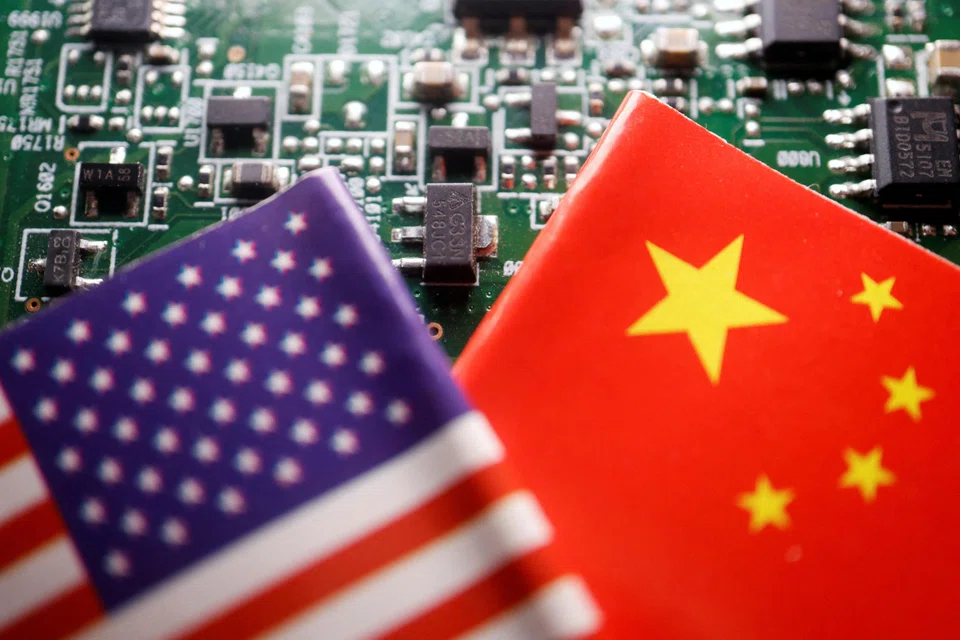
[SINGAPORE] New US export rules on chip shipments could deal a body blow to Asean’s data centre boom and China’s ability to lease overseas data centres, Natixis said in a report published on Monday (Nov 23).
The interim rule requires a US licence for advanced artificial intelligence chips shipped to Singapore, Malaysia, Thailand, Indonesia and Brazil unless the buyer is headquartered in the US.
A licence is also needed for a data centre to serve China-headquartered firms, which Natixis believes would cover almost any AI data centre given the low threshold.
The investment firm estimates that 32 per cent of live capacity in Asean-4 – comprising Singapore, Malaysia, Thailand and Indonesia – is China-linked, in a base case using known ownership and tenants.
Assuming that every unknown tenant is Chinese results in an upper bound of 63 per cent of total data centre capacity, though Natixis noted that the numbers are estimates, given a lack of public tenant data.
Malaysia and Thailand look most exposed, having more than 45 per cent of capacity linked to China. Singapore’s share is lower, at around 15 per cent.

Co-location model
The region’s exposure stems from how its data centres are built. Only 16 per cent of Asean’s data centres are self-built, against 48 per cent in the US.
The remaining 84 per cent in Asean, Natixis said, are under co-location, where businesses rent physical space to house their own servers, storage and networking equipment inside a shared third-party facility, owned by US private equity, regional conglomerates and China-linked platforms, and funded mainly by bank loans.
Earlier US rules restricted chip shipments to China but not renting chips abroad, leading Chinese firms to view South-east Asia as a key market to rent chips.



With the new policy in place, “accessing advanced chips domestically and renting overseas will both be more difficult” for China, Natixis said. “It is likely that chip design will also be limited by new export controls.”
Citing figures from the Institute of Progress, Natixis noted that computing power rented overseas is estimated at 23 per cent of China’s total in 2026 and could reach 32 per cent by 2027. South-east Asia hosts about two-thirds of that of China’s overseas rental demand, it added.
“The impact also reaches beyond Asean,” Natixis flagged, pointing to “deals in Japan under review and ByteDance’s data centres in Finland potentially in scope.”
Lenders impacted
Since 2023, US$48 billion has been raised through syndicated loans for Asean data centres.
“Asean banks are the largest known lenders, with 31 per cent of syndicated loans for data centres in the region, against 19 per cent for European and 12 per cent for Chinese banks,” Natixis said.
It added that while the rest could not be identified, “the split shows the region’s own banks are large lenders”.
Chinese banks’ exposure may come through loans to Chinese technology giants such as Alibaba, Tencent and ByteDance.
Natixis cited an example of 15 Chinese banks pledging US$18.9 billion of a Bytedance syndicated loan – representing 64 per cent of the total – for financing data centres in Asean.
These loans, Natixis said, rest on a “fast payback” model, leaving little room for error once debt is involved.
“For example, (data centre firm American Compute’s) cluster cost model finds that a B200 cluster funded mostly by debt must be rented out about 80 per cent of the time just to cover its monthly costs, so a licence delay or a lost Chinese tenant can quickly push it into loss,” it added.
Some lenders are also turning more cautious, Natixis said, citing the freezing of a US$480 million loan for Nvidia hardware used by ByteDance as lenders weighed the new rule.
Still, the market estimates that data centres represent just 3 to 5 per cent of loans even at Singapore’s three biggest banks, “so the risk is slower lending to the sector than a threat to the banks themselves”.
China-linked owners most exposed
However, it is owners who will feel the bigger impact of the US’ chip curbs.
“China-linked operators lose as their main tenants need licenses and the US exemption does not apply to them,” Natixis noted. For instance, Singapore-based Bridge and DayOne, which rank among the biggest operators, together hold 35 per cent of capacity. Both have links to China.
Although what makes an owner China-linked is unclear, Natixis said that “what ties (Bridge and DayOne) to China is mainly their customers, as ByteDance is reported to be the largest tenant of each”.
Meanwhile, US private equity owns four of the 10 largest operators and 38 per cent of their capacity. All four are weighing sales this year.
“Buyers are likely to pay less for those with Chinese anchor tenants,” Natixis said, pointing to the delay of DayOne’s initial public offering plan amid unfavourable market conditions.
US hyperscalers such as Google and AWS, on the other hand, are exempt from the five-country licence rules and are “likely to gain as tenants shift toward US firms”.
Natixis said it is unclear how quickly Chinese demand will leave Asean, and whether it can be replaced. Early indicators, it added, will show in:
- Graphics processing unit rental rates;
- Malaysia’s server imports;
- US licence approvals for Chinese tenants;
- Cancelled leases and projects tied to Chinese firms;
- New data centre approvals; and
- Whether US hyperscalers take up the space Chinese tenants leave.
Decoding Asia newsletter: your guide to navigating Asia in a new global order. Sign up here to get Decoding Asia newsletter. Delivered to your inbox. Free.
Copyright SPH Media. All rights reserved.
TRENDING NOW

As Indonesia picks new vice-president to succeed Gibran, investors see risks and opportunities

Seatrium to lay off 2% of its Singapore workforce

Singapore telco recovery at least 2 years away despite StarHub-M1 merger, say analysts
Why Singapore, Johor and Riau Islands should build a cross-border ecosystem for AI

