US probes Chinese factories in Vietnam, stoking new tariff fears
Sources say the inspections are adding to concerns the White House may soon find reasons to pile more levies on the South-east Asian nation
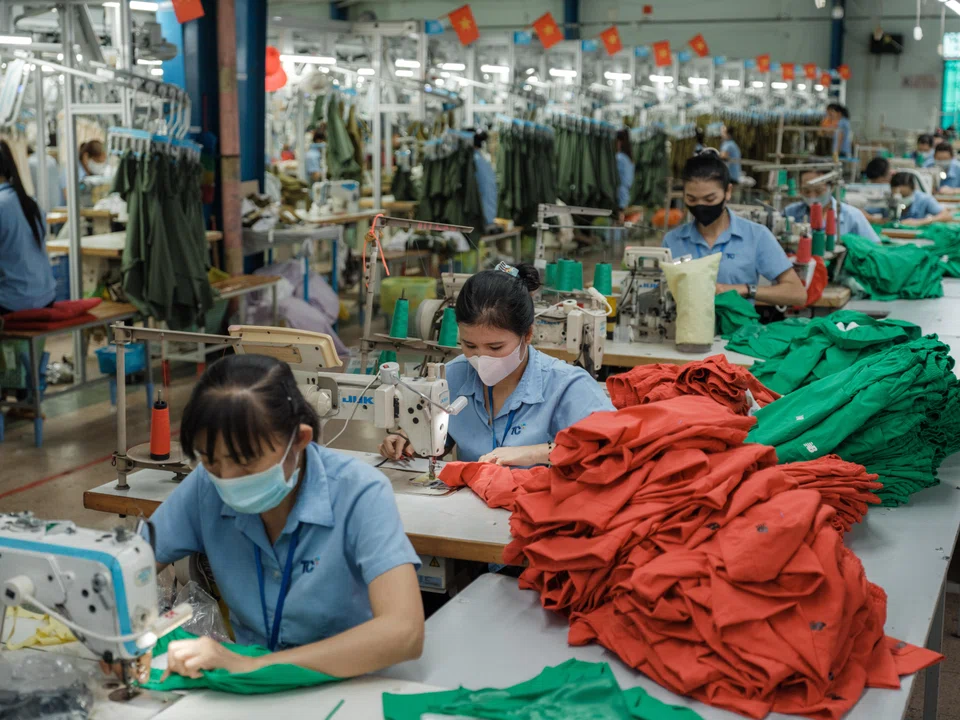
[HANOI] US customs officials have carried out spot inspections on China-linked factories in Vietnam, according to people familiar with the matter, adding to concerns the White House may soon find reasons to pile more tariffs on the South-east Asian nation.
Inspectors examined documents, raw material sources and production processes in a bid to determine how much value was added before exporting to the US.
They also looked at potential software intellectual property (IP) violations, said the people, who asked not to be identified as sensitive trade talks continue between the two countries.
While the inspections have raised concerns the US will widen its tariff regime against Vietnam, it has not yet provided any significant evidence of Chinese goods illicitly transiting through the country, the people said.
A US Customs and Border Protection spokesman said that the agency was not immediately able to comment.
As the US continues to press Vietnam on intellectual property, industrial overcapacity and trade fraud, President To Lam’s government has sought to show that it is cracking down on those issues across its economy, including a widely publicised seizure of 50,000 pairs of fake Nikes.
The two sides have been negotiating for months to finalise the trade framework agreement they reached in October 2025.
The current round of talks have been tensed and very difficult, the people said, because they cannot agree on transshipment and other non-tariff barriers.
The search for illicit Chinese goods – either completely unchanged and labelled Made in Vietnam or with little value-add – is at the heart of one of the main accusations levelled against Hanoi by Washington, as US President Donald Trump seeks to build a tariff wall around the US economy.
SEE ALSO

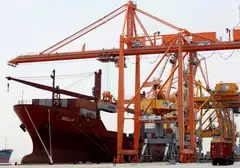
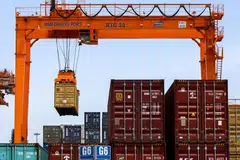
“There’s a pure illegal shipment where they send it to Vietnam and put on a Made-in-Vietnam sticker,” US Trade Representative Jamieson Greer said earlier in July, repeating the often-used accusation.
But that is unlikely to change Vietnam’s tariff fate.
Vietnam was among 60 economies hit with new US tariffs on Friday because the US said it had failed to do enough to prevent forced labour in their supply chains.
The decision does not “fully reflect the reality and Vietnam’s efforts in preventing, reducing, and eliminating forced labour, including banning the import of products made using forced labour”, Vietnam’s foreign ministry said on Saturday.
In response to the IP claims, Vietnam has toughened enforcement, which it outlined in a submission to the US Trade Representative after it was labelled a “priority foreign country” in an April report.
The 3,581-page document highlights nearly 20,000 infringement cases that authorities handled between 2021 and 2025.
Vietnam is also among countries under investigation for alleged excess manufacturing capacity, the only nation currently facing three so-called Section 301 actions by the US.
The investigations come as trade officials are still struggling to make headway on a final tariff deal, which Greer has said must go beyond just narrowing the US$178 billion trade gap.
The US is pressing Hanoi to cut non-tariff barriers, deepen cooperation on economic security and transshipment and strengthen protections for US intellectual property.
Moving from a general framework to a full-fledged agreement between Washington and Hanoi has proved challenging “precisely because of the high stakes for Vietnam”, said Laura Schwartz, senior Asia analyst at Verisk Maplecroft.
The transshipment issue is particularly difficult, she added, but the pressure to reach an agreement will rise as “findings from the investigations translate into implemented tariffs”.
In recent years, Vietnam has become a key manufacturing hub for some of the biggest US brands, as Trump’s first trade war with China pushed companies to diversify supply chains.
Nike produces more than half of its shoes in Vietnam, while Apple has migrated much of its non-iPhone production, particularly Airpods and laptops, to the country.
The Trump administration has consistently viewed large bilateral trade imbalances as evidence that trading relationships are unfair and require corrections.
For Vietnam, the issue has become particularly acute because its surplus with the US has surged. In the most recent US data for May, Vietnam overtook Taiwan to record the largest monthly deficit. BLOOMBERG
Decoding Asia newsletter: your guide to navigating Asia in a new global order. Sign up here to get Decoding Asia newsletter. Delivered to your inbox. Free.
Share with us your feedback on BT's products and services