Vietnam workers keenest on AI in South-east Asia; Singapore employees among most sceptical: survey
The city-state’s labour force doubts the tech’s productive capacity and is wary of its impact on job security

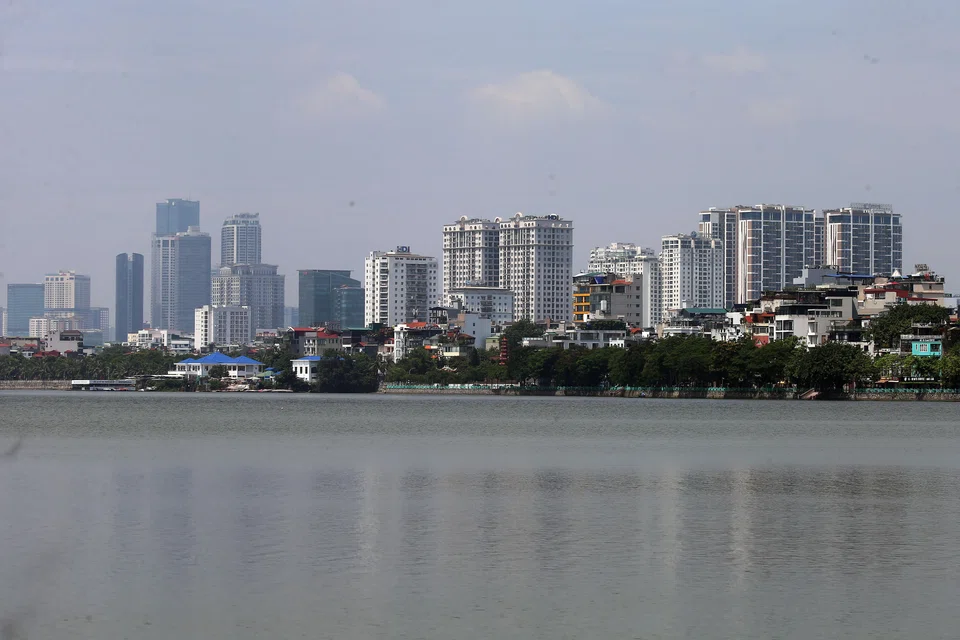
[SINGAPORE] Workers in Vietnam are among the world’s most frequent users of artificial intelligence, and the most optimistic in South-east Asia about the impact of AI on their jobs, a survey by multinational human resources service provider Automatic Data Processing (ADP) has found.
New data provided by ADP to The Business Times, meanwhile, indicates that Singapore workers are far more sceptical about the impact of AI on their daily productivity than their regional peers.
They are also the most wary in South-east Asia about the potential of AI to disrupt their job security.
The survey findings, which were released in May, came from a poll of more than 39,000 working adults in 36 markets worldwide; of the total, 13,136 respondents were from the Asia-Pacific.
Jessica Zhang, senior vice-president for the Asia-Pacific at ADP, said at a media briefing on Wednesday (Jun 17) that emerging markets in Asia are typically more willing to adopt AI technologies than more developed countries such as Australia and Singapore, which tend to be more prudent in their use of AI.
“When a lot of things are new (in emerging markets), you see people adapt to them faster,” she said.
“Workers in more mature markets like Singapore want to see proof that productivity is improving before confidence levels rise.”
In Singapore, just 15 per cent of workers strongly agreed that AI would have a positive effect on their job responsibilities in the coming year. This was the lowest level of optimism among five South-east Asian markets surveyed.
In Vietnam, 29 per cent of workers expressed high optimism, followed by Thailand and Indonesia (both at 23 per cent), and the Philippines, with 19 per cent.


“Adoption alone does not guarantee meaningful workplace impact in Singapore,” Zhang noted.
Globally, the survey found that workers using AI are four times more likely to feel less productive in their work compared to non-users, suggesting that frequent users feel as if they have achieved less through the use of AI in day-to-day tasks.
Zhang said that workers may need to identify the situations in which AI can drive productivity gains within workflows, and employers may need to set clearer performance expectations and invest more in training for AI-related skills.
However, respondents from Singapore appeared doubtful about their employers’ willingness to develop their workers; just 13 per cent said they “strongly agree” that their employer invests in the skills they need to advance their careers.
This was the lowest among the five South-east Asian markets surveyed, with the workers in Indonesia, the Philippines, Thailand and Vietnam coming in at between 21 and 25 per cent.
In terms of generative AI usage, Vietnam had the highest rate among the South-east Asian markets surveyed, with 36 per cent of workers saying they used such tools “nearly every day”.
The country’s usage rates stand among the highest in the world. It is second among the 36 markets surveyed, coming in behind only India, where 41 per cent of the workforce uses AI daily.
Conversely, just 8 per cent of Japan’s workers use such technologies every day, the lowest among all markets.
In South-east Asia, the Philippines had the lowest rate at 22 per cent, slightly below Singapore’s 23 per cent.
Job security
In South-east Asia, workers have increasingly raised concerns about job security as employers increasingly turn towards AI tools to perform tasks that were previously done manually.
Entire industries, such as that of business process outsourcing in the Philippines, face the threat of worker displacement by AI tools, even as governments step up efforts to safeguard worker interests as AI-driven growth accelerates.
Singapore’s national push to strongly integrate AI into its growth strategy has raised fears among its workforce, with ADP finding that only 15 per cent of Singaporean workers say they strongly agree that their jobs are safe from displacement.
This is the lowest in the region, with 24 per cent of Thailand’s workers expressing confidence in their job security, followed by 23 per cent in the Philippines, 20 per cent in Indonesia and 18 per cent in Vietnam.
The Republic has pushed to adopt AI as a national strategy to drive its next phase of economic growth, while committing to anchor this transition in worker inclusivity and upskilling.
Its upcoming chairmanship of Asean in 2027 is to be centred on pushing greater adoption of AI in the regional economy.
Among subgroups of the region’s workforce – broken down into knowledge workers, skilled-task workers and repetitive-task workers – knowledge workers in Singapore and the Philippines were the least confident that their jobs would not be replaced by AI.
In this subgroup, 17 per cent of workers in the two countries strongly agreed that their jobs could be disrupted by AI, compared with 15 per cent in Thailand, 14 per cent in Vietnam and 9 per cent in Indonesia.
Decoding Asia newsletter: your guide to navigating Asia in a new global order. Sign up here to get Decoding Asia newsletter. Delivered to your inbox. Free.
Copyright SPH Media. All rights reserved.