



Vietnam’s northern provinces, not Hanoi or Ho Chi Minh City, are powering near 10% GDP growth
The country’s economic acceleration is showing up far beyond its two biggest cities
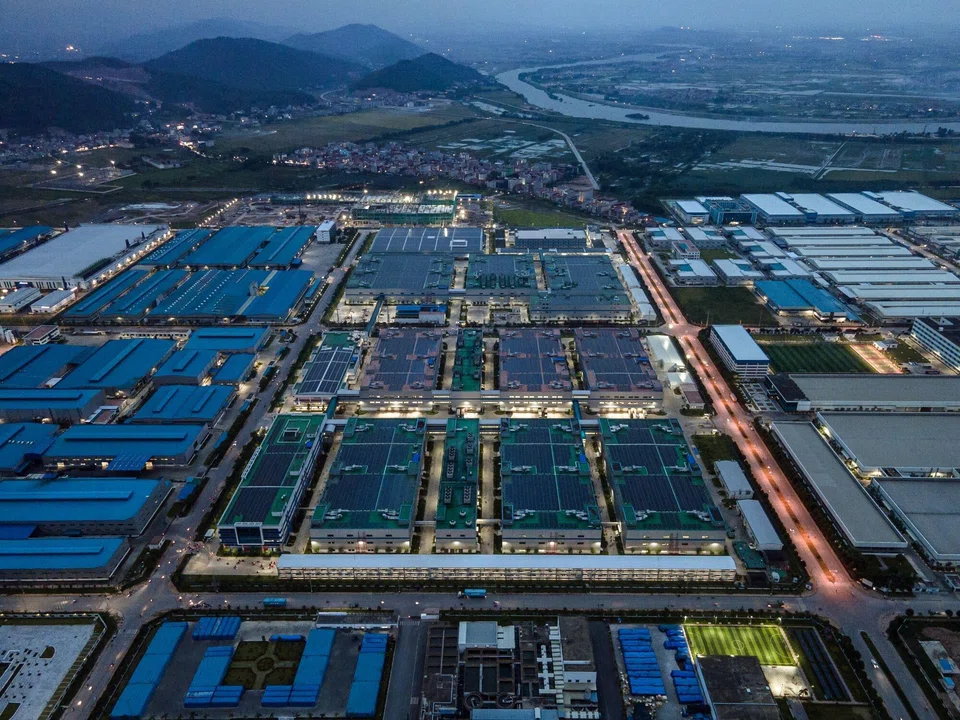
VIETNAM’S economy is heading towards rapid growth of more or less 10 per cent, helped by large-scale projects coming into operation, recovering export orders and faster public-investment disbursement.
Some of the fastest growth is being recorded not in Hanoi or Ho Chi Minh City, but across a cluster of northern industrial provinces closely tied to electronics manufacturing, foreign investment and global supply chains.
Of Vietnam’s 34 provinces and cities, 12 recorded gross regional domestic product, or GRDP, growth of at least 10 per cent in the first nine months of 2026. Seven were in the north, versus three in the central region and just two in the south.
The pattern was also evident in the latest quarter, when nine of the 17 localities posting double-digit growth were in the north, compared with three in the south.
“The North’s high concentration of electronics industries enables the region to ride on the current global electronics and AI capex upturn,” said Brian Lee, an economist at Maybank, who sees northern Vietnam benefiting disproportionately from the current cycle.
Data released by Vietnam’s National Statistics Office on Oct 3 showed that exports of computers, electronics and components surged 59.6 per cent to US$123.7 billion in the first nine months, while phones and components rose 18.8 per cent to US$51.8 billion.
Together, the two categories generated about 40 per cent of Vietnam’s exports and almost two-thirds of the year-on-year increase in the country’s merchandise exports over the period.
“(The region’s) outperformance reflects a cyclical upswing amplified by structural manufacturing advantages,” Lee added.
Northern Vietnam currently combines an established electronics production base with proximity to Chinese component supply chains. It is also where major South Korean electronics groups established some of their biggest manufacturing operations in Vietnam, creating supplier networks that make the region a natural choice for further investment.


In the first nine months, Vietnam attracted US$50.4 billion of registered foreign investment, up 76.4 per cent from a year earlier, while realised foreign direct investment (FDI) reached US$21.1 billion, the highest level for the period in five years.
Matthew Powell, director at Savills Hanoi, pointed to a growing concentration of manufacturing capital in the north. Newly registered manufacturing FDI there reached US$8.6 billion in the first half of the year, equivalent to 80.5 per cent of the national total across 274 projects. That compared with only US$1.6 billion in the south and US$517 million in the central region.
“What is particularly notable is the increasing scale and capital intensity of investment, particularly evident in electronics and advanced manufacturing,” he said.
But industry experts cautioned against reading the latest numbers as evidence of a permanent north-south growth divide.“Southern Vietnam has a more diversified manufacturing base so the current disparity in GRDP growth partly reflects different sector exposure,” Lee said.
Concentration risks
The industrial concentration powering northern growth could, however, face constraints.
“Power and transmission stands as the most immediate northern bottleneck due to the rapid growth of power-intensive high-tech industries amid intra-country grid constraints,” Lee said. Greater electronics exposure also brings “higher sensitivity to a hardware-cycle slowdown if AI-related capex slows”.
Powell noted that availability of adequate infrastructure, power, labour and suitable industrial land could affect the pace of manufacturing investment and expansion in northern provinces.
“The next stage will depend less on investment announcements alone and more on how effectively this capital translates into production, employment, supplier development and higher-value manufacturing activity,” he said.
Here are the northern growth engines driving the trend.
1. Quang Ninh: Vietnam’s fastest-growing locality
Best known internationally for Ha Long Bay, a Unesco World Heritage site, Quang Ninh lies east of Hanoi along the Gulf of Tonkin and is also one of northern Vietnam’s most important energy, industrial and logistics centres.
The province led the country with GRDP growth of about 12.5 per cent year on year over January to September, accelerating to more than 15 per cent in the third quarter.
Quang Ninh’s expansion has been less reliant on a foreign-invested electronics cluster, reflecting a more diversified economic base. This is unlike some of its northern peers.
Manufacturing expanded 26.7 per cent in the first nine months, more than twice the national pace of 11.4 per cent, supported by output in electronics, cars, silicon materials, solar components and construction materials.
The province is currently one of Vietnam’s largest coal-mining and thermal power centres, and is seeking to develop into a major wind power hub.
Tourism is another growth pillar, with the region’s much-touted emerald waters and limestone karsts drawing about 18.8 million visitors during the period. International arrivals accounted for 4.21 million – almost a quarter of the 17.7 million nationwide over the same period.
2. Hai Phong: A port city and logistics hub
Bordering Quang Ninh to the east and linked to Hanoi by key road and rail corridors, Hai Phong recorded GRDP growth of more than 12 per cent in the first nine months and 13 per cent in the third quarter, while attracting about US$3.1 billion in foreign investment, the fifth-highest amount nationwide.
The northern port city’s advantages begin with logistics and set to deepen with the Hai Phong Free Trade Zone. It hosts one of Vietnam’s largest seaport and logistics hubs. Even after its 2025 merger with Hai Duong, it remains the only locality in northern Vietnam served by all five major modes of transport – road, rail, sea, air and inland waterways.
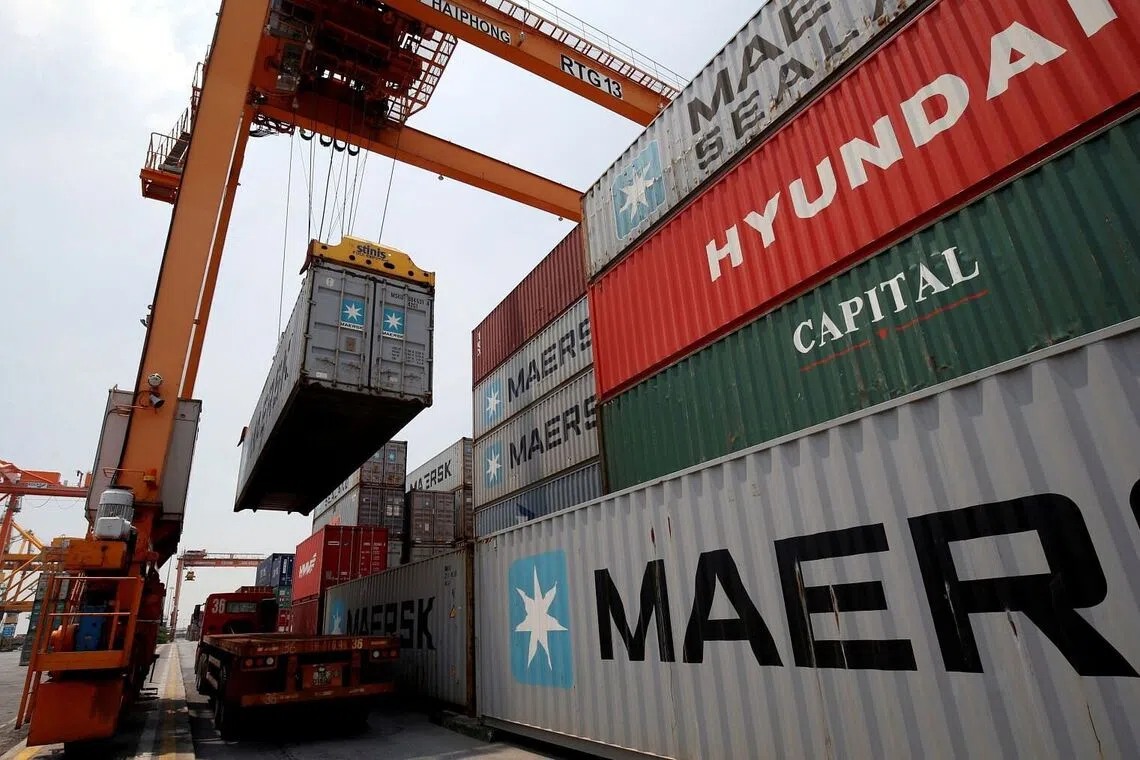
These have given manufacturers unusually broad logistics connectivity and made the city one of northern Vietnam’s main gateways for export-oriented industrial investment.
Hai Phong also has the largest cumulative supply of industrial land and ready-built factories in the north, with manufacturers including LG, Pegatron, Fujifilm, General Electric and VinFast operating there.
In the first three quarters, the city’s manufacturing was the clearest outperformer, with output rising about 15.5 per cent versus 11.4 per cent nationally. Retail, tourism and port activity also posted double-digit growth.
3. Bac Ninh and Thai Nguyen: The heart of the electronics boom
Few places illustrate northern Vietnam’s electronics-driven growth model as clearly as the neighbouring northern manufacturing hubs of Bac Ninh and Thai Nguyen. Both sit on Hanoi’s north-eastern fringe and are anchored by several major foreign investors and a dense network of suppliers.
Their GRDP growth rates were among the country’s highest in the first nine months. Bac Ninh expanded 12.1 per cent year on year and 13.8 per cent in the third quarter, while Thai Nguyen grew 11.2 per cent over the same period and nearly 14 per cent in the latest quarter – the second-fastest quarterly pace nationwide.
Samsung’s extensive presence is the clearest link between the two provinces. The group’s mobile phone manufacturing operations in Bac Ninh and Thai Nguyen account for about half of its global smartphone output, making both localities key nodes in Vietnam’s electronics manufacturing and export base.
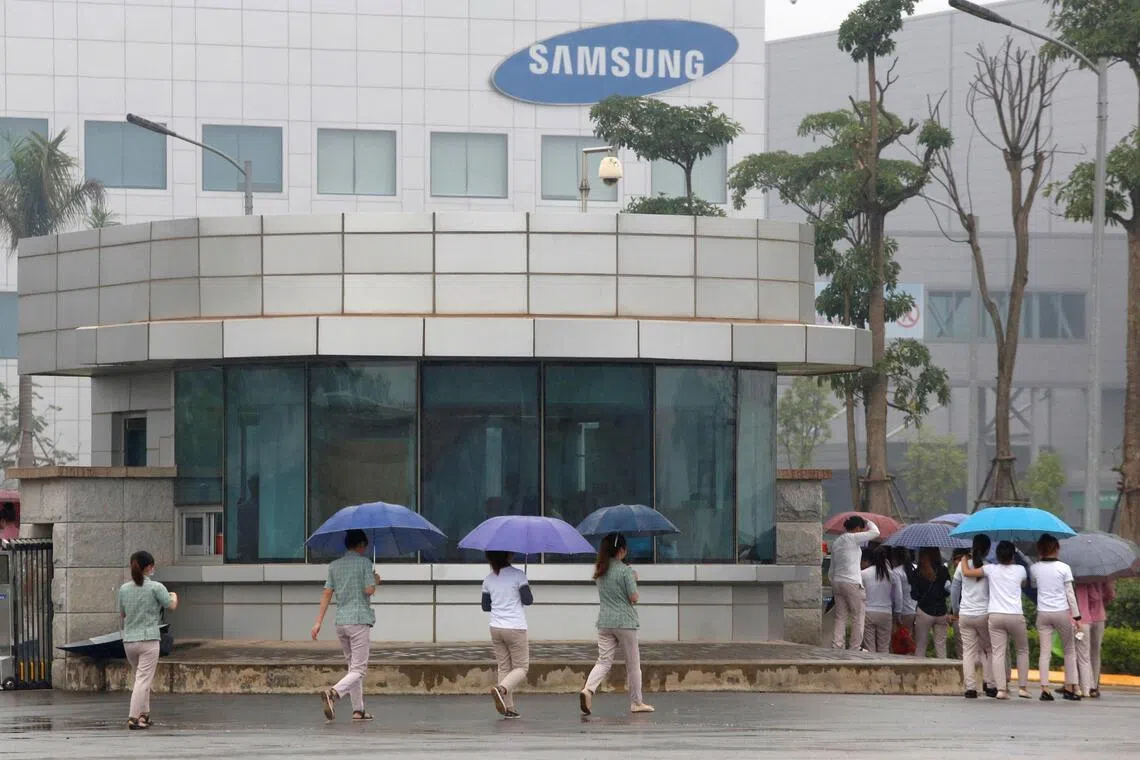
During the January to September period, Bac Ninh attracted about US$4.3 billion of FDI, while Thai Nguyen drew nearly US$8 billion, ranking third and second nationwide, respectively, after Ho Chi Minh City.
A fresh wave of investment is pushing both provinces further into higher tech segments including semiconductors and advanced components. Thai Nguyen has drawn new commitments from Samsung Semiconductor Asia and Samsung Electro-Mechanics, while Bac Ninh has seen expansions by Foxconn, Amphenol, Micro Commercial Components and ITM Semiconductor.
Overall, Savills’ Powell noted, the investment momentum has created a strong industrial cluster across northern provinces. “Established manufacturers attract suppliers and supporting industries, which in turn deepen the supply chain and make the region more competitive,” he said.
Decoding Asia newsletter: your guide to navigating Asia in a new global order. Sign up here to get Decoding Asia newsletter. Delivered to your inbox. Free.
Share with us your feedback on BT's products and services
TRENDING NOW
8 public officers referred to police over property buys near unannounced MRT stations: Chan Chun Sing

Grab CEO’s wife Chloe Tong on life with Anthony Tan and finding her purpose
Retrenched PMETs who return on lower pay see median 25% wage cut

Hao Mart owner resisting OG’s mortgage foreclosure on his Tanglin GCB

