VinFast steps into real estate with stake in massive Hanoi project
The Vietnamese EV maker seeks to diversify its cash flow and pursue a more capital-efficient growth model
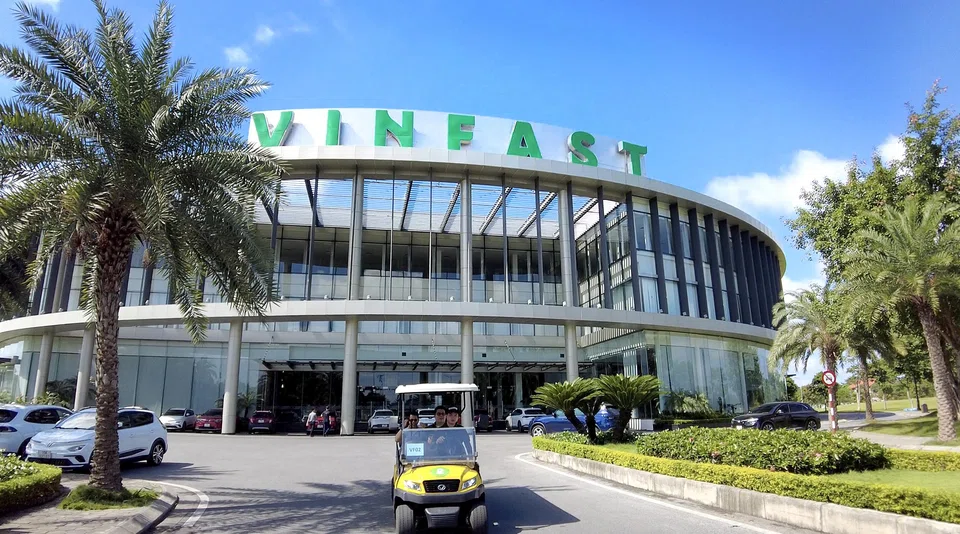
VINFAST is making a push into real estate by acquiring a company with a stake in a sprawling urban development in Hanoi, as the Vietnamese electric-vehicle (EV) maker seeks to diversify its sources of cash to fund the growth of its core automotive business.
VinFast Vietnam, a unit of Nasdaq-listed VinFast Auto, signed agreements to acquire 100 per cent of Ngoc Hoi Real Estate Investment, said a statement on Wednesday (Sep 16).
Ngoc Hoi holds a 20 per cent economic interest in the investor consortium behind Hanoi International Sports Urban Area, a US$35-billion mega-project also known as Vinhomes Global Sportia Hanoi.
Vinhomes, the property-development arm of VinFast parent Vingroup, will be the lead developer coordinating and implementing the project.
Entering the project from an early stage paves the way for VinFast to capture “a substantial share of the value generated by the mega-urban development”; it would also provide “additional and sustainable revenue and cash flow” to support its EV strategy, the company said in the statement.
The firm wants to make EVs an integral component of urban planning, with electric transport integrated into the development from the outset.
It did not disclose the acquisition price for Ngoc Hoi or the amount of capital it expects to commit to the Hanoi development.
On Tuesday (Sep 15), SACE, Italy’s state-owned export credit agency, announced a US$200 million financing facility for VinFast Vietnam.
SACE said that the financing would be used for general corporate purposes, including investments and research and development to support the EV maker’s business plan.


Mega-urban project
The Hanoi International Sports Urban Area, sitting at the southern gateway to the Vietnamese capital, is almost 9,200 hectares in size, making it one of the largest urban-development projects in the country.
The Vingroup-led development includes infrastructure, residential, commercial and entertainment facilities, as well as a major sports complex.
The more-than-400-hectare Hung Vuong International Sports Complex at the centre of the development includes the VinFast-Trong Dong Stadium, which can seat 135,000 spectators; the company claims it is the world’s largest.
Vingroup companies are also developing other mega-projects in the country, including coastal cities and high-speed railways.
More capital-efficient
The investment further entwines VinFast with Vingroup’s broader business ecosystem.
Vinhomes has long been one of the group’s largest businesses and a major source of property-development expertise, while VinFast has put significant capital into building overseas factories, expanding its sales networks and competing in international EV markets, particularly in India and Indonesia.
The EV maker said in a statement: “Proactively diversifying and reinforcing (VinFast’s) financial resources will remain critical to supporting growth in the years ahead in international markets.”
VinFast has undergone a major restructuring aimed at making it more capital-efficient.
In June, it completed the transfer of its stake in VinFast Trading and Production, which retained its Vietnam manufacturing operations, to a group of purchasers after carving research and development, intellectual property, sales and other operations into the newly formed VinFast Vietnam.
VinFast noted that the move was designed to move the company towards an asset-light model and allow it to focus resources on higher-value activities such as technology, product development, branding and sales.
The changes have also extended to management. Pham Nhat Quan Anh, the eldest son of Vingroup founder and chairman Pham Nhat Vuong, was appointed VinFast’s global chief executive in September, succeeding his father, as the company presses ahead with its restructuring and international expansion. THE BUSINESS TIMES
Decoding Asia newsletter: your guide to navigating Asia in a new global order. Sign up here to get Decoding Asia newsletter. Delivered to your inbox. Free.
Share with us your feedback on BT's products and services