



World’s biggest brandy maker and Dalmore owner sees an opportunity to expand into agave-based spirits
Philippines-based Emperador thinks consumer preferences for tequila and mezcal are changing

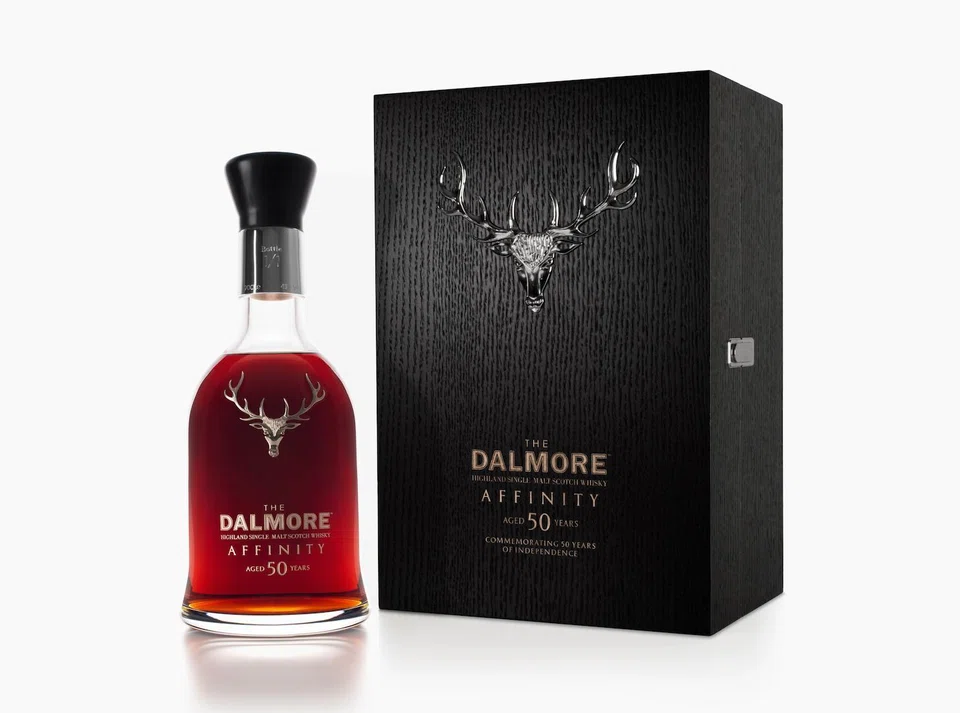
[SINGAPORE] The Singapore and Philippines dual-listed alcohol producer Emperador is eyeing a new spirits segment to penetrate, and is betting on a long-term payoff for its investment in a mezcal distillery in Mexico.
“Agave-based spirits like tequila and mezcal have been growing. While the base is relatively smaller compared to brown spirits like whisky or brandy, this category has been growing for the last 10 years if you look at its compound annual growth rate,” said Glenn Manlapaz, the director, president and CEO of Emperador, in an interview with The Business Times.
Emperador is owned by Filipino tycoon Andrew Tan, and is part of his Alliance Global Group empire which has investments across quick service restaurants, spirits, real estate and tourism. Singapore’s sovereign wealth fund GIC has a minority stake in Emperador.
Manlapaz explained that agave-based spirits such as tequila have usually been consumed as shots. But consumers, particularly in Europe and even Asia, are becoming more discerning with how they interact with agave-based spirits and have been consuming mezcal as they would consume whisky – either to sip neat or as part of a cocktail.

Emperador acquired a 60 per cent stake in Destileria Los Danzantes, a Mexican distiller, for 80 million Mexican pesos (S$5.9 million) last year.
Manlapaz said that while that brand resonates with consumers in the Americas, he sees potential to grow it over the long term in European markets as there has been a growing interest in mezcal there.
In Asia, he also sees the possibility to expand the mezcal market in more developed economies such as Greater China, South Korea, Japan and Singapore.
“In the last 10 to 15 years, consumers have felt that agave-based spirits like mezcal can be enjoyed in the same way you enjoy your whisky or brandy – that is, you pour it into a nice glass, sit down and sip,” Manlapaz explained.
He likened the investment in Destileria Los Danzantes to the acquisition of Scottish whisky maker Whyte and Mackay by Emperador for £430 million (S$740.7 million) in 2014. He explained that the strategy would be much like Emperador’s approach to its whiskies, which is to introduce it in bars and restaurants to consumers who can then later buy it in liquor stores.


Emperador, through its ownership of Whyte and Mackay in 2014, carries a range of whiskies including The Dalmore and Tamnavulin.
While Emperador is the world’s largest brandy producer, it has been growing its whisky segment in the past few years with brands such as The Dalmore.
Manlapaz elaborated that Emperador has positioned The Dalmore, a single malt scotch whisky, as a “premium” offering – something to be sipped on or included in an old-fashioned cocktail at a high-end bar. That is a similar approach that Emperador intends to use to grow its mezcal segment.
“Back in the early 2000s, blended whisky dominated everything... Single malt was a tiny category that was growing double digits. Lo and behold, after 15-20 years, there are some markets where single malts are now bigger than blended whiskies,” Manlapaz said.
Whiskies have since grown into a significant segment of Emperador’s business. It contributed 35 per cent to the company’s revenue of 13.3 billion Philippine pesos (S$275.8 million) for the three months ending Mar 31, 2026, its most recent quarter. Revenue from its brandy segment makes up the rest.
Overall, Emperador’s revenue for the first quarter grew 1.1 per cent from the same period a year ago, supported by sustained consumer demand and operational efficiencies. Manlapaz added that a rising cocktail culture in developed Asia markets also provided tailwinds for the whisky business.
About two-thirds of Emperador’s revenue for the past three years comes from the Asia-Pacific region, with about 25 per cent coming from Europe, and the rest from the Americas, the Middle East and Africa.
Growing the mezcal business would diversify its revenue stream both in terms of alcohol type and markets, as mezcal is already an established type of alcohol consumed in the Americas.
In the near term, Manlapaz is cautiously optimistic for the rest of the year, citing “strong fundamentals”. This is despite uncertainties such as the Iran war, which has raised energy prices and inflationary pressures. “Our whisky portfolio plays pretty good margins, and its share of the revenue has grown in the last 10 years. We’re also very disciplined in cost management and make sure to address supply chain pressures, so all of these are in place – cost management and cash management,” Manlapaz said.
Decoding Asia newsletter: your guide to navigating Asia in a new global order. Sign up here to get Decoding Asia newsletter. Delivered to your inbox. Free.
Copyright SPH Media. All rights reserved.
TRENDING NOW

Britain’s mansion tax shows the difficulty of targeting wealth

Once staunchly pro-China, Malaysian Chinese businesses are now distancing themselves from Beijing

The only common thing in S-E Asia is that we all eat rice: Cisco’s Asean president

Singapore data centre operator DayOne opts for US IPO at likely US$20 billion valuation

