

BOJ’s policy rate likely to reach 2% by end-2027, OECD says
The latest projection comes as the central bank continues to roll back the degree of easing in its monetary settings
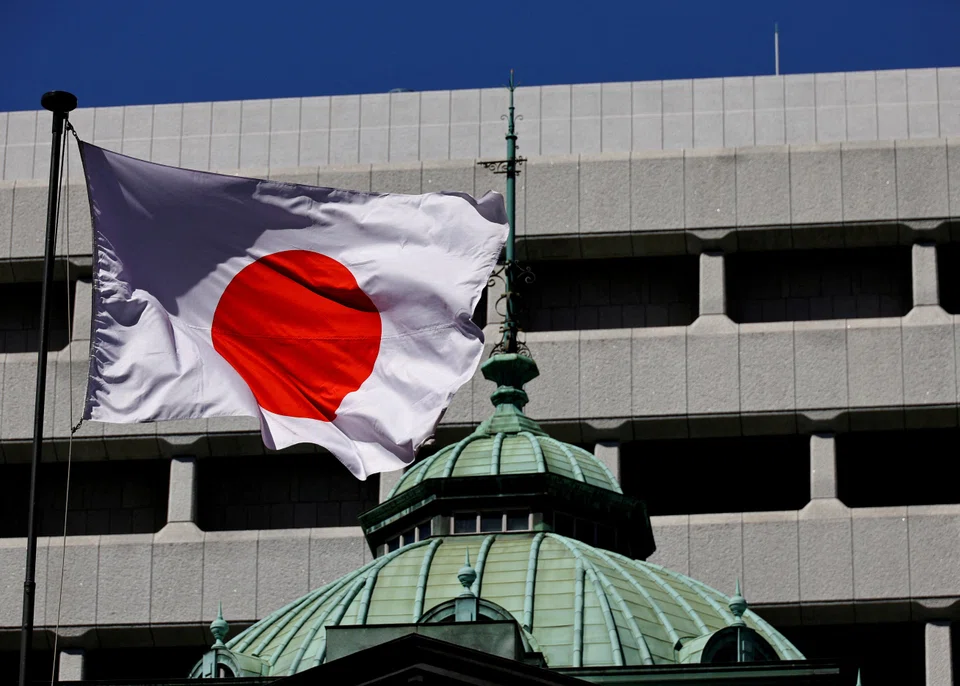
[TOKYO] The policy rate of the Bank of Japan (BOJ) is expected to reach 2 per cent by the end of 2027, a new estimate from the Organisation for Economic Co-operation and Development (OECD) revealed.
Assuming inflation remains around 2 per cent, the current policy rate is still near the lower end of a range that would be neutral for the economy, the OECD said in its economic surveys released on Wednesday (May 13).
It added that the BOJ should continue raising interest rates gradually to prevent the economy from overheating.
Mathias Cormann, the secretary-general of the OECD, on Wednesday said: “We see a pace of normalisation (that) should accelerate as the economy’s new equilibrium becomes clearer.”
He cited anchored inflation expectations and demand that exceeds supply. He also added that he does not believe the BOJ is “critically behind the curve” at this stage.
The report marks the OECD’s first survey on Japan since January 2024, when the BOJ’s policy rate was still in negative territory.
BOJ continues to roll back easing
The latest projection comes as the BOJ continues to roll back the degree of easing in its monetary settings.
It is moving towards a neutral level, the rate seen as neither stimulating nor restraining economic activity.
The central bank has previously estimated Japan’s nominal neutral rate to lie somewhere between 1.1 per cent and 2.5 per cent, while noting significant uncertainty around the exact level.


The OECD’s 2 per cent estimate is more hawkish than projections from other institutions, including the International Monetary Fund, which expects the terminal rate for the current tightening cycle to be around 1.5 per cent.
The median estimate among 49 economists surveyed by Bloomberg in April was also 1.5 per cent.
Regarding the gap in estimates, Douglas Sutherland, head of the country-studies division at OECD, said that the more optimistic view reflects the organisation’s assessment of Japan’s potential growth rate.
On fiscal policy, the OECD emphasised the need to build buffers amid an ageing population and rising debt-servicing costs, as well as expected increases in spending on areas such as defence.
The group recommended that Japan gradually raise its consumption tax, noting it could generate substantial revenue while causing relatively limited long-term harm to economic growth.
Japan’s consumption tax currently stands at 10 per cent, among the lowest in the OECD.
That recommendation runs counter to the ongoing domestic debate over temporarily lowering taxes on food, as Japanese Prime Minister Sanae Takaichi considers steps to help households contend with the rising costs of living.
The OECD argued that a better approach would be to support steady real wage growth rather than introduce broad tax cuts, which it said are costly and poorly targeted.
The report also highlighted Japan’s worsening labour shortages. It called for greater participation by women, older people and foreign workers.
In particular, it said the government should do more to help foreign workers integrate into local communities, especially in rural areas with less experience and fewer resources to accommodate migrants.
Immigration has become an increasingly sensitive political issue in Japan amid rising nationalist sentiment, boosting support for Takaichi and right-wing parties.
While the number of foreign workers in Japan reached a record high in 2025, it remains low when compared with other advanced economies. BLOOMBERG
Decoding Asia newsletter: your guide to navigating Asia in a new global order. Sign up here to get Decoding Asia newsletter. Delivered to your inbox. Free.
Share with us your feedback on BT's products and services
TRENDING NOW

Government to bring forward raising of retirement age, give employers more financial support to create flexi-load jobs
Former minister Maliki Osman, Revolut chairman join Asia Gulf Holdings advisory board

Is Manila Asia’s new dining hot spot?

Simba at risk of losing operating licence over spectrum misuse

