

The bond market is getting closer to sounding alarm on economy
The extra yield investors demand to hold 10-year Treasuries over two-year notes shrank to as little as 17 basis points last week
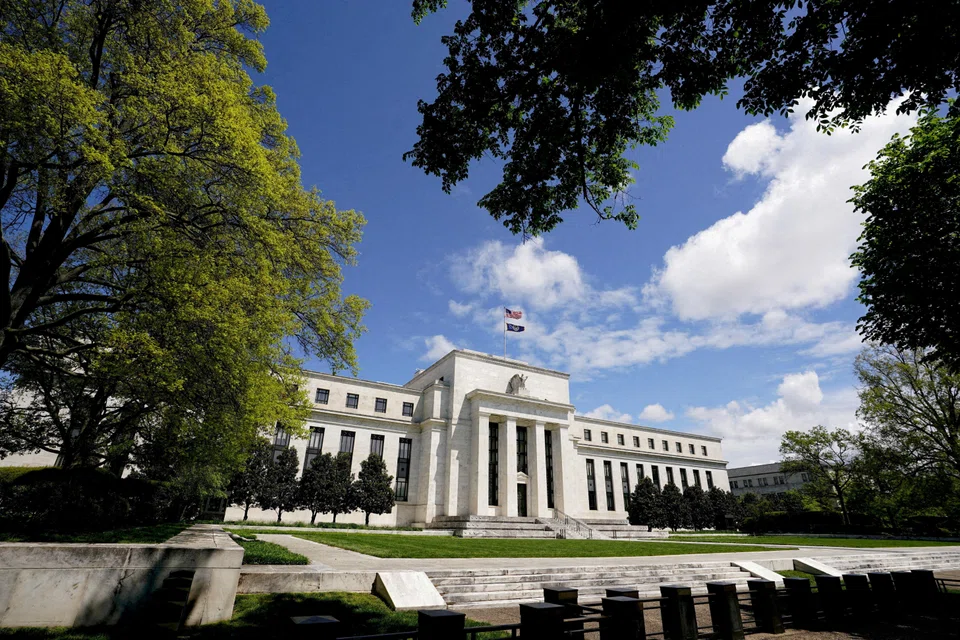
[NEW YORK] The bond market is on the brink of signalling that a series of US Federal Reserve interest rate hikes will start shifting the narrative towards the risk that the US economy stalls out.
The extra yield investors demand to hold 10-year Treasuries over two-year notes shrank to as little as 17 basis points last week, the slimmest gap since early 2025.
This so-called flattening of the curve increases the possibility that the 10-year Treasuries will soon yield less than shorter maturities, a closely watched phenomenon known as a curve inversion.
An inverted curve historically has offered a powerful signal: it has preceded each of the last eight recessions going back to the 1960s, although its predictive power proved faulty earlier this decade.
It is essentially bond investors’ way of showing they see the Fed pushing rates high enough to stymie the economy as it seeks to tame inflation.
That outcome would have broad implications across financial markets, particularly for stocks trading near record highs.
It is a scenario more investors are bracing for after the central bank raised rates this September for the first time in three years and indicated additional hikes are likely.
It also drives home how the hawkish Fed is altering the balance of risks after a bond sell-off that reflected burgeoning price pressures against the backdrop of robust growth.
“Seeing the two- and 10-year curve invert or flatten dramatically calls into question the idea that the economy is very strong and that is part of what’s being priced into the bond market,” said Zach Griffiths, head of investment-grade and macro strategy at research firm CreditSights.


An inversion would reverse a global normalisation of yield curves seen since 2024. Bond investors tend to demand a higher return, or yield, for the greater uncertainty that comes with locking away their money for longer periods. That means yield curves usually slope upward.
As recently as August, that was the trajectory for the curve as long-dated yields soared in part on worries that the Fed’s inflation-fighting credibility was eroding under chairman Kevin Warsh.
But after the central bank’s September hike, shorter maturities have led yields higher. Traders are betting on the equivalent of at least three quarter-point Fed hikes over 2027.
Some do not expect the curve to invert soon as the amount of hikes already priced in makes it harder for shorter-term rates to rise further relative to longer-dated yields.
“The market has already pencilled in significant Fed rate hikes, which have pushed the curve sharply flatter in recent weeks,” said Gennadiy Goldberg, head of US interest rates strategy at TD Securities.
“This makes us believe the 2s10s curve is likely to move steeper in the weeks ahead.”
It is also tough to envision the economy weakening significantly now. Economists just raised their forecasts for US third-quarter growth on stronger demand, according to the latest Bloomberg monthly survey.
Rising odds
But others say the flattening trend has legs. Ed Al-Hussainy, a portfolio manager at Columbia Threadneedle, said he is positioning for an inversion of the two- to 10-year and five- to 30-year curve over the next six months, as the Fed tightens policies to cool the economy and inflation.
“The best indication that monetary policy is getting tighter is a flattening and eventually an inversion of the yield curve,” he said.
The two- and 10-year notes enter the week yielding roughly 4.9 per cent and 5.2 per cent, respectively. The 10-year yield, a key global bond benchmark, is around the highest since 2007.
When the curve is inverted, it often reflects anxiety about growth prospects, given that rate hikes are designed to tackle inflation by cooling demand for loans.
A growth slowdown could eventually set the stage for the Fed to lower rates, spurring long-term yields to fall relative to shorter ones.
Since 1978, the two- and 10-year curve turned upside down about 15 months before a recession started, on average, with the lag ranging from six months to two years, data compiled by Bloomberg show.
The curve’s predictive ability, however, has faced increasing scrutiny in recent years. Various US curves inverted in 2022, with the majority of economists predicting a recession within 12 months.
That never materialised as the economy proved largely able to withstand the Fed’s 2022-2023 tightening campaign, a regional banking crisis, a global trade war and 2026’s surge in energy prices.
While the two- to 10-year curve is most frequently cited among bond investors, policymakers seeking a recession signal study others tied to three-month lending rates. The gap between three-month Treasury yields and 10-year rates remains relatively steep.
Market ripples
The recent flattening for two- to 10-year Treasuries has punished bond investors who came into 2026 positioned for a steeper curve. It is also rippling through US stocks, especially bank shares.
As banks typically borrow on a short-term basis and lend longer term, a narrower spread between the two erodes their net interest margins.
The KBW Bank Index, which tracks shares of the biggest lenders, fell into a technical correction last week, marking a 10 per cent drop from its recent highs.
The move towards inversion reflects the potential for a complete shift in the economic outlook since the US war with Iran erupted in February.
Before that, traders were betting on a series of rate cuts that would drag down short-term yields, instead of the hikes they are preparing for today.
An inversion “would be a sign that the Fed is making a policy mistake”, said Jamie Patton, co-head of global rates at TCW.
“It is raising rates too much, and it is going to have to cut them hard in the future. So to us, inverted yield curves are not healthy signals for the macro economy.” BLOOMBERG
Decoding Asia newsletter: your guide to navigating Asia in a new global order. Sign up here to get Decoding Asia newsletter. Delivered to your inbox. Free.
Share with us your feedback on BT's products and services
TRENDING NOW

Once staunchly pro-China, Malaysian Chinese businesses are now distancing themselves from Beijing

Looking beyond looming CEO succession, should UOB potentially pursue a transformative merger?

Could stablecoins be the future of money?

Grab CEO’s wife Chloe Tong on life with Anthony Tan and finding her purpose

