Bond traders eye packed week of rate decisions for sell signals
Markets will be alert to signs that officials are worried about the inflation threat posed by the US-Iran conflict
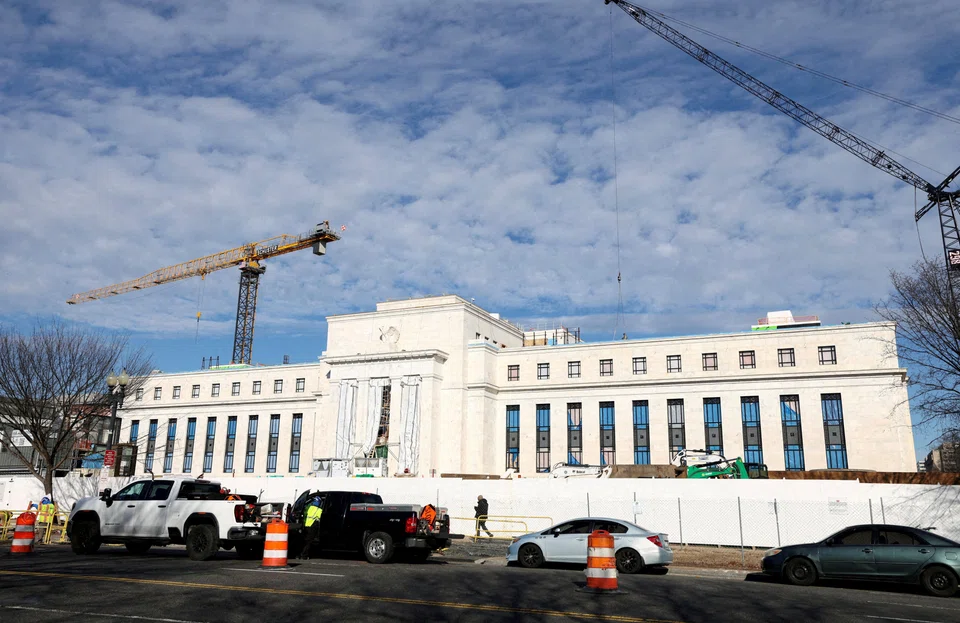
[WASHINGTON] The world’s most important central banks will potentially hand investors fresh reasons to sell government bonds this week, as policymakers find themselves forced to confront the risk of a war-driven inflation shock.
The Federal Reserve, European Central Bank (ECB) and peers in Japan, the UK and Canada are all scheduled to set interest rates.
That makes for a rare week with every Group of Seven central bank convening, together deciding monetary policy for about half the world’s economy.
While investors expect them all to leave rates unchanged, markets will be alert to signs that officials, including Fed chair Jerome Powell and ECB president Christine Lagarde, are worried about the inflation threat posed by the biggest disruption to oil supply in history – stemming from the US-Iran conflict.
Indications of concern and speculation – signalling tight or even tighter policy in coming months – would likely be negative for government debt.
It has already underperformed other assets in recent weeks, as stocks and credit markets rallied with traders looking past the war.
Bonds started the week on a soft note in the US, Europe and Japan.
The 10-year Treasury yield rose two basis points to 4.32 per cent, with the equivalent German rate rising by a similar margin.
Busy week for investors
With the Bank of Japan (BOJ) meeting on Tuesday (Apr 28), the Fed and Bank of Canada on Wednesday and the ECB and Bank of England (BOE) on Thursday, Amy Patrick is among the investors bracing for a busy week.
SEE ALSO


She helps run a dynamic income strategy at investment manager Pendal Group that has beaten 91 per cent of peers in the past five years.
“What have central bankers got to lose by sounding hawkish now?” she said, having exited all her duration exposure in April.
“There’s the oil shock. There’s the uncertain picture of inflation. Bonds want to follow the reversal we’ve seen in equities, but yields are so stuck” until further clarity is available, she added.
Although some major assets have repriced to prewar levels or even higher, shorter-dated yields from the US to the UK remain elevated.
Traders looking to profit from bond volatility have also been left largely disappointed.
Yields on one to three-year government notes have averaged a daily change of about two basis points so far in April, down from four basis points in March.
This could potentially change next week, said Stephen Miller, the former head of fixed income at BlackRock in Australia.
Central bankers are on guard for renewed price pressures, wary of repeating the “transitory” misstep of the pandemic when many were surprised by the stubbornness of inflation, he added.
That experience is likely to keep policymakers cautious, even as growth concerns mount.
“Central bank rhetoric may just poke the bond bear and drive bond yields higher,” said Miller, consultant at asset manager GSFM.
“Bond traders may well be surprised with the intensity of the focus on inflation.”
Take the UK, where BOE officials say the war will worsen prices.
The consumer prices index rose 3.3 per cent from a year earlier in March, up from 3 per cent the previous month, reflecting a sharp jump in the price of motor fuel.
In turn, over the course of last week, the money markets went from pricing just one hike in 2026 to at least two increases.
As for the US, Fed officials have warned the conflict could further stoke inflation and even force the consideration of hikes, while also stressing uncertainty over the period of time during which oil prices will stay elevated.
Amid conflicting headlines from the US and Iran, the overall macro backdrop leaves bond investors struggling to price in a strong chance of rate cuts later in 2026, until clarity from the oil-price shock emerges.
Still, employment and retail sales continue to hold up, suggesting economic resilience.
Short-term Treasury yields, the most sensitive to monetary policy changes, fell on Friday.
This was after the Justice Department dropped its investigation into the central bank – potentially opening a path for US President Donald Trump’s pick, Kevin Warsh, to become Fed chair and push for rate cuts.
Yields on Treasuries have been confined to narrow ranges, with expectations for a Fed rate cut by the end of the year swinging from a roughly 25 to 60 per cent chance in the past week or so.
Mark Cranfield, strategist for Bloomberg Markets Live, said: “Investors will be expecting to hear central bankers explain why they need more time to assess the inflationary impulse from the Iran war, while balancing it against the medium-term risk of slower economic growth.”
Neutral stance expected from Powell
Molly Brooks, US rates strategist at TD Securities, expects Powell to project “a neutral stance, given the uncertainty of the future impacts coming from the Middle East”.
She added that she anticipates the central bank acknowledging in its statement the “recent uptick in inflation due to the oil shock”, while it also notes “that underlying inflation is only somewhat elevated”.
TD expects the 10-year will “continue to trade in the 4.1 to 4.4 per cent range, given the uncertainty going forward and a lack of forward guidance coming from the Fed”, she said.
Elsewhere, BOJ governor Kazuo Ueda has emphasised the need to assess both upside and downside risks to underlying inflation.
Strategists at Evercore ISI predict the BOJ will try to deliver a “hawkish hold” that paves the way to hikes in June and December.
Lagarde has also stressed the elevated uncertainties in a recent speech, a message she is likely to reiterate on Thursday.
Markets see a hike in June as all but certain, based on swaps pricing, with another coming by September.
At the same time, as they fret about inflation in the near term, markets and central banks may ultimately need to pivot to worrying about growth if costlier prices and geopolitical stresses start hurting demand.
Such a shift would likely end up weighing on official and market borrowing costs.
Wee Khoon Chong, senior Asia-Pacific market strategist at financial-services company BNY, said: “Markets will be looking for hawkish signals to sustain current rate-hikes expectations in the eurozone, UK, Canada and Japan.”
“Geopolitical uncertainties and elevated oil and petrochemical prices present both upside inflation risk and downside growth risk. Central banks are likely to deliver a cautious hawkish tone but be non-committal to future rate moves.” BLOOMBERG
Decoding Asia newsletter: your guide to navigating Asia in a new global order. Sign up here to get Decoding Asia newsletter. Delivered to your inbox. Free.
Share with us your feedback on BT's products and services