Canada to retaliate for US tariffs, worsening ties after talks fail
The two countries blame each other for derailing three days of intensive negotiations
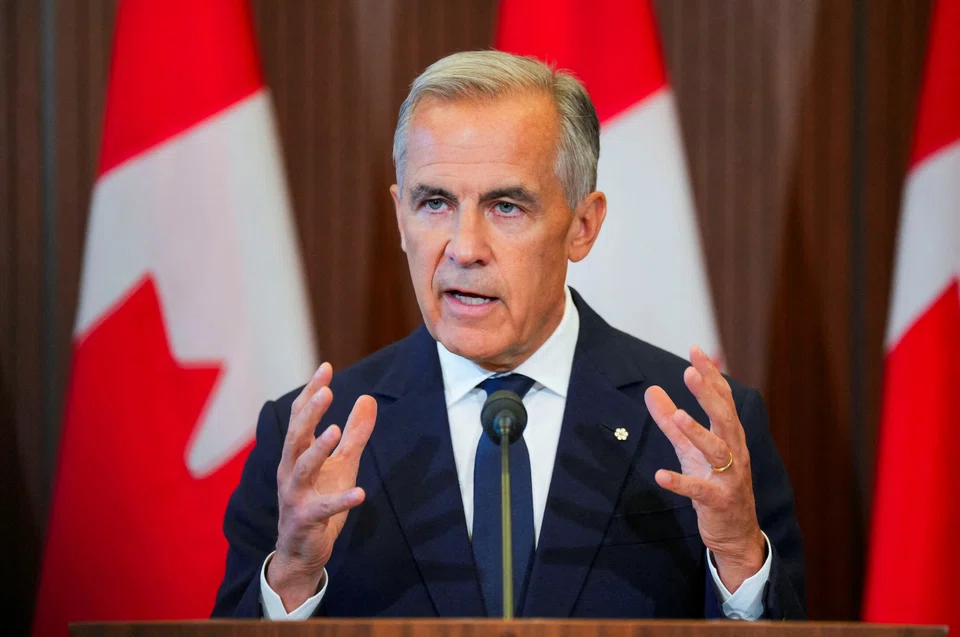
[OTTAWA] Canada will impose tariffs on some US goods in retaliation for 50 per cent levies ordered by US President Donald Trump on Canadian products, Prime Minister Mark Carney said on Saturday (Aug 23), after trade talks collapsed between the two neighbours.
The “dollar-for-dollar” tariffs on imports of US steel, electronics and other products, to take effect on Sep 8, mark a further worsening of relations between the long-time allies and major trading partners.
The two countries failed to reach a trade deal late on Friday, with each side blaming the other for derailing three days of intensive negotiations.
The breakdown complicates the future of a US-Mexico-Canada free-trade pact.
Trump’s new tariffs hit sectors including wine, furniture, dairy products, cement, clothing, fishing rods and hockey equipment, covering some US$20 billion of Canadian exports to the US.
These duties do not exempt Canadian products under the three-nation trade deal, which has shielded most Canadian exports to the US in the last 18 months.
“A missed opportunity”
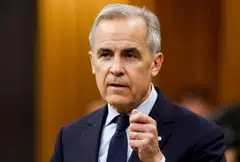
“Canada will match Washington’s new tariffs dollar for dollar in order to protect Canadian workers, farmers, families and businesses,” Carney told a press conference.
“You’re at war when you get attacked. We got attacked,” he said, when asked a question about whether Canada was engaged in a trade war.
He is one of the few global leaders to retaliate against US tariffs and has pledged to forge new trade and military alliances, despite Canada’s dependence on the US for nearly 70 per cent of its exports.
SEE ALSO
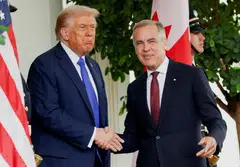
US Trade Representative (USTR) Jamieson Greer called the breakdown “a missed opportunity for Canada to partner with the US”, saying no new talks were planned with Canada.
“We’re moving forward with measures that respond to Canadian retaliation,” he told Fox News. “They’ve always had the best deal, and they still would have an even better deal, but they didn’t want that.”
The White House and the offices of the US commerce secretary and USTR, respectively, did not immediately respond to queries.
Canada will impose tariffs on US steel, dairy, appliances, agricultural equipment, pulp and paper and electronics, along with some products the US previously targeted in Canada, Carney said from Ottawa’s parliament building.
The government will release details on its response in the coming days, he said. “We cannot accept what they have offered, and we will not give what they have asked,” Carney added.
Trump had expressed hope that a deal with Canada could happen on Friday. But Carney said the US administration’s last-minute demands halted progress.
“In recent days, the US proposed new terms that were uneconomic, unfair and undermined the net benefits to Canada, calling into question the reliability of any deal,” he said, noting that these demands included curtailing Canada’s ability to forge new trade deals.
Larger vehicles, other sticking points
Carney said Canada would announce support measures next week for industries hit by the new US duties, adding that these measures could last years.
The new US tariffs cover around 5 per cent of Canada’s exports to the US.
They could expose some vulnerable industries, such as softwood lumber and wine, to severe damage and lead to job losses and business closures, trade experts have said.
“We will be mobilising our network of businesses in all regions and all sectors to brace for impact and make the best of a bad situation,” said Candace Laing, CEO of the Canadian Chamber of Commerce.
Ontario Premier Doug Ford, one of the most vocal opponents of US tariffs, supported Carney’s decision to retaliate.
“I’m glad he didn’t sign that deal because it was a bad deal. It was a bad deal for Ontario. It was a bad deal for the (car) sector, the steel sector and manufacturing sector,” he told reporters on Saturday.
One of the main sticking points was the treatment of larger vehicles.
Three sources said Canada wanted favourable tariff terms proposed for light-duty vehicles to extend to medium and heavy-duty lorries, something the US resisted.
Carney said the US position would have excluded Canadian-made models, including Ford’s F-350, F-450 and F-550 trucks and General Motors’ Silverado, making Canadian production less competitive. There were also US proposals that affected Canadian culture, language and sovereignty, Carney said, without elaborating.
He was elected in 2025 on a promise to be a tough negotiator with Trump, and remains broadly popular.
Polls show most Canadians oppose making any concessions to the US.
“Canadians must stand united to defend our country against these unfair attacks on our jobs and businesses,” explained Pierre Poilievre, the leader of the official opposition Conservative Party. REUTERS
Decoding Asia newsletter: your guide to navigating Asia in a new global order. Sign up here to get Decoding Asia newsletter. Delivered to your inbox. Free.
Share with us your feedback on BT's products and services