

China investors bet Xi-Trump meet to extend trade-detente rally
Markets do remain vulnerable to any negative surprises, with a setback in talks likely to reverse sentiment and erode recent gains
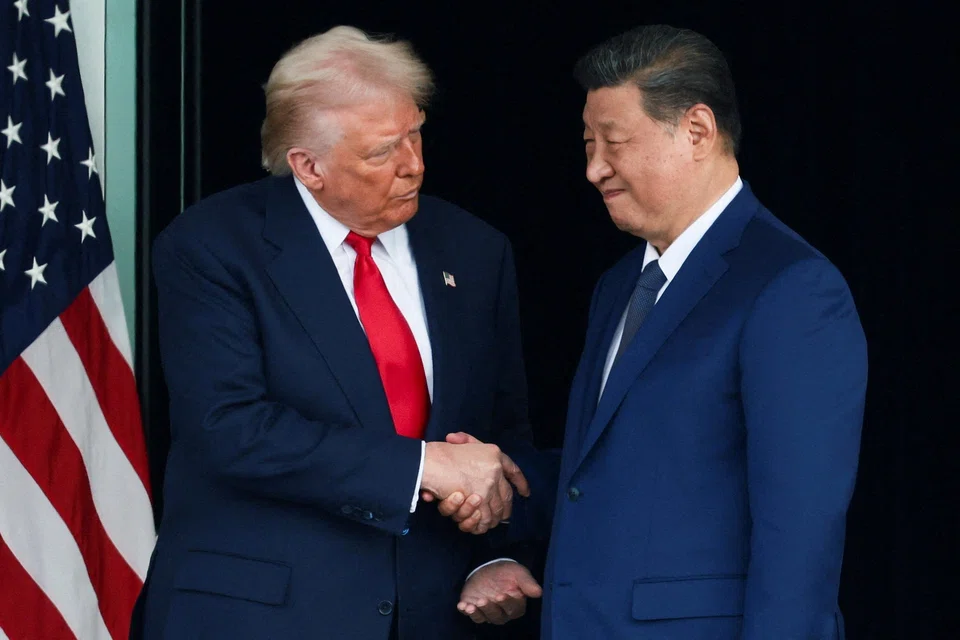
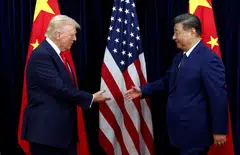
[HONG KONG] China investors are counting on the summit between Xi Jinping and Donald Trump to deliver just enough to sustain the detente trade underpinning stocks and the yuan.
Rather than betting on a sweeping reset in relations, market watchers are focused on whether the two leaders can avoid renewed friction on trade, technology and geopolitics. Even without major breakthroughs on those key issues, a broadly constructive outcome is seen keeping the positive market sentiment intact.
Such cautious optimism has investors choosing tactical rather than structural bets on Chinese assets, which have gained since the two sides reached a trade truce in South Korea last October. Staying long the yuan and selectively buying stocks poised to benefit from currency stability, export resilience, domestic technology investment and demand for artificial intelligence are among the favoured trades.
“The ideal scenario would be the status quo to continue,” said Tai Hui, chief market strategist for Asia-Pacific at JPMorgan Asset Management in Hong Kong. “Tariffs and trade tensions have taken a backseat on investors’ minds for now, given the supply risk to energy and petrochemicals.”
Trump’s arrival will mark the first visit by a sitting US president to China in nearly a decade. Policy experts do not anticipate major agreements to come out of the two-day meeting, which has been rescheduled once as Trump focused on the conflict with Iran. However, it may produce deals at the margins, such as Chinese purchases of additional US soybeans or Boeing planes.
China’s markets have had a good run ahead of the event, suggesting investors see little risk of a sharp deterioration in ties between the world’s two largest economies.
Up about 1.7 per cent, the onshore yuan is Asia’s top-performing currency against the US dollar over the past three months, and is trading at its highest level since early 2023. It has been buoyed by improving US-China ties and weakness in the greenback.
Goldman Sachs expects the currency to keep rising over the coming year, arguing that it is more than 20 per cent undervalued. The yuan remains well below levels justified by China’s export strength and external surplus, strategists including Kamakshya Trivedi wrote in a May 8 report.
‘Risk premium’
The Iran war is expected to be high on the agenda. The US and China both want to see the reopening of the Strait of Hormuz, through which a fifth of global oil and gas flows passed before the conflict. The key question for Beijing is whether it’s prepared to put pressure on Teheran, and what quid pro quo it would seek from Washington in return.
SEE ALSO

“If the 2025 Busan summit is any guide, the engagement could help catalyse RMB appreciation and a risk-on equity rally should Middle East tensions de-escalate,” Citigroup economists Xiangrong Yu and Xinyu Ji wrote in a note. “We expect the economic agenda should reinforce short-term stabilisation in bilateral relations, but not reverse structural headwinds.”
Broadly, Xi and Trump are expected to seek an extension to their trade truce. Markets do remain vulnerable to any negative surprises, with a setback in talks likely to reverse sentiment and erode recent gains.
That said, Goldman’s equity strategists predict stocks could see near-term upside as investor expectations stay low ahead of the summit.
The CSI 300 Index, a benchmark of onshore shares, jumped 1.6 per cent on Monday. The measure is up about 11 per cent so far this quarter, though it has lagged the broader Asian benchmark that’s been boosted by a surge in tech stocks in South Korea and Taiwan.
“What that summit can do is it can compress some of the uncertainty premium that continually persists between the US and China from a geopolitical perspective,” said Christopher Hamilton, head of client investment solutions for Asia-Pacific ex-Japan at Invesco. “If you can bring a little bit more certainty to that relationship and drive that risk premium down, that’s ultimately going to be very positive for Chinese equities.” BLOOMBERG
Decoding Asia newsletter: your guide to navigating Asia in a new global order. Sign up here to get Decoding Asia newsletter. Delivered to your inbox. Free.
Share with us your feedback on BT's products and services
TRENDING NOW

DBS, OCBC, UOB rout lops billions off STI as inflation, rate concerns spook investors

Grab CEO’s wife Chloe Tong on life with Anthony Tan and finding her purpose

OCBC sheds S$8 billion in value as shares close nearly 6% down; analysts cautious on banks

Deal between tycoon friends sparks scrutiny of Philippine power sector

