

China plans to care for 400 million seniors by 2035, and Singapore has a stake
The breakdown of the traditional three-generation family structure is also reshaping China’s eldercare
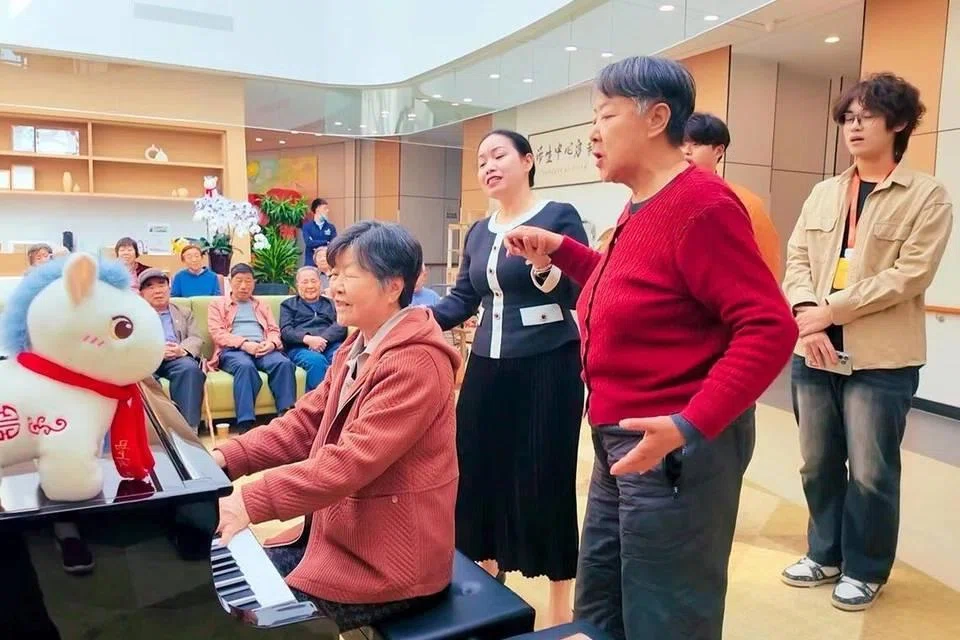
[JINAN, Shandong] When Qi Naihua opened a 160-bed senior care home in the suburban outskirts of Jinan city in 2015, she struggled to fill it.
After two years, just 40 beds were occupied. It was only through a sustained word-of-mouth campaign that more seniors were convinced to move in, many of them relatives or former colleagues of existing residents.
A decade later, the situation has reversed. Qi often receives more requests than she can accommodate.
This shift at Yangguang Fuyuan Senior Apartments, located 40km north-east of downtown Jinan, mirrors the demographic sea change unfolding across Shandong province and the rest of the country.
According to China’s National Health Commission, the number of people in China aged over 60 is set to hit 400 million by 2035 – roughly equal to the populations of the US and Italy combined. This is more than double the 178 million seniors recorded in China’s 2010 census.
A 2021 government survey found that 35 million Chinese elderly faced difficulties in caring for themselves, down from about 40 million in 2010. This number is expected to grow to 46 million by 2035 and 58 million by 2050, Chinese state media reported.
“Back then, people would ask why someone with children would go to a nursing home,” Qi, 58, told The Straits Times (ST). “The family didn’t understand it, and neither did the elderly person.”
Today, interest in institutional care has surged, particularly post-pandemic, she said. “Everyone is busy with work, so they have limited time and energy to take care of their elders. Many caregivers are also seniors themselves,” Qi added.
At the end of 2025, there were 41,700 eldercare institutions in China employing 722,000 people, according to the Ministry of Civil Affairs, up from about 34,000 in 2019.



An estimate by consulting firm IMARC Group put the size of China’s eldercare market at US$183 billion (S$233 billion) in 2025, with projections that it will grow to US$362 billion by 2034.
The breakdown of the traditional three-generation family structure – a byproduct of the discontinued one-child policy and rural-to-urban migration – is also reshaping China’s eldercare.
While government policy has been guided by the so-called “9073” model – where 90 per cent of seniors are cared for by family, 7 per cent receive community care and 3 per cent live in institutions – some experts have warned that this is increasingly unsustainable, as family units have shrunk.
The “9073” model is a planning framework that was proposed by Shanghai’s government in 2005. It was later adopted more widely across the country to tackle the ageing crisis.
Dr Feng Zhanlian, a senior researcher at RTI International, an independent scientific research institute in the US, believes China’s policy shift towards more home- and community-based care aligns with prevailing preferences to age in place.
But he noted the many practical challenges to making this model viable, including the lack of a well-trained workforce and the difficulty of regulatory oversight and quality control.
“One thing is for sure: The demand for market-based eldercare options will continue to grow, as China’s population is ageing rapidly and family-based care is no longer as reliable as in the past,” said Dr Feng, who is an expert on China’s eldercare system.
At Qi’s facility, now home to 140 residents, the needs are also increasingly complex. More residents now require support for physical disabilities or cognitive impairments like dementia.
In Shandong, the ageing problem is acute, as more than one in four of the province’s 100 million residents is aged 60 and above, outpacing the 2025 national average of 23 per cent.
In response, policymakers have rolled out reforms to keep pace with the escalating demand.
Since 2013, China has promoted the integration of medical services with eldercare, with Shandong acting as a national demonstration area. Qi’s care home, which operates in concert with Jiyang People’s Hospital next door, was born out of this policy push, providing clinical services for acute and chronic conditions while also taking care of daily needs.
Shandong was one of the first provinces to pilot long-term care insurance in 2016. In March 2026, China’s State Council announced plans to roll out such insurance coverage nationwide within the next three years to provide financial support for basic nursing and medical care for those unable to look after themselves.
In January, China launched a national subsidy scheme to offset the costs of eldercare services such as rehabilitation and meal assistance. Under this scheme, seniors with disabilities will be issued monthly electronic vouchers worth up to 800 yuan (S$150) that they can use to pay for these services.
Qi said these policies are vital in lightening the financial load. For instance, her home charges between 3,000 yuan and 7,000 yuan a month – a luxury for many, given that the per capita disposable income in Jinan was 56,961 yuan in 2025, or roughly 4,750 yuan a month.
With new subsidies, Qi said the cost can drop to 15 to 20 per cent of an average worker’s salary.
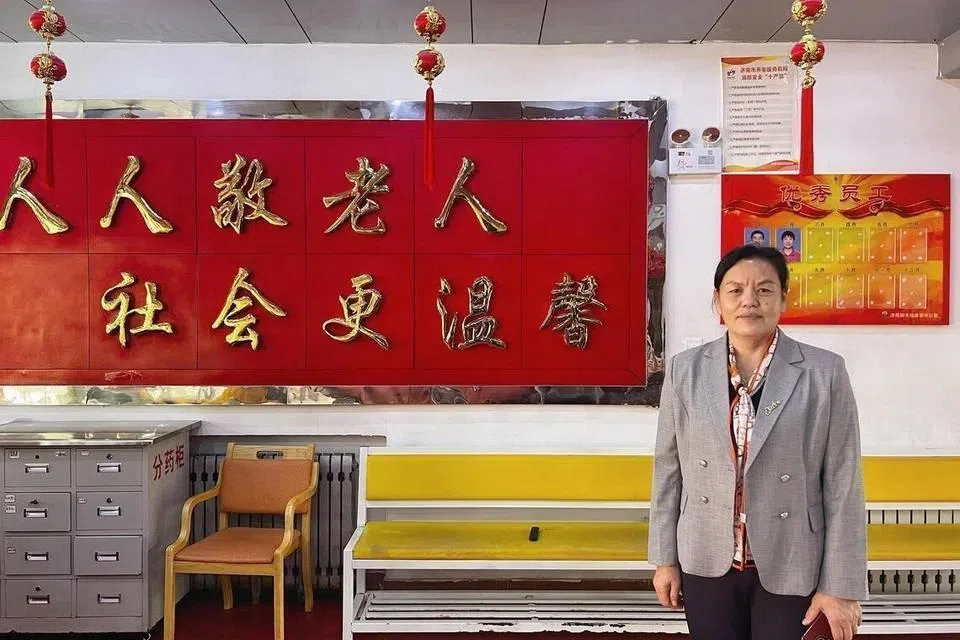
RTI International’s Dr Feng said the expansion of long-term insurance coverage will be a big boost for eldercare providers, as they can expect a more stable stream of financing support.
But he told ST that the long-term sustainability of this type of government-driven funding mechanism remains to be seen.
To meet demand, Shandong has plans to build an eldercare industrial cluster projected to be worth more than 100 billion yuan by 2027. It has introduced subsidies for new facilities and incentives to develop and train eldercare staff.
This ambition has attracted new players such as Sindora Living.
The subsidiary of Singapore’s Keppel follows in the footsteps of another Singapore-based firm, Perennial Holdings, which has invested 31 billion yuan in China’s medical and eldercare sectors since 2015.
After Sindora Living opened its first wholly owned senior living facility in Nanjing in 2024, the company was tapped to manage a 530-bed one in Jinan’s newly developed Qibu district, built by a state-owned enterprise. Later in 2026, it will open a third location in Guangdong’s Foshan in partnership with Chinese insurance giant Ping An.
Since opening in October 2025, Sindora Living’s facility in Jinan has welcomed 60 residents and seen a steady stream of entries. Notably, one of its seven blocks is dedicated to residents fully subsidised by the government. For private payers, fees start at 4,600 yuan a month.
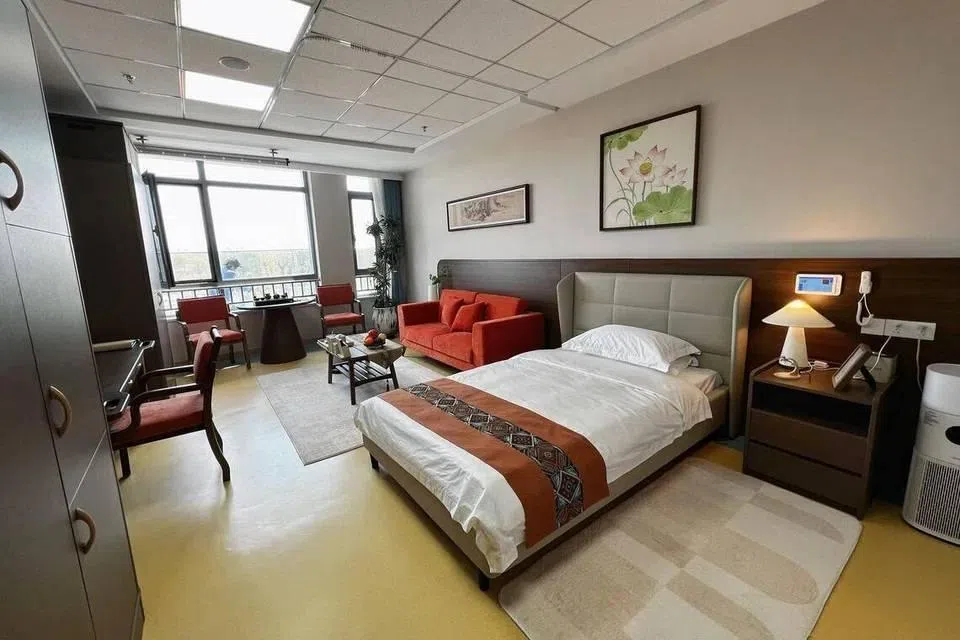
Chief operating officer Thierry Costanzo told ST the company aims to raise standards and introduce new philosophies of care.
“What we offer is very different from the classic nursing home in China,” he said. “If you go to traditional players, you do not have ownership of your own care. We flip this completely. You live on your own terms.”
He touted the company’s multidisciplinary approach and emphasis on intergenerational bonding through its staff. However, like Qi, Costanzo noted challenges in hiring quality professional caregivers.
The company has turned to technology to bridge the gap, installing fall detection sensors in every room and using artificial intelligence to track medication inventory in its in-house pharmacy.
Qi hopes for better financial support and a higher social standing for eldercare workers. “This job is very tough... There aren’t enough caregivers to keep up,” she said.
For 86-year-old Wang Yuzhen, her move to an eldercare home was a combination of choice and circumstance. Following the death of her son in 2022, she chose institutional care to avoid burdening her daughter-in-law in distant Yunnan.
She moved to Sindora Living’s Jinan facility after her previous home closed.
“This is my home now, and the staff are like my own children,” the retired nurse told ST. “No matter when you need them or what the issue is, they are there in a heartbeat. To be honest, you can’t even expect that much from your own children.” THE STRAITS TIMES
Decoding Asia newsletter: your guide to navigating Asia in a new global order. Sign up here to get Decoding Asia newsletter. Delivered to your inbox. Free.
Share with us your feedback on BT's products and services
TRENDING NOW

Once staunchly pro-China, Malaysian Chinese businesses are now distancing themselves from Beijing

Looking beyond looming CEO succession, should UOB potentially pursue a transformative merger?

Could stablecoins be the future of money?

Grab CEO’s wife Chloe Tong on life with Anthony Tan and finding her purpose

