‘A Fed chair with a spine’: A look back at Jerome Powell’s tenure as US central bank chief
He helped the US economy navigate one of the most tumultuous periods of its history
Koh Kim Xuan
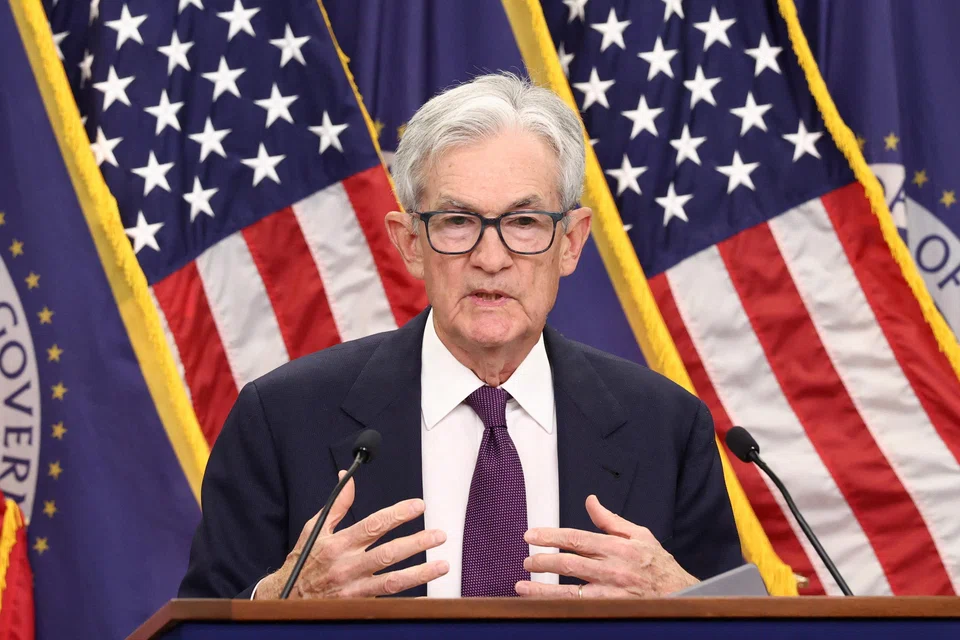
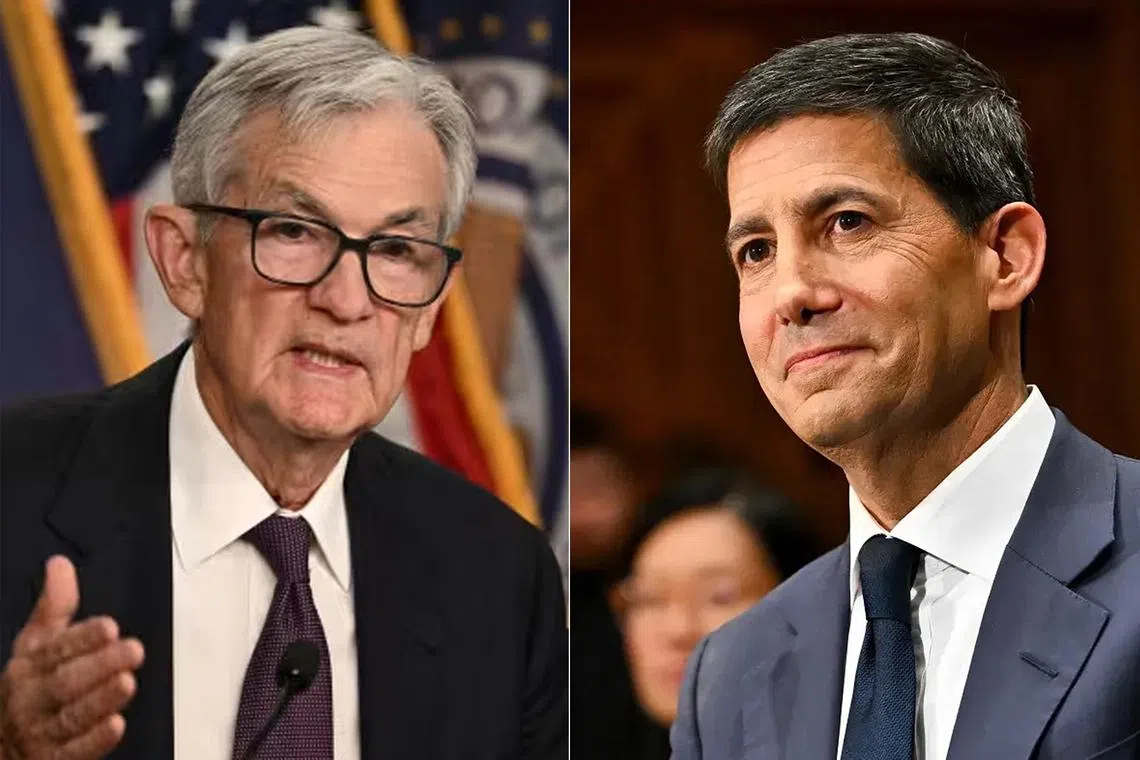
JEROME Powell, 73, steps down from his position as US Federal Reserve chair on May 15, after two terms.
From the start of his tenure in 2018, he was tasked with steering the world’s most influential central bank through crises such as the Covid-19 pandemic, political pressures and the sharpest inflation spike in decades.
The Business Times looks at the defining moments of Powell’s eight-year term as Fed chief.
Navigating a pandemic
As the Covid-19 pandemic swept across the globe, the US went into a deep economic downturn and uncertainty in 2020.
Sharp contractions in the economy sparked a “dash for cash”, a desire to hold deposits and only the most liquid assets, a January 2024 report by the Brookings Institution think tank noted. This disrupted financial markets, potentially worsening the US’ economic position.
Under Powell’s lead, the Federal Reserve became the “lender of last resort”, intervening with measures to keep credit flowing to mitigate the economic impact of the pandemic, said a 2021 Congressional Research Service report.
One such action was the cutting of its target for federal fund rates – ranging from 0 to 0.25 per cent – by a total of 1.5 percentage points. This was aimed at supporting household and business spending by lowering borrowing costs.
The Fed also made large purchases of US Treasury and mortgage-backed securities – worth US$2 trillion and US$1.5 trillion, respectively – by the end of 2020. This restored credit flows and smooth functioning to financial markets and bolstered the economy.
Under Powell, the Fed financed all its activities by expanding its balance sheet, which exceeded US$7 trillion by May 2020. It pledged not to raise interest rates until the economy reached full employment and consistently maintained inflation at 2 per cent.
To that end, the Fed was committed to making large-scale asset purchases until significant progress was made in stabilising the economy.
Beyond focusing on financial markets, the Fed set up two facilities to support US business operations. It lent directly to businesses, and purchased corporate bonds and exchange-traded funds to help corporations access new credit.
Powell said in a press conference in April 2020: “We are deploying these lending powers to an unprecedented extent... (and) we will continue to use these powers forcefully, proactively and aggressively until we are confident that we are solidly on the road to recovery.”
Fighting inflation
While his swift and aggressive approach effectively restored the US’ economic stability, his tenure as Fed chair was also marked by criticism of his call on US inflationary pressures in 2021, dubbed by some as the worst inflation call in the Fed’s history.
A combination of pandemic-driven price shocks and a misreading of the labour market’s strength led to the highest US inflation rate in 40 years.
Among the critics was Allianz SE chief economic adviser Mohamed El-Erian, who described Powell’s tenure as Fed chief as “one of the unluckiest on record”, and said the institution’s credibility was “eroded” by its actions at the time.
Despite Powell arguing that inflation caused by supply chain bottlenecks and temporary reopening demand would be “transitory”, prices soared 6.2 per cent year on year in October 2021 – making it the fastest annual rise in the Consumer Price Index since 1990.
To combat this, he pivoted to a hawkish stance.
By enacting 11 interest rate hikes between March 2022 and July 2023, the benchmark federal funds rate was raised to a range of 5.25 to 5.5 per cent from near-zero levels.
This included unprecedented, aggressive 75-basis point, or 0.75 per cent hikes for three consecutive meetings in June, July and September 2022.
During that period, the central bank also decided to keep interest rates “higher for longer” until inflation cooled to the targeted 2 per cent.
This came as Powell recognised the importance of lowering inflation before the public came to treat high prices as the norm.
He said at the Cato Institute in 2022: “The longer inflation remains well above target, the greater the risk that the public would begin to see higher inflation as the norm, and that has the capacity to raise the costs of getting inflation down.”
By the end of 2023, headline inflation had fallen 3.1 per cent, and gross domestic product grew by 3.3 per cent in the fourth quarter. The Fed had achieved a “soft landing”, tightening interest rates without causing a recession.
Preserving the Fed’s independence
In July 2025, despite facing criticism and pressure from the White House to lower interest rates to boost the economy, Powell maintained that the Fed would keep rates on hold to fully assess the lagging impact of US President Donald Trump’s global tariffs on the economy.
It was a “wait-and-see” strategy to evaluate the impact that Trump’s trade wars and mass deportation campaigns would have on the economy.
By holding interest rates steady, even against the president’s wishes, Powell made clear the difference between the Fed and Trump’s administration, underscoring the apolitical and data-driven approach that shapes the central bank’s decisions.
“As we parse the incoming information, we are focused on separating the signal from the noise. As the outlook evolves, we do not need to be in a hurry, and we are well-positioned to wait for great clarity,” Powell said in an appearance at the University of Chicago Monetary Policy Forum in March 2025.
The approach continued to put the Fed directly at odds with Trump amid the US-Iran war that began in March 2026, when the US president demanded immediate rate cuts.
Even with rising inflation due to the conflict, the Fed said it would maintain interest rates at the 3.5-to-3.75 per cent range to prioritise long-term macroeconomic stability for the US amid intense global uncertainty.
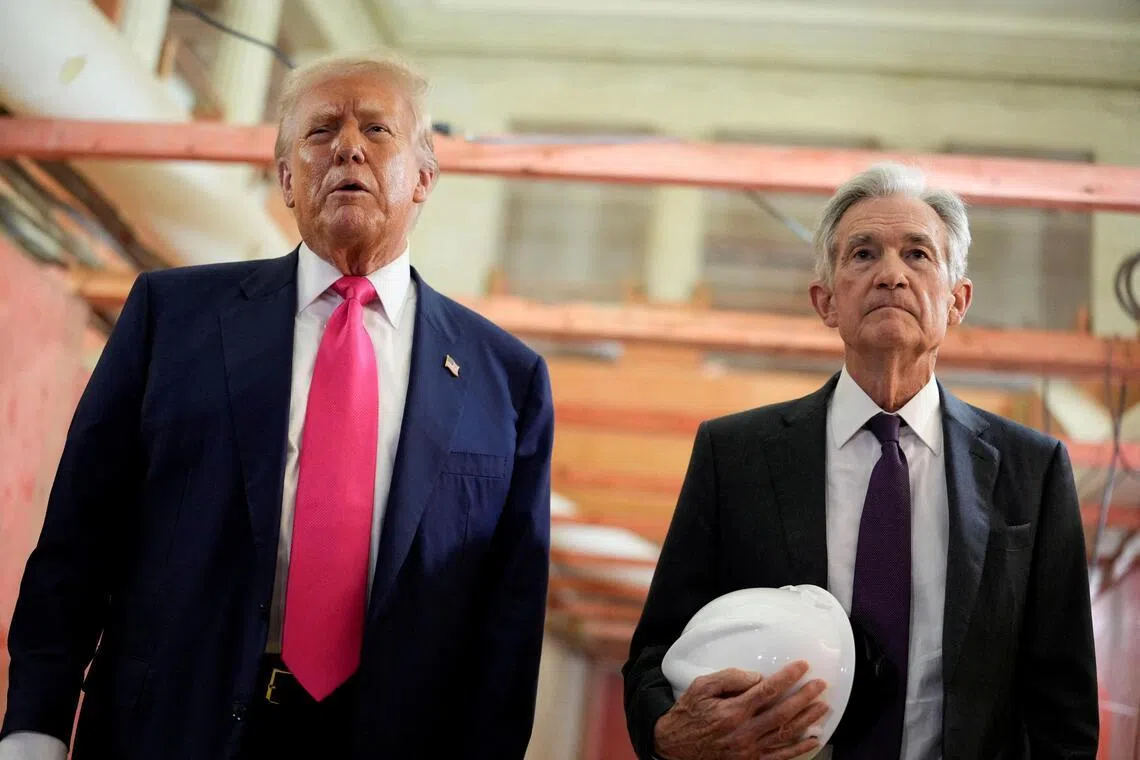
The pressure on the central bank peaked when Trump compelled the Department of Justice to initiate a probe into the Fed’s headquarters’ US$2.5 billion renovation expenditure. The US leader also questioned the institution’s credibility and independence and threatened to oust Powell.
The Fed chair, however, remained fixed in his decision to keep interest rates.
Powell’s responses against Trump cements his legacy as “a Fed Chair with a spine”, said think tank Brookings senior fellow David Wessel.
Two terms well done?
When Powell took over as Fed chair, Congress gave the central bank two mandates – to manage inflation and keep unemployment low.
By the end of his tenure, Powell had lowered the average unemployment rate to 4 per cent, its lowest level since 1978. But due to energy price hikes amid the US-Iran war, the third-highest inflation among recent Fed chairs was recorded.
Powell has gained support from both Democrats and Republicans, as well as the Fed’s biggest detractors, for his consensus-building and pragmatic leadership.
“We’re always going to do the same thing, which is we are going to use our tools to foster maximum employment and price stability for the benefit of the American people,” he said in a press conference in May 2025.
Even after his term as Fed chair ends, he will remain on the Federal Reserve Board of Governors for an indefinite period of time as the probe into the central bank’s renovation continues.
As of May 15, Powell has been appointed temporary chair of the Fed’s Board of Governors until his successor, financier and attorney Kevin Warsh, is officially sworn in.
Warsh, nominated by Trump, faces scepticism over his claims of independence from the US president, who has said that he would be disappointed with the Fed pick if he does not lower borrowing costs.
Decoding Asia newsletter: your guide to navigating Asia in a new global order. Sign up here to get Decoding Asia newsletter. Delivered to your inbox. Free.
Share with us your feedback on BT's products and services