



IMF chief Georgieva says global economy weathering energy shock
She urges all countries to tackle their fiscal problems and wants central banks to stay ‘laser-focused’ on their price stability mandates
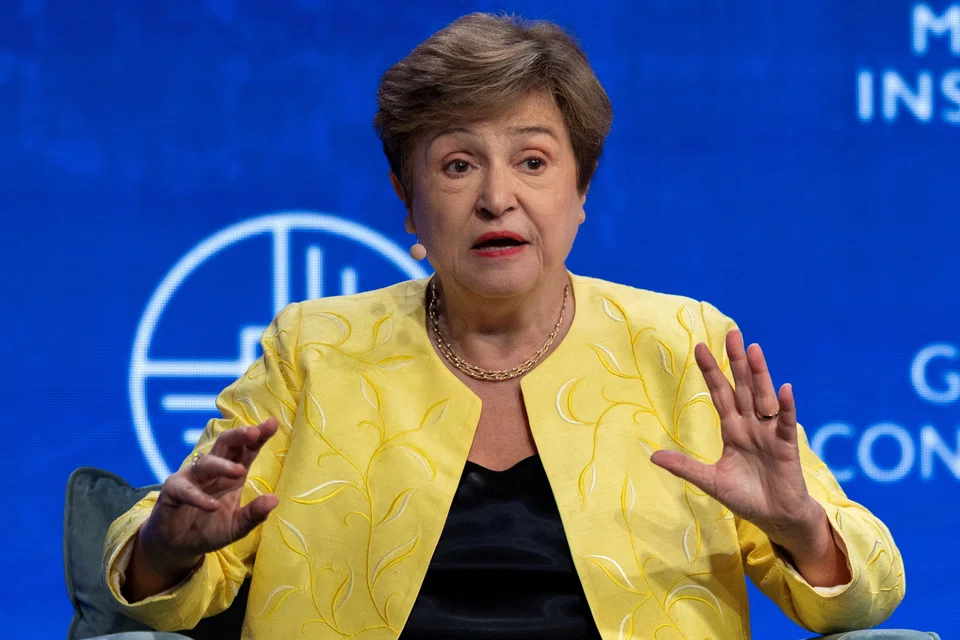
[WASHINGTON] The global economy has weathered the Iran war energy shock better than feared, International Monetary Fund managing director Kristalina Georgieva said on Tuesday (Aug 25), but she raised concerns about deteriorating fiscal conditions in some countries shown by rising bond yields and a stalled disinflation process.
Georgieva told reporters in a briefing ahead of the Aug 29-Sep 1 Group of 20 finance leaders meeting in Asheville, North Carolina, that there was a “tug of war” between the negative Gulf energy supply shock and growth tailwinds from the artificial intelligence investment boom that was starting to spread beyond US borders.
She said that risks to the global outlook were more balanced than in April, but still tilted to the downside, due to mounting fiscal pressures and the potential that central banks will have to maintain tight monetary policy to control inflation.
Global growth is “resisting powerful headwinds from high debt levels, stubborn inflation, and trade tensions. Thus far, it has weathered the energy shock caused by the closure of the Strait of Hormuz better than we feared, thanks to a combination of factors”, Georgieva noted.
These factors include drawdowns of oil and gas reserves by many countries, increases in non-Gulf energy supplies, lower energy demand, increased renewable energy capacity and a return to coal power generation in some places.
AI investment in the US is keeping corporate earnings and consumer spending strong, and other countries are ramping up data-centre construction and AI hardware supplies, she pointed out.
Her overview of global economic conditions did not come with any new forecasts. The IMF in July lowered its 2026 global growth forecast to a sluggish 3 per cent, while warning of further downside risks from the Middle East war, trade fragmentation and potential AI uncertainty.
It will next update its global growth forecast in mid-October at IMF and World Bank annual meetings in Bangkok.
Georgieva warned against complacency by policy makers amid benchmark Brent crude oil prices that have been hovering in the US$80-US$90 per barrel range since mid-June, well below their spring peaks above US$118.


“The energy shock is not over,” Georgieva explained. “A renewed rise in oil prices could fuel inflation, forcing central banks to retain a restrictive policy stance with knock-on implications on debt service costs and on economic activity.”
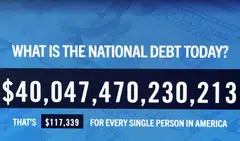
She said that all countries need to tackle their fiscal problems and “formulate and present credible plans to ensure their debt and deficits are on a sustainable path”.
She did not single out individual countries needing fiscal consolidation. But her comments follow the spike in US Treasury 30-year bond yields to 19-year highs on Aug 18 that prompted US Treasury Secretary Scott Bessent to announce a surprise doubling of long bond buyback sizes in an effort to hold down borrowing costs.
The IMF has long called on Washington to reduce its growing fiscal deficits, which would also help shrink US trade and current account deficits.
Georgieva said that central banks must stay “laser-focused” on their price stability mandates amid continued inflation risks, despite expressing concern that tight monetary policy would cool growth.
She also added that countries needed to address “excess global imbalances” that were causing trade tensions. She did not name specific countries, but Georgieva has long called on China to rebalance its growth model away from exports that have flooded global markets with cheap goods, towards one driven by internal consumer demand.
“A better balanced economy is a stronger global economy, and that is good for everyone,” she felt, adding that this was harder to achieve in a more fragmented world.
The IMF is refining its model for assessing external balances, she noted, and will deepen its analysis of the drivers of these imbalances, including the interaction of macroeconomic trends, trade and industrial policy in a series of forthcoming papers. REUTERS
Decoding Asia newsletter: your guide to navigating Asia in a new global order. Sign up here to get Decoding Asia newsletter. Delivered to your inbox. Free.
Share with us your feedback on BT's products and services
TRENDING NOW

Government to bring forward raising of retirement age, give employers more financial support to create flexi-load jobs
If Europe goes to war, the fallout will be felt in East Asia
Indonesia stocks suffer worst plunge in nearly 30 years as MSCI proposes standalone status

Vietnam’s northern provinces, not Hanoi or Ho Chi Minh City, are powering near 10% GDP growth

