Jio’s blockbuster debut puts valuation, earnings in focus
India’s second-most valuable listed company now needs to show investors the money
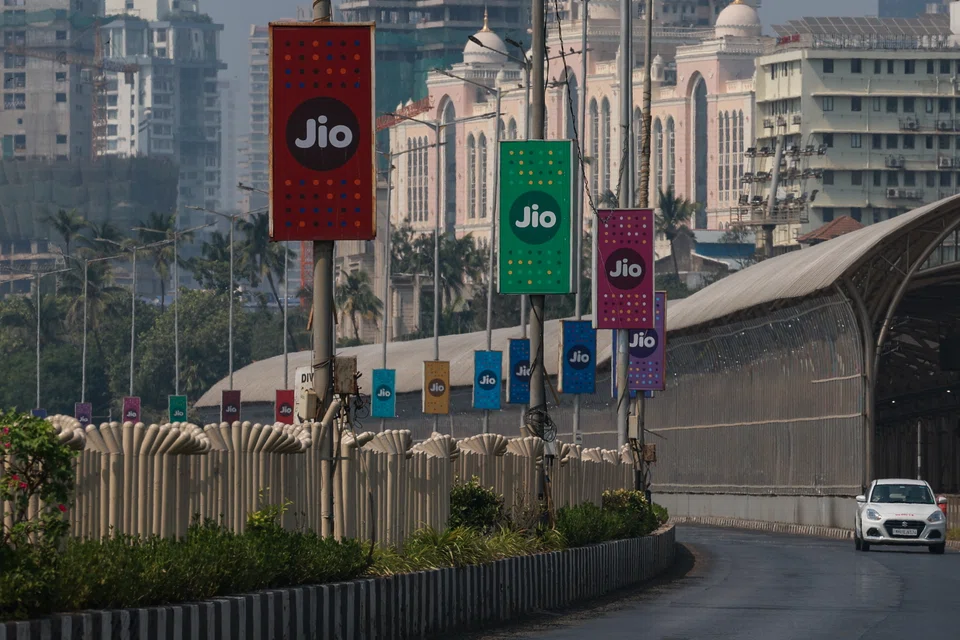
[BENGALURU] Jio Platforms extended its post-listing gains on Thursday (Oct 29), closing 0.2 per cent higher at 1,419.70 rupees after surging almost 27 per cent on its debut a day earlier.
The digital and telecommunications arm of Reliance Industries ended the day with a market capitalisation of 15.9 trillion rupees (US$167 billion), retaining its position as India’s second-most valuable listed company behind its parent, and ahead of Bharti Airtel and HDFC Bank.
The strong gains have put the spotlight on whether billionaire Mukesh Ambani’s telecom and digital services business can deliver the earnings growth needed to sustain its valuation.
After a sharp rerating on debut, investors will be looking for evidence that Jio can turn its vast subscriber base and expanding digital businesses into stronger earnings and cash flow.
Jio’s long-term growth prospects remain attractive, but the sustainability of its valuation will depend on how effectively it converts scale into earnings and cash flow, said Prabhu Ram, vice-president of the industry research group at CyberMedia Research.
“With much of the near-term optimism already reflected in the stock after a strong debut, further upside is likely to come from earnings delivery rather than rerating,” he said.
Is the valuation justified?
At about 12 to 13 times one-year forward earnings before interest, taxes, depreciation and amortisation (Ebitda), Jio Platforms’ valuation appears reasonable for a capital-intensive business with its scale, cash-generation potential and growth opportunities, said RSB managing partner Chakri Lokapriya.
“Jio Platforms offers an attractive combination of scale, financial strength and growth optionality,” he said.
Its subscriber base of more than 533 million and technology platform positions it to sustain a competitive advantage over rivals Bharti Airtel and Vodafone Idea.



Lokapriya noted, however, that Jio will need to demonstrate sustainable earnings and cash flow growth while maintaining its technological edge.
The earnings test
Jio’s second-quarter results, scheduled for Friday, will be an early test of whether its financial performance can support the expectations built into its share price.
Lokapriya said that over the next few quarters, investors should look for revenue growth of 13 to 14 per cent alongside Ebitda growth of 15 to 16 per cent, which would indicate operating leverage and improving profitability.
He also highlighted the importance of monetising digital services, expanding home broadband and maintaining a strong balance sheet, including interest coverage of more than five to six times.
“Ultimately, investors should look for evidence that new businesses meaningfully contribute to Ebitda and cash flow, rather than simply adding to the company’s growth narrative.”
For Abhinav Tiwari, a research analyst at Bonanza Portfolio, key indicators over the next two to four quarters will be: average revenue per user (ARPU); subscriber additions and churn; home broadband growth; and debt reduction.
Jio’s ARPU stood at 215.6 rupees in the first quarter of FY2027, around 48 rupees below its closest competitor, Tiwari noted. Higher tariffs, customers upgrading to more expensive plans and service bundling could help close that gap.
What could drive further gains?
An industry-wide tariff increase could provide a boost to revenue and profitability. The last broad-based tariff increase was in July 2024, and another hike could lift ARPU, Tiwari said.
CyberMedia’s Ram said that broadband expansion and artificial intelligence-led services could offer upside potential beyond tariffs. However, he added that regulatory intervention and competitive intensity could limit Jio’s ability to translate these opportunities into higher returns.
Lokapriya identified potential gains in wireless revenue market share, 18 to 20 per cent earnings growth and initial revenue contributions from emerging digital businesses as key catalysts over the next 12 months.
Greater traction in managed services, cloud, the Internet of Things and home broadband could also provide incremental growth beyond mobile connectivity, he said.
A potential pressure point is the expiry of a six-month lock-in period for pre-IPO investors in late April 2027. Tiwari pointed out that this could increase the supply of shares available for trading and weigh on the counter.
Ultimately, Jio’s long-term prospects rest on its ability to turn its vast subscriber base and expanding digital businesses into sustained earnings and cash flow growth.
While tariff increases, broadband expansion and newer services offer avenues for growth, analysts believe the stock’s next leg will depend less on investor enthusiasm and more on the company’s ability to deliver on those opportunities.
Decoding Asia newsletter: your guide to navigating Asia in a new global order. Sign up here to get Decoding Asia newsletter. Delivered to your inbox. Free.
Copyright SPH Media. All rights reserved.