Singapore’s STI up, Hong Kong stocks surge as Asia rises after Trump’s new tariffs
Trade levies on Asia have ‘likely peaked’, say Morgan Stanley analysts

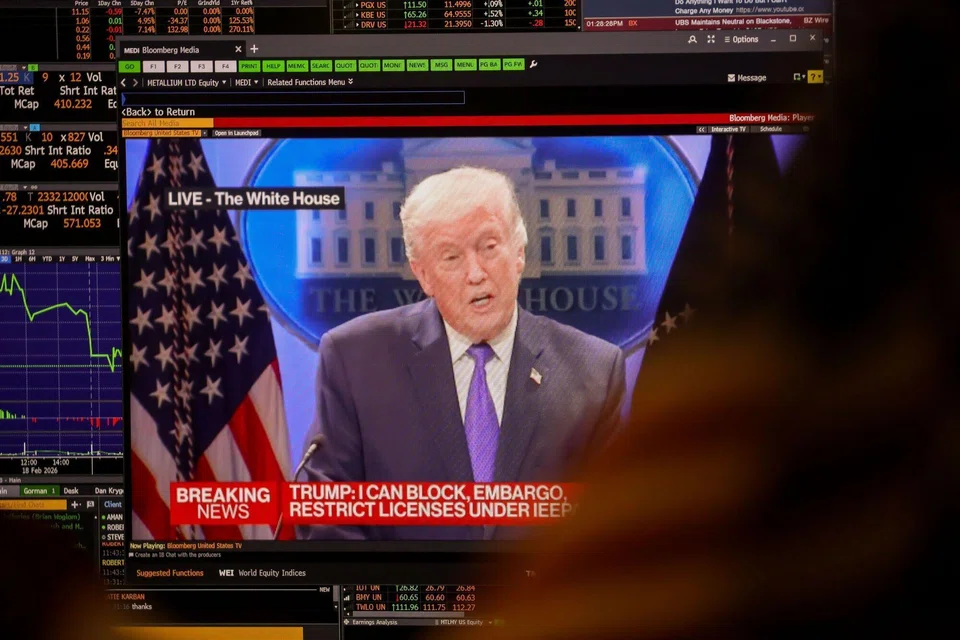
[SINGAPORE] Markets in Asia-Pacific on Monday (Feb 23) largely shrugged off US President Donald Trump’s latest decision to increase global tariffs to 15 per cent from 10 per cent.
Trump’s move was in response to the US Supreme Court ruling that his previous tariff mechanism was illegal.
Singapore’s Straits Times Index (STI) closed 0.3 per cent up, while South Korea’s Kospi ended the day 0.7 per cent higher. Taiwan’s Taiex was up 0.5 per cent.
The FTSE Bursa Malaysia KLCI mirrored the STI’s gains, climbing 0.3 per cent, while Hong Kong’s Hang Seng Index surged 2.5 per cent. India’s Sensex ended Monday about 0.6 per cent higher.
Only Australia’s S&P/ASX 200 was down, closing 0.6 per cent lower. Morgan Stanley noted that Australia is set to face a tariff increase of 4 per cent, having previously been subject to a 10 per cent levy.
The Japanese stock market was closed for a holiday, while the mainland China market remained closed for Chinese New Year.
South Korea and Taiwan’s semiconductor export strengths are expected to “persist” amid supply shortages and continued tariff exemptions, said Morgan Stanley on Monday.
The South Korean government is also set to begin its preliminary review of US investment projects soon; Taiwan is likely to follow, with no major changes to the agreed deal terms expected.
Tariffs on China will fall from 32 to 24 per cent, representing an estimated reduction of seven percentage points on a trade-weighted basis, Morgan Stanley analysts noted.
SEE ALSO
Still, the impact of the tariff reduction could be limited. Existing tariffs have already prompted significant rerouting of supply chains through Asean and Mexico, the analysts added, while multiple investigations of “unfair trade practices” involving China are already under way.
“With the new headline rate of 15 per cent, the weighted average tariff rate on imports from Asia will actually fall to 17 per cent from 20 per cent,” they added.
Tariff tussles
The US Supreme Court on Feb 20 struck down Trump’s original slate of tariffs, originally announced on so-called Liberation Day in April 2025. The court said that the president had exceeded his authority by invoking the International Emergency Economic Powers Act without the US Congress’ approval.
Economists estimate that more than US$175 billion worth of the original tariffs will likely need to be refunded by the US government, Reuters reported.
Shortly after the Supreme Court ruling, Trump imposed a new 10 per cent global levy under another trade law provision before increasing that to 15 per cent a day later. The new provision, Section 122 of the Trade Act of 1974, allows tariffs of up to 15 per cent for 150 days without congressional approval.
However, the 150-day deadline is likely to eventually translate into longer-lasting measures.
“After the 150-day period for Section 122 tariffs, the US government is likely to pursue more durable measures through Section 301 – addressing unfair trade practices – and Section 232 – citing national security concerns,” said Morgan Stanley.
Direct effects to remain limited
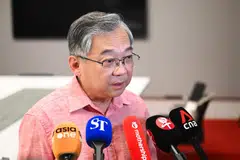
Singapore has not revised its growth forecast, said Deputy Prime Minister Gan Kim Yong on Feb 22, adding that the Republic’s relative export competitiveness is unlikely to be affected even if tariffs were applied across the board.
The country was set to face a 10 per cent levy under the original tariffs, but now faces a 2 per cent higher weighted average tariff rate, Morgan Stanley noted.
DPM Gan also discouraged speculation that Singapore might be exempted from the new 15 per cent tariffs.
A spokesperson for the Ministry of Trade and Industry (MTI) said that the Singapore government will seek clarity on the implementation of the new tariffs and the processes for the original tariff refunds.
MTI added that certain goods, including pharmaceuticals, pharmaceutical ingredients and some electronics, are exempt from the Section 122 tariffs but may be subject to Section 232 tariffs that have not been imposed yet.
Although Singapore faces a higher weighted average tariff rate, the other Asean economies should see modest tariff reductions, said Morgan Stanley.
“As with other economies in the region, we expect the direct effects of these tariff changes to remain limited,” noted its analysts.
The tariffs now appear unlikely to rise further, they added. This should “support the regional trade cycle and, by extension, more trade-oriented economies such as Singapore, Malaysia and Thailand”.
Morgan Stanley added that Thailand should also benefit from the signing of its pending bilateral trade agreement.
India’s weighted average tariff rate is estimated to decline to around 14 per cent, which Morgan Stanley expects to support a turnaround in export growth to the US, particularly for labour-intensive sectors.
The country is also expected to stay the course in trade negotiations to formalise the details of its interim trade agreement and honour commitments on concessions, non-tariff barriers and increased imports from the US.
While the bank cautioned that this tariff relief may be temporary and new sectoral and economy-specific tariffs may still be applied, it thinks that “tariffs on Asia have likely peaked”.
With non-tech exports improving since October last year and “signs of an industrial cycle upturn”, Morgan Stanley believes that the underlying improvement in demand conditions means “non-tech exports will continue to accelerate, notwithstanding near-term tariff volatility”.
Decoding Asia newsletter: your guide to navigating Asia in a new global order. Sign up here to get Decoding Asia newsletter. Delivered to your inbox. Free.
Copyright SPH Media. All rights reserved.