



Trump orders Pentagon to cut back military exercises with South Korea, cites Seoul’s Iran war stance
The Blue House is reviewing the move of the US president, who also highlighted a ‘very good relationship’ with North Korea’s Kim Jong Un
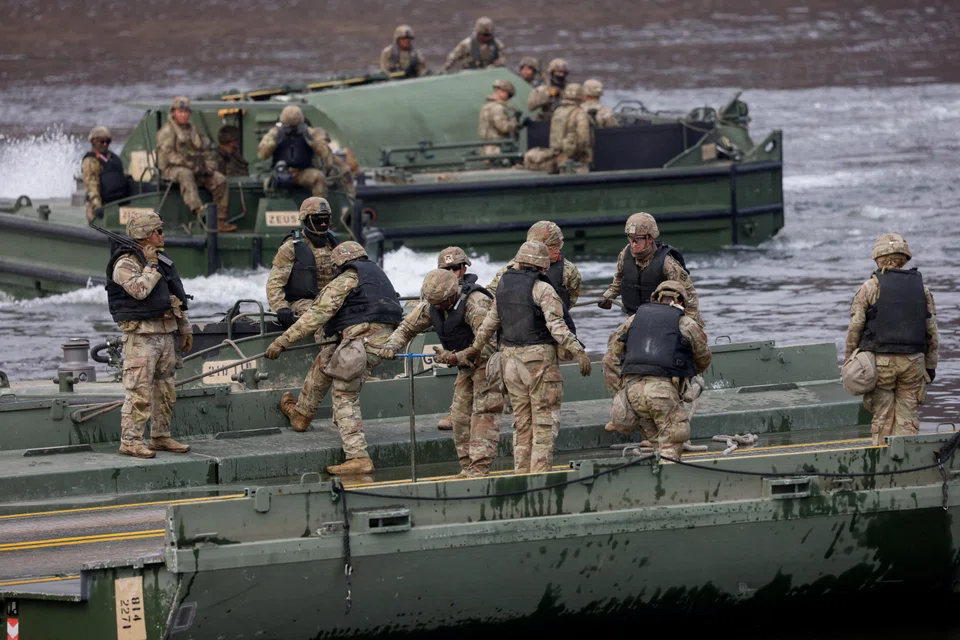
[WASHINGTON/SEOUL] US President Donald Trump on Sunday (Aug 16) instructed the Pentagon to “substantially reduce” 10 days of joint military exercises with long-term Asian ally South Korea, citing the cost of the drills and Seoul’s refusal to take part in actions against Iran.
Hours before exercises were scheduled to begin, Trump said on his Truth Social site he was “not happy” that the US had agreed to participate and highlighted his “very good relationship” with Kim Jong Un, the leader of nuclear-armed and heavily sanctioned North Korea.
“These exercises are not only costly... but send a signal that is totally inappropriate and hostile, to a Country that, as long as Donald J Trump has been President, has been unthreatening and respectful,” Trump wrote.
The annual Ulchi Freedom Shield joint military exercises are scheduled to run until Aug 27, with about 18,000 South Korean military personnel participating.
South Korea’s joint chiefs of staff told Reuters the drills started on Monday as scheduled.
The country’s presidential Blue House said on Monday it was reviewing Trump’s post and “hopes that the friendly relationship between the US and North Korean leaders will lead to meaningful dialogue between the two countries, opening discussions aimed at advancing peace and stability on the Korean Peninsula”, it said.
The allies would continue coordinating on their combined defence posture and military exercises, it said.
Responding to Trump’s claim that President Lee Jae Myung had refused to join US efforts to de-nuclearise Iran, it said Seoul was discussing potential military contributions, while considering its defence readiness on the Korean Peninsula and domestic legal procedures.
A Pentagon spokesperson referred questions on the matter to the White House, which did not immediately respond to a request for details.

Up-and-down relationship
Trump has long sought to end or curtail military exercises with South Korea while clashing with Seoul over sharing the costs of stationing 28,500 US troops in South Korea and their role in securing the broader region.
North Korea, still technically at war with the South, routinely denounces the US-South Korean exercises as preparations for an invasion.
Pyongyang last week fired a ballistic missile from its eastern coast towards the Sea of Japan, days after a similar North Korean short-range ballistic missile launch.
“This decision may be part of a larger effort to create a diplomatic opportunity with Pyongyang, as Trump has consistently wanted since coming back to office, although the haphazard nature of this move is unlikely to make much of an impression in Pyongyang,” Jenny Town, head of the Stimson Center think tank’s 38 North programme, said in an email.
The relationship between Trump and Kim has been a roller coaster for years.
Trump once mocked the North Korean leader as “little rocket man” and threatened Pyongyang with “fire and fury”, while Kim boasted that he would “tame the mentally deranged US dotard with fire”.
Yet they also took part in three summits, with Trump declaring, “we fell in love” after exchanging letters with Kim.
None of these efforts led to changes in North Korea’s nuclear weapons or ballistic missile development.
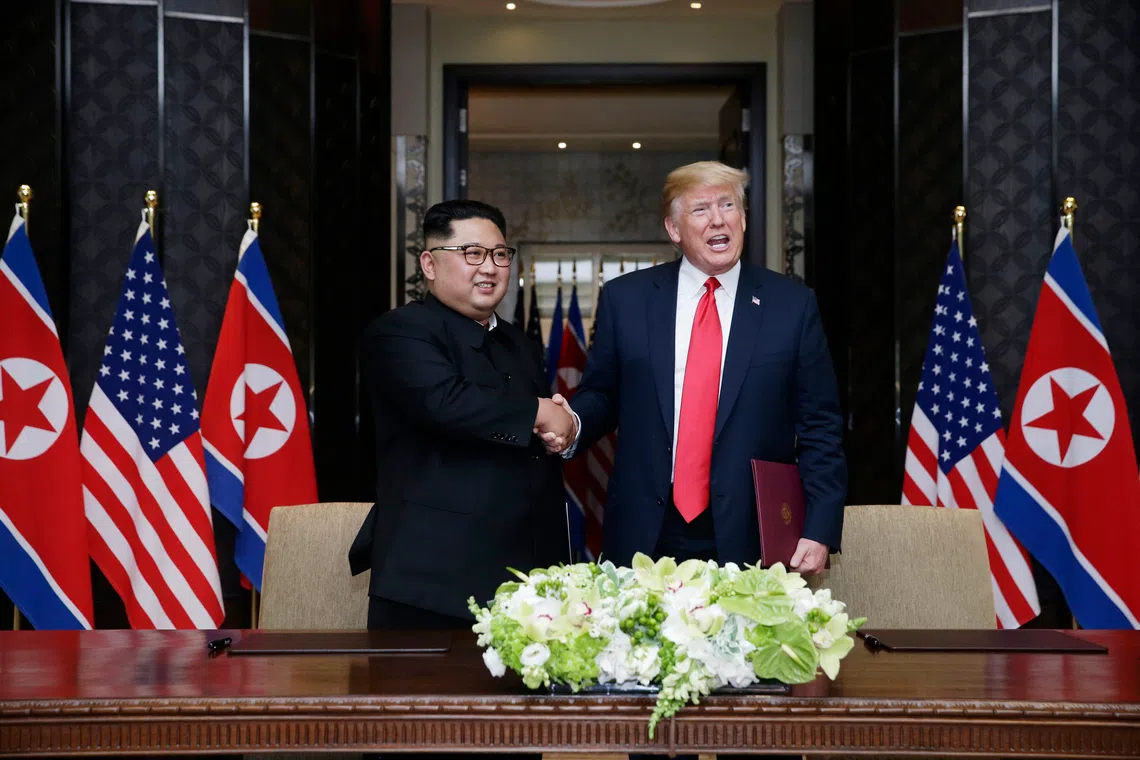
Even as Trump on Sunday spoke warmly of nuclear-armed North Korea, he pointed to South Korea’s stance on the US-Israeli conflict with Iran.
“While somewhat unrelated (?), I recently asked the President of South Korea if they would like to join us in the Denuclearization of the Islamic Republic of Iran, and they said, ‘No thanks!’” Trump wrote.
Exercises shift to simulations
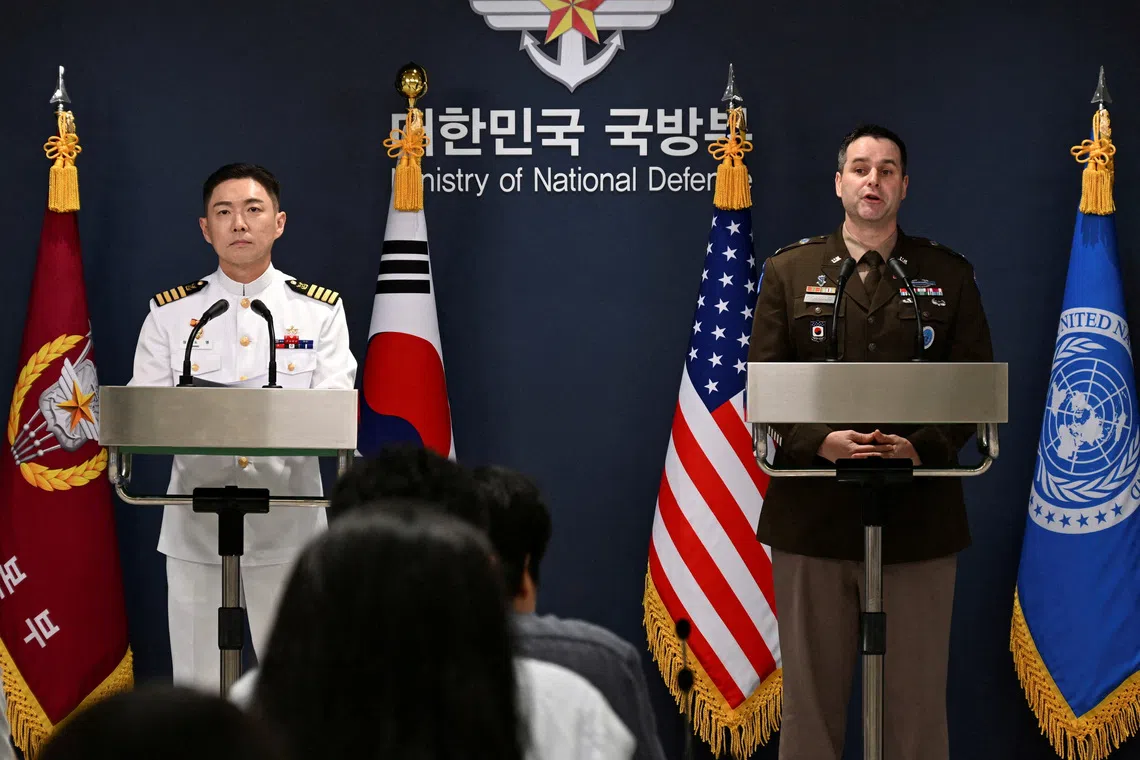
It is unclear how the drills could be cut back, but in recent years, they have shifted away from live-fire exercises to computer-simulated missile and cyberattacks.
Victor Cha, head of the Korea programme at Washington’s Center for Strategic and International Studies, said Trump may be seeking greater influence over North Korea as Pyongyang has been heavily engaged in support of Russia in Ukraine.
“The other way to look at this is that Trump wants to engage Kim as a way to impede the Russia-NK ties,” said Cha.
US military officials have said North Korean troops, who have fought alongside Russia in its invasion of Ukraine, have gained experience from the conflict, while Ukraine said on Aug 11 that North Korean-made missiles were used in a Russian ballistic missile attack on a steel plant in Zaporizhzhia.
A high-ranking US Northern Command official, lieutenant-general Joseph Jarrard, last week warned that North Korea had successfully tested intercontinental ballistic missiles with “enough boost to deliver a nuclear payload anywhere in North America”.
Economic factors
While Trump has repeatedly called for South Korea to shoulder a bigger burden of defence costs, a US official in 2026 called Seoul a “model ally” committed to increasing defence spending in line with US regional strategy.
There are also broader economic tensions.
A former US official who worked in the first Trump administration told Reuters he believed Trump is “frustrated with the intransigence” of the South Korean administration in addressing economic issues.
“The Lee government has repeatedly pursued policies antagonistic to American companies and shown little interest in following through on the historic investment deal with the United States,” the official said.
The countries signed a trade deal in 2025 to lower Trump’s auto tariffs in exchange for Seoul’s commitment to invest US$350 billion. South Korea has not announced details of its investment plan.
The allies have been at odds over a dispute involving US-listed e-commerce company Coupang, which is being investigated by Seoul over a massive data leak. REUTERS
Decoding Asia newsletter: your guide to navigating Asia in a new global order. Sign up here to get Decoding Asia newsletter. Delivered to your inbox. Free.
Share with us your feedback on BT's products and services
TRENDING NOW

One-third of Singapore-listed firms at risk in severe AI downturn: MAS
‘Not done’: Keppel CEO Loh Chin Hua transformed the group, but says there’s ‘still a lot to do’

He built the Vingroup empire. Now South-east Asia’s richest man is handing some key roles to his sons
‘We don’t want to stay as we are’: CEO Patrick Ng builds a more resilient Huationg

