Trump, Republican senator engage in shouting match over Iran war
The proposed peace deal has provoked scepticism in the Middle East
[WASHINGTON] US President Donald Trump faced pointed criticism over the Iran war in a closed-door meeting with fellow Republicans on Wednesday (Jun 24), shortly before his administration asked Congress for tens of billions of US dollars to pay for the conflict.
Several Republicans who attended said that Trump engaged in a shouting match with Senator Bill Cassidy, who said that the administration needed to explain a framework deal Trump signed last week that gives Iran financial incentives but falls short of the goals he laid out at the war’s beginning.
“The American people need to know more than we are being told,” Cassidy told reporters. “It does not appear, although I do not know for sure, that the course of this is going the way that we were told.”
Later, in what appeared to be an effort to please the president, the Senate’s Republican leaders scheduled a late-night vote to block a resolution calling for an end to hostilities with Iran.
The Senate voted by 50 to 47, largely along party lines, to block a war powers resolution that had advanced on a procedural vote in May.
“This vote puts Iran on notice,” Trump said on social media after Wednesday’s late-night vote, although it does not affect the earlier vote.
Iran war weighs on Trump’s Republicans
Wednesday’s high-volume lunchtime exchange with a member of Trump’s own party shows how the war has weighed on the president ahead of November elections that will determine control of Congress.
With Trump’s approval rating at its lowest since he returned to office last year, just one in four Americans believes the war was worth its costs, a Reuters/Ipsos poll showed.
The exchange came a day after the Senate voted to direct Trump to end the war in a separate vote on a resolution passed by the House of Representatives this month. Cassidy was one of four Republicans to back it, along with opposition Democrats.
SEE ALSO


Trump did not mention the exchange with Cassidy, who was unseated by a Trump-backed challenger in a primary election this year. Later, he criticised the Senate.
“Iran sees that, they go, ‘What’s that all about?’. Now you know, it’s meaningless, right?” Trump told reporters at the White House.
Several hours later, the administration asked Congress for US$70 billion to cover the cost of the war, adding to the US military budget of US$867 billion.
In Wednesday’s late-night vote, Cassidy, who had voted for recent Iran war powers resolutions, voted no, while Senator Rand Paul of Kentucky, a Republican who also had voted in favour of war powers resolutions, voted present.
Two Republicans, Senators Susan Collins of Maine and Lisa Murkowski of Alaska, voted with every Democrat except one in favour of the resolution. Senator John Fetterman of Pennsylvania was the only Democratic no vote.
Republican Senator Mitch McConnell of Kentucky and Michael Bennet of Colorado did not vote.
Cassidy got briefing
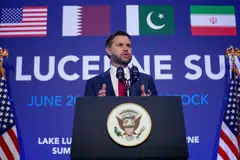
In a Wednesday evening post on X, Cassidy thanked Vice-President JD Vance and Special Envoy Steve Witkoff for a “thorough briefing this afternoon on Iran”.
“I appreciate the quick invitation to the White House to address many of my concerns,” Cassidy said.
Benchmark oil prices fell on Thursday to their lowest since before the war started, as the initial accord between the United States and Iran lifted Iran’s chokehold on the Strait of Hormuz, allowing traffic to flow again.
Iran’s Revolutionary Guards Corps (IRGC) warned vessels to stick to routes designated by Teheran through the Strait of Hormuz, rejecting newly announced shipping routes not coordinated with Iran as unacceptable and dangerous.
The statement came a day after Oman announced temporary shipping lanes through the strait in coordination with the International Maritime Organization.
In a statement, the IRGC urged vessels to coordinate with the Revolutionary Guards Navy via maritime Channel 16, and threatened action against those infringing its requirements.
Before the waterway was blockaded in the war, it had carried one-fifth of global oil and liquefied natural gas shipments.
Conflicting accounts have emerged over elements of the framework deal, which has prompted criticism of Trump at home and abroad.
Financial incentives for Iran, inspections of its nuclear facilities, control of the strait and Israel’s parallel war in Lebanon have all been disputed.
The deal sets up 60 days of talks to tackle thornier details, such as Iran’s nuclear programme.
Regional scepticism
The proposed peace deal has provoked scepticism in the Middle East, where many states came under attack from Iran during the war and view the accord as too generous to Teheran, including a US$300 billion fund and the waiver of some sanctions.
Washington’s Gulf allies fear the reconstruction fund could help Iran rebuild its military. The accord also does not address Teheran’s ballistic missile capacity.
The deal requires Iran to let shipping flow freely through the Strait of Hormuz for 60 days, and Teheran has suggested it might impose tolls after that.
Iran could propose environmental, navigation and security fees in upcoming talks with Gulf states, said a diplomat briefed on the talks. Washington and its Gulf allies oppose such fees.
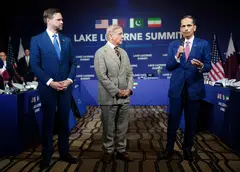
“We are not going to do anything that undermines the security of our allies, our longstanding allies in the region,” US Secretary of State Marco Rubio said in Kuwait City, where the US embassy resumed operations after a stoppage due to the war.
Israel, Lebanon meet in Washington
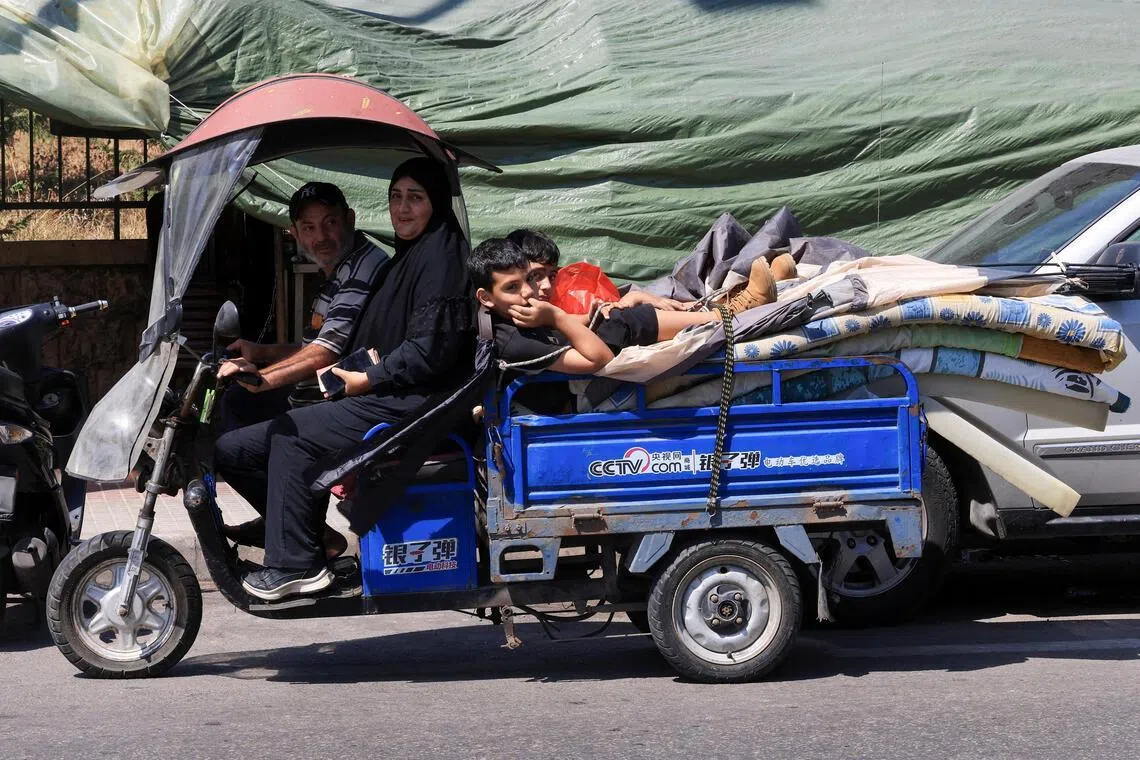
In Washington, Lebanon and Israel discussed a US-backed proposal for Israel’s forces to pull out of some territory it invaded to be handed back to Lebanese army control.
But Israeli Prime Minister Benjamin Netanyahu said Israel would not pull troops out.
Israel has been battling Hizbollah in Lebanon since the militant group attacked Israel on Mar 2 in support of Iran, and Teheran has made a cessation of hostilities there central to its demands in any peace deal with the United States.
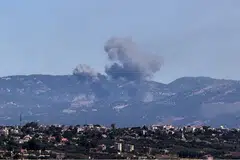
An Israeli drone strike on a car in southern Lebanon killed two people on Wednesday, Lebanese sources told Reuters, while Israel said that it struck two armed Hizbollah fighters. It was not immediately clear if the incidents were the same. REUTERS
Decoding Asia newsletter: your guide to navigating Asia in a new global order. Sign up here to get Decoding Asia newsletter. Delivered to your inbox. Free.
Share with us your feedback on BT's products and services