


Why Asia’s sovereign wealth funds go direct, co-invest in PE deals – and who’s at risk
The trend, set to continue into 2027, will affect an ‘already constrained’ fundraising market, analysts say


[SINGAPORE] Asia’s sovereign wealth funds (SWFs) are increasingly taking direct stakes and co-investing alongside private equity firms this year, in a trend that is likely to continue into 2027, experts told The Business Times.
SWFs are playing a bigger role in recent high-value transactions, with the value of sovereign-backed deals trebling year on year to US$200 billion globally in 2025 from US$67 billion, S&P Global data shows.
The funds are shifting away from investing as passive limited partners (LPs) – an arrangement that typically provides returns only every few years.
LPs – which can be institutional or high-net-worth investors – act as financial backers investing money into a business or fund, in exchange for a share of profits, without taking part in daily management.
Reasons for moving away from LPs include:
- Higher interest rates driving the cost of capital;
- Compressed company valuations; and
- Private markets – previously a key engine of investment outperformance – maturing.
Fees paid out to general partners (GPs) – more active fund managers – and LPs are rising steadily against this backdrop.
This affects the sovereigns, who want more ownership in their deals and are hence more incentivised to seek zero-fee or carry models via direct or co-investments.
Direct and co-investments represent 50 to 60 per cent of sovereign private market deployment, Bain & Company data as at Jun 22 shows. This is up from about 40 per cent in 2023.
Why sovereigns are stepping up
James Ong, group head of asset management at CGSI Singapore, said that there are three reasons why SWFs excel at long-term capital development.

“Sovereigns are structurally patient over decades, have tremendous government relationships, and do not need to raise money – as they are state-backed,” he said in an interview with BT.
More direct or co-investments by the funds will allow them to commit their own equity while leading consortia, alongside their traditional fund allocations.
Analysts from CFGI Singapore said that this is most advantageous to savings-pool and development sovereigns without near-term liabilities or borrowing programmes, which can hold capital longer than traditional closed-end private equity funds.
Examples of savings-pool sovereigns include the Kuwait Investment Authority, Norway’s Government Pension Fund Global and Singapore’s GIC.
Singapore’s state-owned multinational investment firm – Temasek Holdings – acts more as a development sovereign, as it aims to generate sustainable financial returns and deliver positive outcomes to social communities.
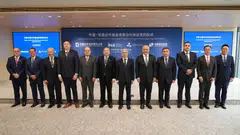
Different sovereigns can come together to create a multi-investor platform, too, such as with the Galaxy Orientis China-Asean Investment Platform, which was launched on Apr 13 this year. The private equity programme is focused on long-term investments across the China-Asean corridor, and is backed by three SWFs.
China Investment Corp, the Indonesia Investment Authority and the State Oil Fund of the Republic of Azerbaijan jointly anchor the platform, which secured around US$520 million in its first close. There are plans to bring the sum raised up to US$1 billion.
CGSI Securities, the overseas arm of China Galaxy Securities, is the platform’s GP, and provides regional expertise, operational support and networks across South-east Asia.
Ong noted that the challenge with more hands on deck through a multi-governance structure may be how things get “operationally more painful”.
In the longer term, however, experts believe that such a move helps the money become a lot more “sticky”, as the cost and duration of their capital in this set-up is still an advantage.
Risks for private equity sponsors
This direction by sovereigns, however, suggests how traditional private equity sponsors are exposed to the risk of losing the largest transactions, said the CFGI analysts.
For one thing, they noted, the jump in sovereign-backed deal value in 2025 is not straightforward.
The surge corresponds to only about a 13 per cent rise in deal count, pointing to concentration in “a small number of very large transactions” rather than a broad expansion of activity.
Typically, the structural response for private equity sponsors is to lean into mid-market assets, where sovereign capital is less active.
Consortium structures are therefore built on larger assets where sovereign and private equity mandates can be “complementary rather than competing”, the CFGI analysts said.
In such a structure, the GP contributes origination and operational capability, while the sovereign contributes duration.
But the analysts pointed out that sovereigns increasingly seeking co-investments and direct exposure in place of blind pool fees would affect an “already constrained” fundraising market.
Blind pool fees are management and operational charges paid by investors to a fund manager (in this case, a GP) to run an investment vehicle before specific target companies or assets have been selected.
Vincent Ng, co-head of client solutions Asia at Partners Group, said that even amid heightened market competition, private equity sponsors still have a place in most large-scale sovereign transactions, given that their operational know-how is valued.
Other industry observers, however, remain divided on the outlook.
“Capital is consolidating into fewer and larger managers, and (present) sovereign behaviour accelerates that consolidation,” said the CFGI analysts.
IPO exit?
The analysts added that at this juncture, state-linked capital is emerging as a potential liquidity channel in specific situations, particularly in South-east Asian markets with “thin” initial public offering windows.
This was noted in Khazanah-led Malaysia Airports’ privatisation in February 2025.
There was also the February 2026 take-private buyout of Apex Healthcare by Quadria Capital, whose consortium drew co-investment from Malaysia’s Employee Provident Fund, Temasek-backed 65 Equity Partners, and China’s Silk Road Fund.
Additionally, South-east Asia’s SWFs are now making “selective Gulf allocations” in digital infrastructure, the CFGI analysts noted. Artificial intelligence and energy transition were among the dominant themes for deals.
That said, trade sales, sponsor-to-sponsor secondaries and traditional exit routes remain the primary documented channels across Asean.
“Whether sovereign capital becomes a broader exit theme depends on how mandates evolve as more assets reach maturity,” said the CFGI analysts.
Decoding Asia newsletter: your guide to navigating Asia in a new global order. Sign up here to get Decoding Asia newsletter. Delivered to your inbox. Free.
Copyright SPH Media. All rights reserved.






