Xi Jinping has just rewritten the rules of US-China rivalry
Beijing has accepted that it is in competition with the US but wants guard rails in place so that it does not get out of hand
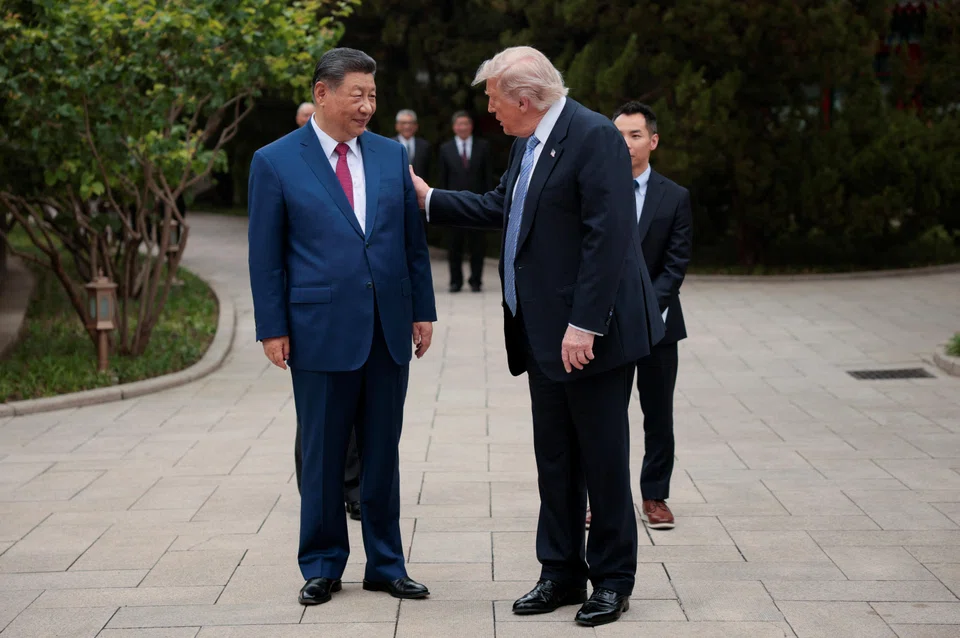
FOR US President Donald Trump, the Beijing trip was ultimately about tangible wins: deals for American companies, jobs back home, relief for farmers, and perhaps even Chinese help in managing the fallout from the Iran war.
For Chinese President Xi Jinping, the visit was about something much bigger.
This was an opportunity not merely to stabilise ties, but to redefine the relationship itself – and to lock Washington into a framework that Beijing believes can govern the next phase of US-China rivalry on terms it can live with.
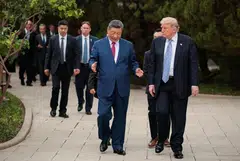
Beijing laid on the pomp and ceremony: President Trump got the goosestepping military honour guards, the carefully choreographed welcome ceremonies, promises of purchases ranging from Boeing aircraft to soya beans and American energy, and even a rare invitation into Zhongnanhai, the leadership compound that serves as both the seat of power and Mr Xi’s official residence.
The commercial deals may dominate headlines in the coming days, but from Beijing’s perspective, they are not the main prize.
Constructive strategic stability
What Mr Xi appears to want most is American acceptance of what he called a “constructive strategic and stable relationship” – a new definition of how the world’s two largest powers will coexist.
That phrase matters far more than it sounds. Chinese diplomacy places enormous weight on formal definitions and political formulations. Once elevated into official discourse by the top leadership, they become organising principles that shape everything from bureaucratic behaviour, diplomatic expectations to future negotiations.
China has spent decades defining relationships through carefully calibrated formulations, and they are not semantic exercises but attempts to establish the political terms of engagement.
SEE ALSO

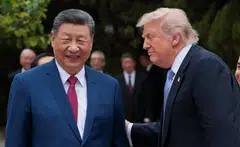
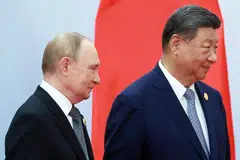
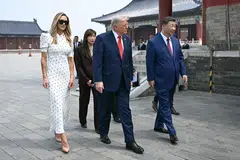
For years, Beijing resisted Washington’s characterisation of the relationship as fundamentally competitive. Chinese officials accused the US of using “strategic competition” as a pretext to contain China’s rise.
As recently as Mr Xi’s 2023 visit to the United States, he publicly rejected the idea that major-power competition should define the relationship at all, insisting the two countries should be “partners, not rivals”.
Now, however, Beijing appears to have adjusted to reality.
By acknowledging “moderate competition” and “manageable differences”, China is effectively conceding that rivalry with the United States is structural and likely enduring. It’s a significant shift. Beijing no longer appears to believe it can persuade Washington to abandon strategic competition altogether and instead, it is trying to shape the terms under which that competition takes place.
In Beijing’s view, “constructive strategic stability” means rivalry that remains bounded and predictable.
China is signalling that it can live with economic, technological and geopolitical competition so long as both sides avoid pushing the relationship into outright confrontation. Implicit in this framework is a demand that Washington stop treating China as an existential threat whose development or regime should be suppressed or undermined.
Beijing’s expectation is not that the US stops competing altogether. It is that competition remains controlled, does not spill recklessly into every domain, and respects what China repeatedly calls its “core interests” – above all Taiwan.
Mr Xi himself made that linkage explicit. Almost immediately after unveiling this new formulation, he warned Mr Trump against crossing Beijing’s Taiwan red lines, signalling that the island remains the ultimate test of whether this promised “stability” can hold.
Beijing has already been quietly moving towards this thinking for some time. During the Biden years, both sides established a series of mechanisms or “guard rails” intended to prevent escalation even as tensions worsened, such as economic working groups and military communication channels.
But this is the first time Beijing has so openly and systematically incorporated competition itself into the official definition of the relationship.
Two leaders, two styles
What also stood out was the contrast in priorities between the two leaders.
Mr Xi spent much of the summit focused on the long-term architecture of the relationship itself. Mr Trump, by contrast, remained focused on personalities and transactions.
He repeatedly praised his “very good relationship” with Mr Xi, spoke enthusiastically about “fantastic trade deals”, and suggested that only he could have secured such agreements. He described Mr Xi as “a great leader”, “very powerful” and a friend whom he respected greatly.
Mr Xi did not reciprocate in personal terms. In a Fox News interview aired on May 15, even Mr Trump himself acknowledged that the Chinese leader was “all business”.
The atmosphere of the summit also felt noticeably different from earlier meetings between the two men.
Beijing hosted the American delegation with far greater confidence than in 2017, buoyed by the sense that China had emerged from the bruising 2025 trade war having found real leverage over Washington through rare earth export controls.
Mr Trump, too, projected a more measured tone. Publicly at least, the visit focused far more on cooperation and deal-making than on longstanding American complaints about China’s economic practices.
Instead, the optics often reinforced the impression that American business had come to Beijing asking for access.
At one point, Mr Trump unexpectedly brought the US business delegation into the room before bilateral talks began so they could personally greet Mr Xi. Some of the most powerful corporate leaders in the world – from tech executives to finance chiefs – stood lined up behind the seated American delegation waiting to be introduced to the Chinese leader.
The symbolism wouldn’t have been lost on anyone watching. Nor would the composition of the delegation itself. By bringing the CEOs of companies like Nvidia, Qualcomm, Apple and Tesla, Mr Trump also appeared to soften the once-hard rhetoric around preventing advanced American technology from reaching China on national security grounds.
The larger question now is how this new framework will hold up when the next crisis hits.
If Congress passes further legislation restricting Chinese investment or tightening export controls, does Beijing view that as legitimate competition or as a violation of “constructive strategic stability”? If tensions flare again in the Taiwan Strait or South China Sea, where exactly are the guard rails?
These questions will remain unanswered for some time.
But with meetings expected again in September, at Apec and possibly the G-20, both sides appear keen to establish a steady cadence of leader-level engagement aimed at keeping the relationship on an even keel.
What Beijing has made increasingly clear is that it no longer believes rivalry with Washington can be avoided. The debate now is about whether it can be managed and more importantly, who gets to define the rules. THE STRAITS TIMES
Decoding Asia newsletter: your guide to navigating Asia in a new global order. Sign up here to get Decoding Asia newsletter. Delivered to your inbox. Free.
Share with us your feedback on BT's products and services