High credit card rates emerge as rare bipartisan midterms issue
About one-third of Americans worry about their debt almost every day, according to a survey
[WASHINGTON] With control of Congress hanging on a number of razor-thin races, both Democrats and Republicans are seizing on voters’ frustrations with rising credit card debt to win over inflation-weary Americans.
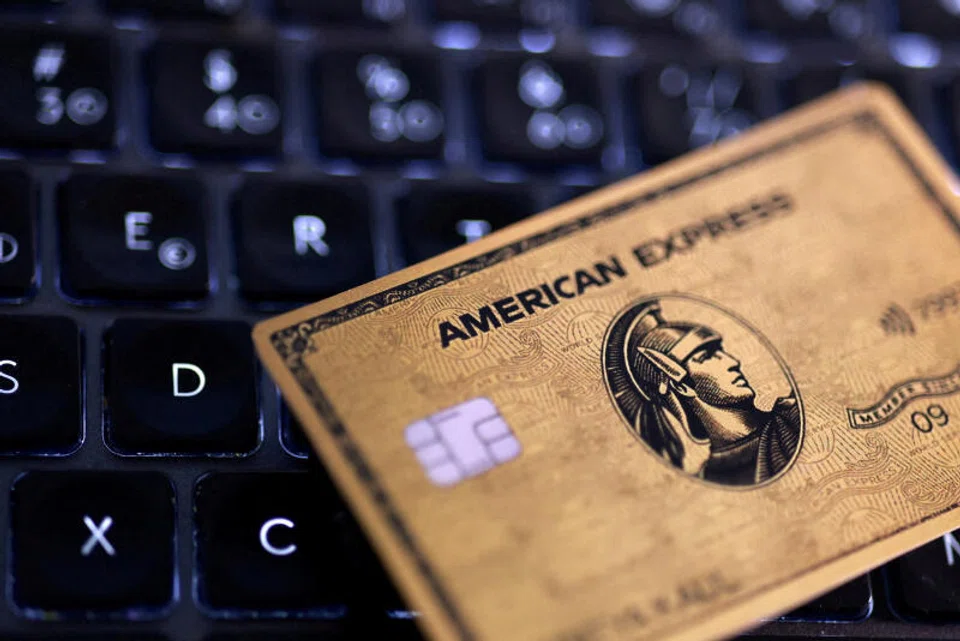
Credit card interest rates are now over 20 per cent on average – nearly double what they were a decade ago – compounding the burden of monthly payments.
The mix of high rates, a pickup in inflation and rising costs across the broader economy has helped drive the credit card delinquency rate toward its highest level since 2011.
On the campaign trail, Democrats like Texas Senate candidate James Talarico and Florida’s Angie Nixon have championed capping the rates set by credit card companies.
US President Donald Trump praised Kansas Senator Roger Marshall for fighting the same “predatory” lenders, and Republican House incumbent Anna Paulina Luna has pushed for bipartisan legislation that would cap credit card rates at 10 per cent.
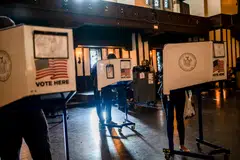
Support for such policies, widely condemned by the nation’s largest banks, underlines the vital role cost-of-living concerns are expected to play in next week’s midterm elections.
Those worries are particularly acute for the voters who cannot pay off their monthly credit card bills.
More than 40 per cent of adults are carrying debt from month to month on their credit cards, according to an analysis by the Century Foundation earlier in 2026.
About one-third of Americans worry about their debt almost every day, according to a survey by Pew Research Center.


“Rising credit card debt is one tentacle of this octopus of affordability that so many voters feel wrapped around them,” said Republican strategist Mark Weaver.
Trump pitched voters on a 10 per cent credit card rate cap in the final stretch of the 2024 presidential race, a time when affordability was also top of mind for Americans.
He revived the idea at the start of 2026, also taking aim at the fees businesses must pay to use credit cards at checkout.
Major banks sharply criticised the proposals, arguing a cap would require them to significantly reduce access to credit for Americans who need it most.
JPMorgan Chase chief executive officer Jamie Dimon called the proposal an “economic disaster”.
While the White House has backed away from the idea of a cap, there is broad-based voter support for the idea – at least temporarily.
A May survey showed 72 per cent of respondents approve of capping credit card interest rates at 10 per cent for one year. That included similar shares of Democrats and Republicans, according to the Harvard CAPS/Harris Poll.
One of those people is Dakota Bradley, 36, a voice actor in Pensacola, Florida. Between high rates and rising costs, the independent voter said he has accumulated more than US$12,000 in credit card debt over the past eight months.
“It comes down to a choice of putting food on the table or covering the credit card payment,” Bradley said. “With these interest rates, it’s unsustainable.”
For the first time, he voted down-ballot for Democratic candidates. Bradley said he now places more trust in Democrats to address his affordability concerns than Republicans.
Florida’s Nixon has called for a cap of 8 per cent, below the 10 per cent endorsed by progressive stalwarts Alexandria Ocasio-Cortez and Bernie Sanders.
Bipartisan groups of lawmakers have introduced bills in both chambers to codify such caps as well as legislation designed to increase competition and lower swipe fees.
While inflation has cooled from the pandemic-era peaks, the Iran war has sparked a new wave of price increases.
Larger-than-usual tax refunds earlier in 2026 helped cushion the blow from rising petrol costs, but those funds have since run dry. When adjusted for inflation, wages have declined for six straight months.
“In 2022, it’s likely that Americans still had that Covid buffer, all the cash built up from stimulus payments and other ways that they were able to cover the rise in prices,” Mattie Duppler, a spokesperson for the Ledger Project, which focuses on financial services issues, said on Bloomberg Television.
The personal saving rate – or the share of disposable income that Americans are putting towards savings – fell in September to the lowest since 2022.
Alternative financing
Low-income borrowers are increasingly relying on alternative financing options with looser lending standards, said Breno Braga, a senior fellow at the Urban Institute. Chief among these offerings are interest-free buy-now-pay-later loans, which have gained popularity.
Subprime borrowers are also turning toward personal loans, which typically have lower interest rates than credit cards, according to Rikard Bandebo, chief economist at the credit scoring firm VantageScore.
But personal loan delinquencies were up 7.8 per cent in September from a year ago, the steepest rise since 2024, according to the company’s internal data.
A bipartisan push, helped by Trump, could lead to meaningful changes in credit card terms. Without legislation, there is little relief for consumers on the horizon.
Prices continue to rise, and the US Federal Reserve has begun to raise its benchmark interest rate again – a move that could ultimately push credit card rates up.
Cuts to federal support for food and healthcare, part of Republicans’ signature One Big Beautiful Bill Act, could put further pressure on debt-strained households.
After years of dealing with credit card debt and economic hardship under both major parties, Ashton McDermott, 29, of Allentown, Pennsylvania said he is not sure either party will be able to truly help.
“Even if Democrats do get into office, nothing changes,” he said. “I’m picking Democrats not because I like them, but because they’re the less sharp edge of the sword.” BLOOMBERG
Decoding Asia newsletter: your guide to navigating Asia in a new global order. Sign up here to get Decoding Asia newsletter. Delivered to your inbox. Free.
Share with us your feedback on BT's products and services