US midterm elections serve as bellwether for South-east Asia
If the Democrats gain control of Congress, there could be a glimmer of hope for this export-dependent region
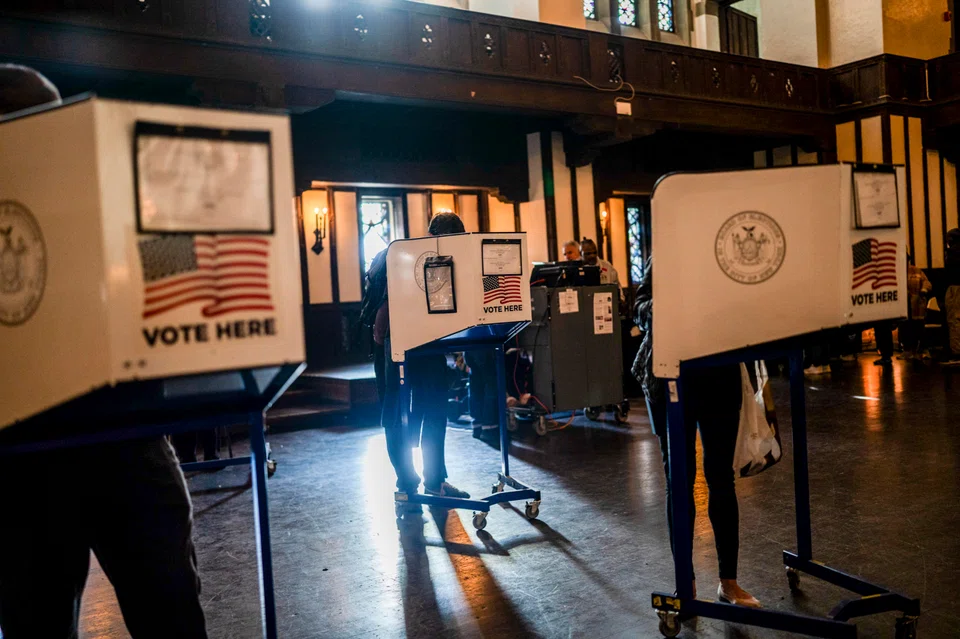
THE US midterm elections – in which one-third of the Senate and the entire House of Representatives are up for election – will take place on Nov 3.
While the midterm results are unlikely to produce a direct and dramatic impact on South-east Asia, they will be an important bellwether providing useful signals about how the region is likely to fare during the remaining two years of the Trump presidency, especially with regard to trade policy.
Historically, the party that controls the White House (in this case, President Donald Trump’s Republicans) typically suffers steep Congressional losses in the midterms.
Although the president does not appear on the ballot, voters view the midterms – termed as such because they come midway through the president’s four-year term – as a referendum on the sitting president.
Currently, Republicans have majorities in both houses of Congress.
Although polling data in the US has been less than reliable, all indications are that Republicans will lose their majority in the House, with control of the Senate likely to be a toss-up decided by one or two closely contested elections.
The Republicans are facing strong headwinds.
The war in Iran, which has dragged on for eight months, is deeply unpopular. The issue voters care most about – high consumer prices – has been exacerbated by Trump’s tariffs.
The recent ratcheting up of tariffs on Canada has been particularly damaging to northern border states such as Maine, Michigan and Alaska, all of which feature closely contested elections.
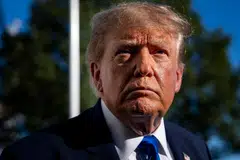
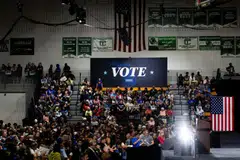
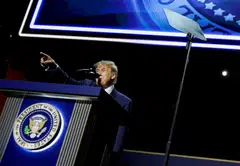
If history and polling data hold up, and the Democrats do indeed win a majority in the House and even the Senate, the legislative branch will take on a more prominent role in relation to Trump.
It has functioned under Republican control almost as a subordinate arm of the White House; conversely, a Democratic-controlled Congress will assume a more assertive and oppositional stance towards the executive branch.
One would expect Democratic-led congressional investigations into the conduct of the Trump administration on a litany of issues where Democrats have alleged wrongdoing.
These include abuse of power by using the Justice Department to target political opponents, as well as lucrative Trump family business dealings in countries with sensitive policy issues pending before the US government.
More importantly, large Republican losses despite Trump’s energetic campaigning efforts – along with the “lame duck” status that accrues to any president in the last two years of a final term – would crack Trump’s aura of electoral invincibility and his vice-like grip on the Republican Party.
Republicans would be less fearful of Trump’s political potency and more willing to differentiate themselves from a president who presided over a midterm debacle.
Positioning for the 2028 Republican presidential nomination would commence in earnest as the party begins to look beyond Trump.
A strong rebuke of “Trumpism” in the midterms would also begin a recalibration in the executive-legislative balance of power when it comes to trade. Higher prices, fed by high tariffs, will be one of the most important factors driving such a rebuke.
One would expect members of Congress – potentially from both parties – to seek to reassert Congress’s traditional role on trade.
Within the Republican Party, there continues to be a pro-free trade wing that has been intimidated into standing down during the Trump presidency. A diminished Trump could encourage them to find their voices.
In practical terms, there is a glimmer of hope for South-east Asian countries dependent on access to the US market.
While the administration’s efforts to reconstruct reciprocal tariffs through Section 301 investigations will continue irrespective of the election results, a Democrat-controlled Congress would be mindful of the tariff-fuelled higher prices distressing its constituents.
Such a Congress would be positioned to push for carve-outs and exceptions. This could provide a modicum of relief for South-east Asian exporters. Any deeper shifts in US trade policy will have to await the outcome of the 2028 presidential election.
On the campaign trail, Trump has been imploring voters to “pretend” he is on the ballot and come out and vote Republican. Given Trump’s abysmal approval ratings, this might seem a curious strategy. It is, however, a fairly logical political calculation.
With no hope of getting the needed “swing” voters, the only viable path for the Republicans is turning out “base” voters in hopefully record numbers. This is an unlikely scenario, but no politician in US history has demonstrated Trump’s ability to pull off shocking comebacks.
Looking ahead
A stronger-than-expected Republican performance would keep Democratic hands off the legislative levers of power and further fortify Trump’s iron grip on Republicans.
The party would continue to revolve around the president. Republican aspirants or incumbents would be compelled to compete for Trump’s favour – and ideally, his endorsement – rather than seek to distance themselves.
Under these circumstances, meaningful political pressure to retrench on trade is unlikely to coalesce.
Trump’s status as a political force of nature would be cemented, ensuring that the legislative branch will continue to grant the president untrammelled authority to pursue a high-tariff trade policy.
For South-east Asia, the midterms will not produce any “game-changing” results. They will, however, provide greater clarity on the broad direction of trade relations with the US for the remainder of the Trump presidency.
The best hope for the region is a strong Democratic showing that at least opens the door to some potential tariff relief on the margins.
The writer is a visiting senior fellow at ISEAS – Yusof Ishak Institute and a non-resident fellow and visiting lecturer at the Yeutter Institute of International Trade.
This is an edited version of an article that first appeared on Fulcrum, Iseas – Yusof Ishak Institute’s blog site.
Decoding Asia newsletter: your guide to navigating Asia in a new global order. Sign up here to get Decoding Asia newsletter. Delivered to your inbox. Free.
Share with us your feedback on BT's products and services