

‘I am ready’: Andy Burnham vows unity after rapid ascent to UK premiership
The incoming leader will inherit a prime ministerial inbox bursting with tricky issues
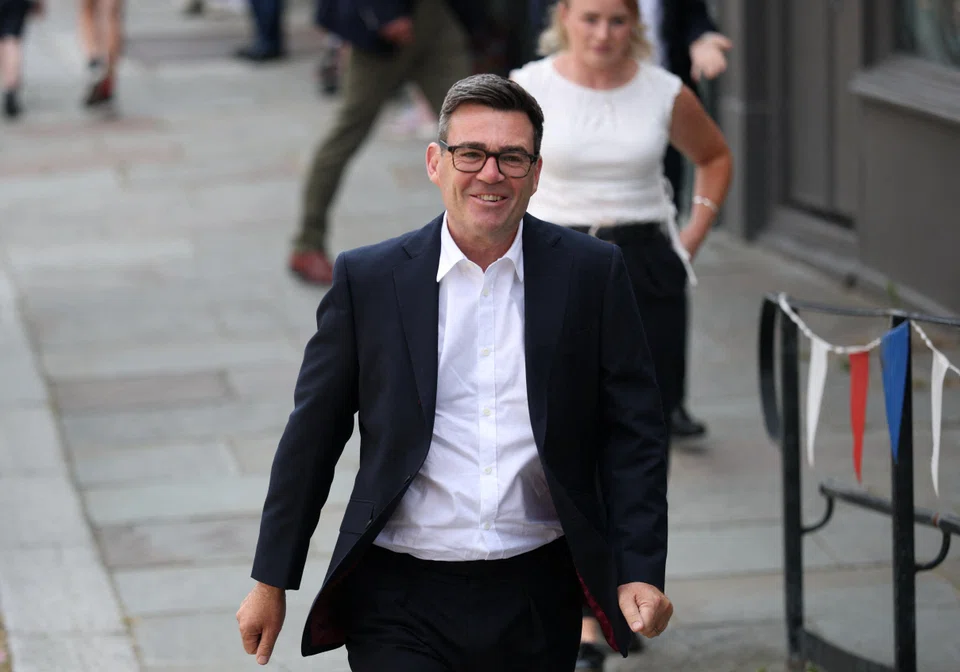
ANDY Burnham is set to become the UK’s seventh prime minister in just over a decade on Monday (Jul 20) with a number of outstanding questions about who will be in his cabinet and the policy direction he will pursue.
In an address from Downing Street, the incoming UK premier will pledge to deliver tangible improvements in people’s lives, while stressing that his rise to high office is a moment for “reflection and resolution,” according to advance remarks sent by his office. He will set out his domestic priorities, and conclude on a “message of optimism” saying Britain can look to the future with “hope and unity.”
Despite securing the backing of the vast majority of his party’s Members of Parliament on Jul 13, Burnham has already irked a swath of his party by refusing to give certainty on who he will appoint to key cabinet positions including Chancellor of the Exchequer, and what policies he will pursue to mark his administration out as significantly different from that of the man he is replacing, Keir Starmer.
The incoming leader will inherit a prime ministerial inbox bursting with tricky issues, including how to keep lowering immigration levels that helped spur the rise of Nigel Farage’s Reform UK party, containing the nation’s ever-increasing welfare bill, reinvigorating Britain’s stagnant productivity and overhauling social care to cater for an ageing population.
On the global front, he will have to contend with an unpredictable US president in Donald Trump, while seeking to maintain British leadership in defence of Ukraine. A key challenge will be ramping up core defence spending to get to a pledged level of 3.5 per cent of national output by 2035.
Burnham’s arrival at 10 Downing Street will complete a dizzying ascent for a Labour veteran and twice-defeated leadership contender who, less than 10 weeks ago, was serving as the mayor of Greater Manchester outside Parliament and with no obvious route to national power.
But Josh Simons’ resignation as the MP for Makerfield gave Burnham a House of Commons seat to contest, and when he resoundingly defeated Nigel Farage’s Reform in the resulting by-election on Jun 18, the momentum behind him became unstoppable. Seeing the writing on the wall, Starmer announced his resignation on Jun 22.
Monday’s events are expected to begin with a mid-morning address in Downing Street by Starmer. He will then head to Buckingham Palace to hand his resignation to King Charles III. Burnham himself will then be driven to the palace for a ceremony called kissing of hands – in modern times, no kissing is involved – at which he will be asked to form a government. He will then head to Downing Street to address the public around lunchtime and following that, is expected to begin appointing his cabinet.
Cabinet plans
The frontrunner to be named chancellor is Home Secretary Shabana Mahmood, a move that will be seen as a snub to Energy Secretary Ed Miliband, the former party leader who was the early favourite for the role and was instrumental in Burnham’s ascent to power. Burnham may install Miliband in the Foreign Office – another major role – in order to pacify him.
SEE ALSO
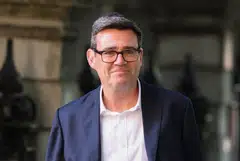
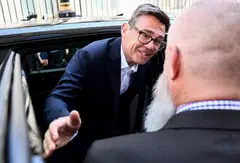
Close Burnham allies Louise Haigh, Anneliese Midgley and Deputy Labour leader Lucy Powell are all likely to be given significant roles.
The fates of Chancellor of the Exchequer Rachel Reeves, Deputy Prime Minister David Lammy, Foreign Secretary Yvette Cooper, former Health Secretary Wes Streeting and former Deputy Prime Minister Angela Rayner will all be closely watched as Burnham seeks to avoid having powerful rivals on Labour’s back benches. Starmer, who remains an MP, is not expected to want or be given a cabinet role.
On Sunday, Powell – who could be deputy prime minister by the end of Monday – sought to defend the opacity around Burnham’s cabinet plans, saying: “You don’t start appointing a government and a cabinet until you’re actually prime minister.” She declined to speculate on her own prospects, saying, “I will wait to see all of that tomorrow.”
Policy-wise, Burnham has said he will stick to the manifesto with which Labour fought the 2024 general election – a move that hinders his ability to raise the Treasury’s three main revenue earners – income tax, national insurance and value-added tax. It also commits him to the triple lock guaranteeing annual rises in the state pension until after the next election. Burnham has also said he will stick to Reeves’ budgetary rules.
In his only major policy speech of a leadership campaign that never gathered speed due to a lack of rivals, Burnham majored on plans to ramp up devolution, including establishing an outpost of No 10 in Manchester, overseeing the biggest house-building programme since the postwar period and giving more control over taxation as well as services such as water, energy and transport to the regions.
Over the Jul 18-19 weekend, Burnham’s team outlined plans to scrap proposals for a national digital ID, vowing instead to plow the cash that would have been spent on the programme – £1.8 billion (US$2.4 billion) over three years according to the Office for Budget Responsibility – into priorities such as measures to alleviate the cost of living for ordinary Britons.
New drilling for oil and gas
In his early days in power, Burnham is also preparing to announce new drilling for oil and gas in the North Sea as well as taking public control of Thames Water, Bloomberg reported on Jul 16.
The North Sea move may ease relations with Trump, who is no ideological bedfellow, but has regularly criticised Starmer and Miliband for curtailing development in the North Sea. Responding to the news, Trump on Sunday posted that people in Aberdeen, the UK’s oil capital, “are dancing in the streets.”
Powell told the BBC on Sunday that while Burnham stands by manifesto promises that include a pledge for no new exploration licenses in the North Sea, he would bring about a “change of emphasis.” That may leave wiggle room for two stalled projects that had licenses, Rosebank and Jackdaw.
“What Andy is talking about is taking a more pragmatic approach and working with the industry to make sure that it can contribute,” she said.
On Thames Water, Powell told Sky that privatisation of the water industry “hasn’t worked,” and added that “the government has powers to bring a distressed water company under special measures.”
On Friday, when he became Labour leader, Burnham promised his government would start to “confidently” lay out a path for the future starting Monday. “I am ready,” he said. “I have a plan.” BLOOMBERG
Decoding Asia newsletter: your guide to navigating Asia in a new global order. Sign up here to get Decoding Asia newsletter. Delivered to your inbox. Free.
Share with us your feedback on BT's products and services
TRENDING NOW
Prima to move out of historic Keppel Road flour mill building in 2028

Grab CEO’s wife Chloe Tong on life with Anthony Tan and finding her purpose

OCBC sheds S$8 billion in value as shares close nearly 6% down; analysts cautious on banks
As Asia’s food delivery giants rejig the pie, who will win the market?

