



Indonesia’s IPO market doubles in early 2025, but can it stay hot?
Analysts caution that geopolitical tensions, shifting capital flows and macroeconomic uncertainty could stall momentum

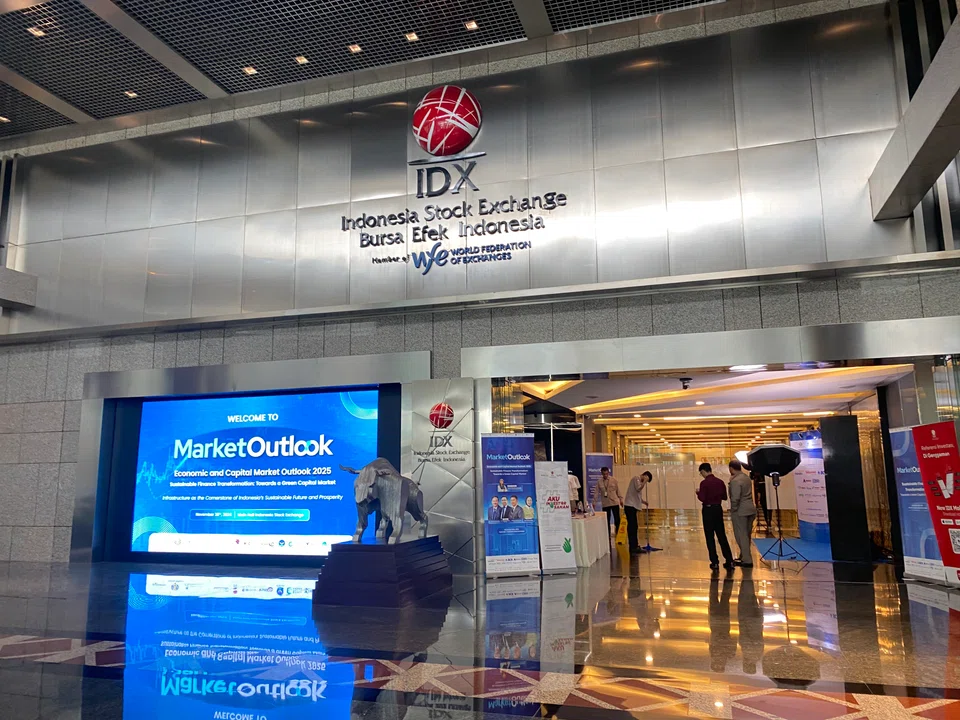
[JAKARTA] Indonesia’s initial public offering (IPO) market is off to a roaring start in 2025, raising nearly US$420 million from 13 listings – almost double last year’s tally for the same period – but the rally may be short-lived.
Analysts warned that the momentum may not last, as ongoing macroeconomic volatility, escalating geopolitical tensions and shifting capital flows cast doubt over Jakarta’s ambitious IPO target for the year.
By early May, 13 companies debuted on the Indonesia Stock Exchange (IDX), pulling in 6.94 trillion rupiah (S$543.2 million) in proceeds – a 79 per cent increase in value compared to the same period last year. Analysts cited the surge in renewed investor confidence after Indonesia’s presidential election last year.
The momentum could be fleeting, with mounting global headwinds – although Amit Singh, head of South and South-east Asia capital markets at Linklaters, pointed out that Indonesia’s IPO pipeline has held up relatively well, with capital flows not shifting away from the country any more than from other markets.
However, the stock exchange’s target of drawing more than 60 IPOs this year is looking lofty.
“That number is unlikely to materialise, which gives the impression of a more significant impact to the country,” he told The Business Times.
He noted that no IPO market in South-east Asia performed particularly well in the first quarter, as investor appetite for new listings cooled in recent months.
“Recent statements from the White House alone have caused near instant double-digit impacts on share prices on multiple occasions, and in an environment like that, issuers and investors will find it very difficult to do deals,” he said.
South-east Asia’s IPO market lost some steam in the first quarter of this year, with both deal count and proceeds sliding year on year. The region had just 27 IPOs raising a total of US$700 million, down from 37 deals that brought in US$800 million during the same period last year, based on the latest EY Global IPO Trends report.
Still, there were pockets of resilience. Malaysia emerged as a bright spot, chalking up 14 IPOs that raised US$300 million – a notable jump from nine listings that raised the same amount a year earlier.
In Indonesia, 11 companies went public between January and March, raising a total of US$400 million – doubling the US$200 million raised during the same period last year.
Meanwhile, Thailand’s IPO scene slowed to two listings worth US$150 million – half the volume and value of last year. Singapore, on the other hand, remained on the sidelines with no IPO activity recorded in the quarter, although there was Vins Holdings in April.
Based on IDX data, there are currently 30 companies in the pipeline, with 10 of them – each boasting assets exceeding 250 billion rupiah – set to debut on the market.
Among the upcoming listings, one to watch is Chandra Daya Investasi, a unit of billionaire Prajogo Pangestu’s Chandra Asri Group, that is set to raise 2.3 trillion rupiah in its debut. It is positioning itself to expand operations in Indonesia’s booming industrial and petrochemicals sector.
Delays among state-owned enterprises
While private firms may still see public fundraising as a viable path, IPOs appeared to have fallen lower on the priority list for many state-owned enterprises (SOEs), their subsidiaries and regionally owned enterprises.
Although no official postponements have been announced, several major state-linked companies – including Pertamina Hulu Energi and top fertiliser producer Pupuk Kaltim – have yet to make progress on their listing plans.
The two companies were previously reported to target fundraising totals of 20 trillion rupiah and 7.5 trillion rupiah, respectively. If these plans come to fruition this year, they would mark blockbuster IPOs for Indonesia, following the IPO boom of 2023.
Oktavianus Audi, vice-president at Kiwoom Sekuritas, suggested that the slow pace of SOE IPOs reflects a shift in strategic priorities, as these companies reassess their next steps in a changing market landscape under the new government.
“Some SOEs are waiting for a clear policy direction from the new administration,” Oktavianus told BT.
He added that broader market turbulence, amplified by tariff-related developments, has pushed investors into a more cautious stance – prompting several companies to hit the brakes on their plans to go public.
The Jakarta Composite Index has been on a rollercoaster ride since US President Donald Trump’s re-election in November, hitting rock bottom on Mar 18, when the stock exchange authority pulled the circuit breaker after a 7 per cent single-day drop.
Trump’s tariff policies, coupled with growing uncertainty over President Prabowo Subianto’s inconsistent policy direction, have shaken investor confidence and triggered capital outflows from Indonesia’s equity market.
In the first quarter of this year, the benchmark posted a quarterly decline of 8 per cent, alongside foreign net outflows totalling 30 trillion rupiah.
Since the end of April, however, the market has found some relief, with year-to-date losses narrowing to 3.5 per cent as tariff volatility eased amid ongoing trade talks between Washington and its global partners.

Against the tide
Despite the stormy weather, a number of recent IPOs have turned heads, with some deals sailing through oversubscription, showing that investor enthusiasm is still very much alive.
IPO deals such as those of energy company Raharja Energi Cepu and Fore Coffee – each oversubscribed by 313 times and 200 times, respectively – generated significant investor attention, reflecting a level of enthusiasm that stands out in a challenging market environment.
Yet, much of this enthusiasm may be driven by speculative appetite, said Oktavianus from Kiwoom, who noted that both issuers have ties to powerful business and political networks.
Raharja Energi Cepu is reportedly owned by Happy Hapsoro, son-in-law of former president Megawati Sukarnoputri, while Fore Coffee is backed by Sinar Mas Digital Ventures, the venture capital arm of the Sinar Mas Group.
Fleeting chance
Among South-east Asian countries, analysts see Indonesia and Malaysia as the frontrunners to regain momentum in the latter half of the year.
However, they agree that the rebound in IPO activity in 2025 will depend on the stabilisation of macroeconomic conditions and progress in resolving global trade tension.
Hendriko Gani, investment analyst at Stockbit, said: “If global conditions improve, we’re likely to see more companies pursuing IPOs, supported by clearer expansion plans, stronger investor confidence and greater global stability.”
Singh from Linklaters said Indonesia’s resource-rich profile could mean certain companies might be disproportionately affected by tariffs or other import restrictions.
“However, most market participants believe it is still too early to determine the ultimate direction of these trade discussions, so it’s premature to assume that Indonesia’s IPO pipeline will be affected by this,” he said.
He pointed out that sectors such as infrastructure, renewable energy and consumer goods could emerge as investor favourites once market conditions stabilise – potentially serving as key drivers of growth for Indonesia’s IPO pipeline.
TRENDING NOW

Once staunchly pro-China, Malaysian Chinese businesses are now distancing themselves from Beijing

Looking beyond looming CEO succession, should UOB potentially pursue a transformative merger?

Could stablecoins be the future of money?

Grab CEO’s wife Chloe Tong on life with Anthony Tan and finding her purpose

