



Iran threatens ‘full offensive’ while Trump rejects ceasefire extension
Trump says US would “bomb” ally Oman if it “got in the way” in negotiations with Iran
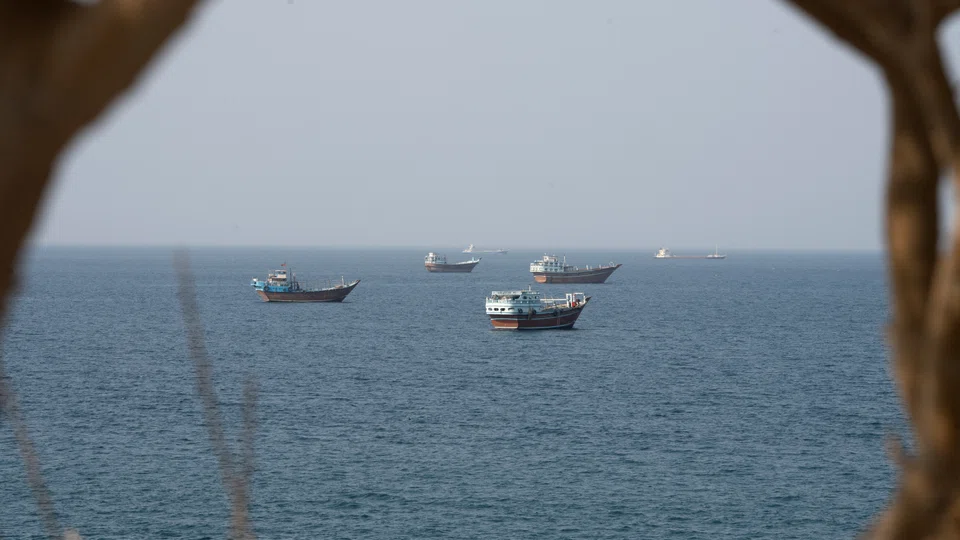
[DUBAI/ WASHINGTON] Iran will shift to a “fully offensive” military posture because efforts to negotiate a permanent end to its war with the US have stalled, a senior Iranian official told Reuters on Monday (Aug 17), as Washington ruled out extending a temporary ceasefire agreement.
Outward progress towards peace talks and a resumption of oil tanker traffic through the strategic Strait of Hormuz has ground to a halt, with no sign that the warring parties are moving towards ending the conflict that the US and Israel launched on Feb 28.
“Iranian entities must be prepared to escalate tensions in the Strait of Hormuz and wider region, as Iran will be ready to make decisions and take action on difficult decisions,” the Iranian official said, adding that Teheran would conduct a “timely and precise” military attack to break the US naval blockade if diplomacy failed.
A memorandum of understanding signed in June to end the war had given Iran and the U.S. until Monday to reach a final peace agreement. Signed on Jun 17, the memorandum set a 60-day timeframe for a broader deal on Iran’s nuclear programme and US sanctions.
The agreement, which declared the “immediate and permanent termination of military operations on all fronts”, quickly unravelled over a dispute over control of the Strait of Hormuz, the narrow waterway through which a fifth of global oil and liquefied natural gas flowed before the war.
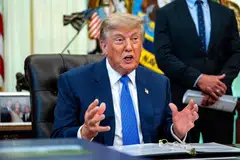
Asked by reporters on Monday if the US was seeking to extend June’s interim agreement, US President Donald Trump said no.
Back channel to IRGC
In one glimmer of diplomacy, media reports said Trump had opened back-channel discussions with the Islamic Revolutionary Guard Corps (IRGC) , which has become more powerful during the war and controls large parts of Iran’s armed forces and the economy.
Axios, citing two sources with direct knowledge, reported that US’ former director of national intelligence Tulsi Gabbard spoke with an Iraqi Kurdish leader with close ties to the IRGC, and that through this intermediary the US delivered a message to IRGC commander General Ahmad Vahidi.
Fox News later reported that Trump confirmed the report in a telephone interview.

The Trump administration was concerned whether Iranian negotiators across the table actually spoke for the IRGC, Axios said, at a time when Reuters was reporting that Vahidi had become a pivotal figure.
Vahidi responded that he was aligned with the Iranian negotiators, Axios said.
“I can’t go into the details of it, but I will say that the conversations between the US government and different areas of the Iranian government at all areas is probably more robust than it’s maybe ever been,” Jared Kushner, Trump’s son-in-law and special envoy, said in a separate interview with Fox News’ chief foreign correspondent Trey Yingst on Monday.
Trump threatens to bomb Oman
Iran said point 5 of the Memorandum of Understanding (MoU) gave it the right to manage the strait, which it shares with US ally Oman, while the US rejected that interpretation.
Hostilities resumed as Iran began firing on vessels it said were trying to sail through Hormuz on an unapproved route, and Trump said on Jul 7 that the pact was “over.”
The Iranian official told Reuters the US must meet the entirety of the MoU’s provisions within a few weeks as a precondition for further negotiations.
Even as Iran projects resilience in the war, its leaders are worried that a threat of more economic punishment could increase hardships, reignite unrest and further erode the Islamic Republic’s legitimacy, according to three Iranian officials.
Iran entered the war with high inflation, a weakening currency, energy shortages, sanctions and deep structural weaknesses, and must now contend with damaged infrastructure, disrupted trade, lost production and the cost of rebuilding.
Iran has separately been negotiating an agreement with Oman in managing the strait and says they are close to a deal.
Trump responded to those negotiations with a threat against the Gulf state, a longstanding US security partner.
“If Oman gets in the way, we’ll bomb the shit out of them,” Trump told Fox News.
Houthi attacks stoke concerns over wider war
Thousands of people have been killed in the conflict, mainly in Iran and Lebanon.
Iran has struck US assets and infrastructure in countries including Oman, Jordan, Kuwait, Israel, the United Arab Emirates and Saudi Arabia.
Trump warned Americans in a speech at a rally on Aug 14 to prepare for continued high fuel prices as a result of the war.
Benchmark Brent crude oil futures have surged during the conflict, hitting a peak of US$126 a barrel, roughly 75 per cent above pre-war levels. Brent crude settled more than US$2 higher on Monday to US$90.87 a barrel.
For Americans who will vote in November congressional elections, gasoline prices have risen above US$4 per gallon, up from less than US$3 before the war, according to the American Automobile Association. REUTERS
Decoding Asia newsletter: your guide to navigating Asia in a new global order. Sign up here to get Decoding Asia newsletter. Delivered to your inbox. Free.
Share with us your feedback on BT's products and services
TRENDING NOW
Malaysian king buys stake in Singapore-listed mining firm expanding into rare earths

Family offices ‘kept captive’ by relationship managers turn to independent advisers, direct deals

Once staunchly pro-China, Malaysian Chinese businesses are now distancing themselves from Beijing

Could stablecoins be the future of money?

