US-Iran ceasefire collapse proves businesses cannot wait out the war
Corporations should treat volatility as a given
THE fragile truce between the US and Iran didn’t just crack last week. It may have shattered.
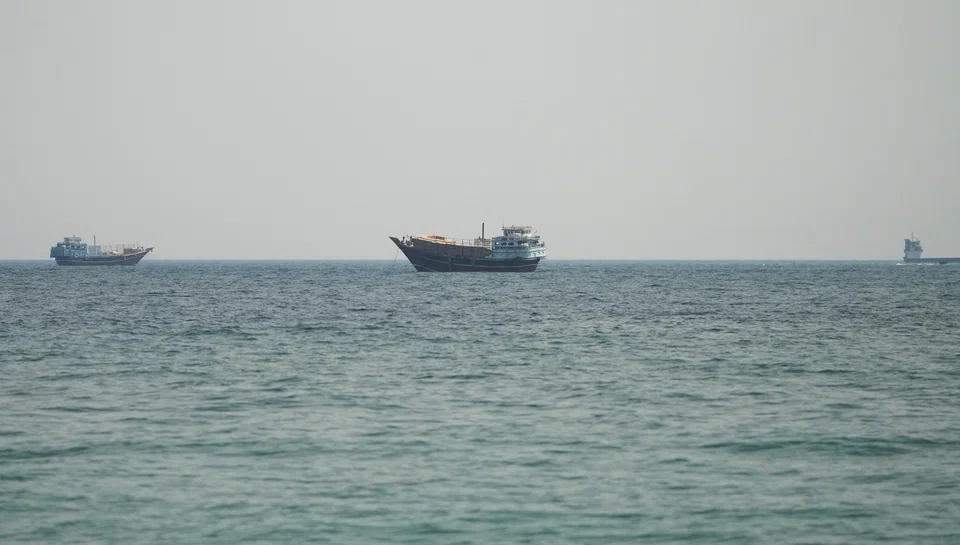
In June, both countries signed a memorandum of understanding (MOU), seeking to formally end months of war. But US President Donald Trump declared the ceasefire “over” on Jul 10, following Iranian attacks on commercial tankers in the Strait of Hormuz.
What followed were multiple days of US airstrikes on Iran targets as well as Iranian missile fire towards Bahrain, Kuwait and Qatar. These attacks reintroduced a level of uncertainty in the global economy that businesses had hoped was behind them.
The return to open conflict is a reminder that the “peace” following the MOU was provisional at best.
The chokepoint remains
Prior to the conflict, roughly a fifth of the world’s oil and a similar share of global liquefied natural gas (LNG) moved through the Strait of Hormuz.
When the war first broke out in February, the strait was effectively closed for weeks, insurance became unavailable or prohibitively expensive and crews refused the transit.
The International Energy Agency called the resulting disruption the largest in the history of the global oil market: spot prices for Brent crude spiked above US$120 a barrel at the worst of it.
Prices had drifted back down towards US$70 in late June as the ceasefire held and traders assumed the worst was over. That belief is now being tested.
On Jul 8, Brent jumped more than 5 per cent in after-hours trading following Iran’s attacks on tankers, war-risk insurance premiums remain elevated, sea-mine risk lingers and Iran has made clear it intends to keep leverage over the waterway even under a formal deal.
The pre-war status quo, where Iran had no practical say over what moved through Hormuz, is probably gone for good.
For any business involved in global logistics, freight, retail and manufacturing with just-in-time supply chains, this means planning around a structurally less predictable chokepoint, not just riding out a temporary spike.
Fuel, fertiliser and food
The oil-price story gets the headlines, but the conflict’s economic footprint is wider.
Roughly 30 per cent of internationally traded fertiliser, and a similar share of LNG bound for Asia and Europe, also transit the strait or originate from Gulf producers.
That matters well beyond the energy sector. Higher diesel and fertiliser costs feed directly into food prices and retail logistics, and airlines have already had to pass on jet-fuel surcharges once.
With the renewal of conflict, companies should be prepared to face rising cost pressures again.
Pricing in risk for longer
Global equities have been choppy on the conflict’s twists, climbing on ceasefire optimism and dropping on escalation news.
The pattern investors should expect going forward isn’t a single shock and recovery, but a stop-start cycle: strikes, a pause for diplomacy, a fragile deal, then a trigger event that unwinds it.
That sequence is exactly what played out over the past week, with US officials openly describing a strategy of “striking and then pausing to avoid escalation and let diplomacy work”, as reported by CNN. It’s a posture that keeps risk elevated rather than resolving it.
For investors, that argues for treating Middle East risk as a persistent input to the performance of markets, rather than a one-off event to wait out.
Not every business is suffering
It’s worth noting the war hasn’t hurt everyone equally. US and Russian oil exporters have reportedly gained billions of dollars in additional revenue as buyers sought alternatives amid oil supply disruptions.
Gulf states that can route around the strait, like Saudi Arabia via its Red Sea pipeline, have fared better than those that can’t, such as Qatar, Iraq and the United Arab Emirates.
The renewable energy and electric-vehicle sectors have also received a tailwind. Europe reportedly logged record EV sales in April as fuel costs spiked, and manufacturers of solar equipment, for instance, saw sales jump in March.
That unevenness matters for strategy: this isn’t simply “bad for business” in the abstract.
It’s a reallocation of costs and opportunities, and which side of that a company lands on depends heavily on its energy exposure, its geography and how quickly it can adjust sourcing.
Ceasefire is more pause
The ceasefire’s collapse shows how fast “resolved” risk can become live again. Businesses that quietly stood down contingency plans after the June memorandum should revisit them.
Energy and shipping cost volatility is likely to persist even if this particular flare-up cools, because Iran’s leverage over Hormuz appears to be a durable feature of the landscape, not a temporary wartime anomaly.
Diversification of suppliers, shipping routes and energy sources is shifting from a nice-to-have to a basic cost of doing business in any sector touching global trade.
None of this guarantees a full-blown return to February’s worst-case scenario, where the strait was effectively closed for weeks.
Rather, it is a reminder that in this conflict, “ceasefire” has so far meant “pause”, not “resolution”. Businesses planning around the latter have been caught wrong-footed more than once.