

Israel strikes Lebanon as US prepares fresh Iran sanctions
11 people die in Israeli strikes, the deadliest since a ceasefire that began at the start of June
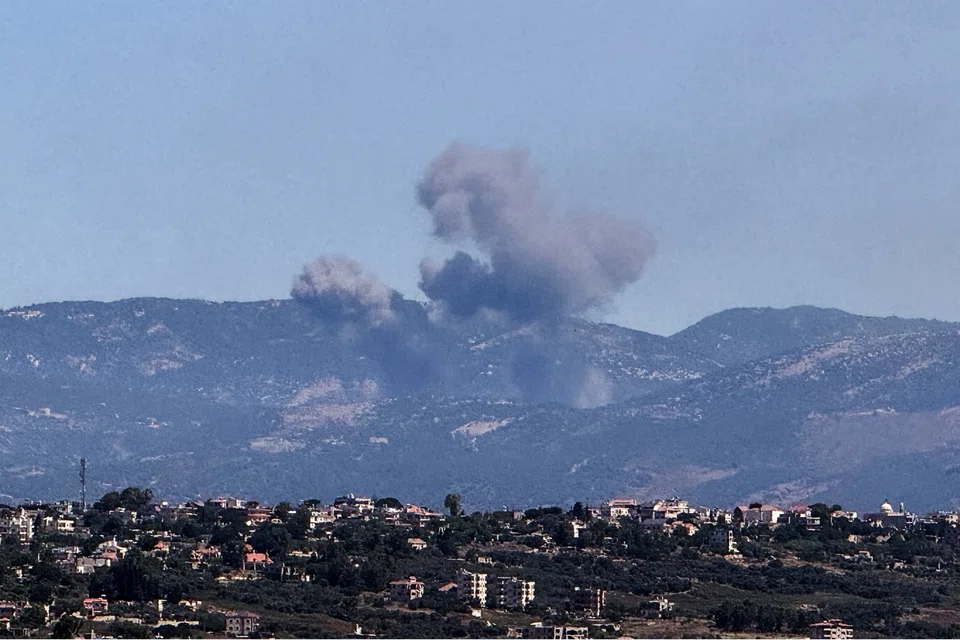
[NEW YORK] Lebanon saw its deadliest day of fighting in months, heaping pressure on stalled US-Iran negotiations while Washington preps fresh sanctions.
The Israel Defense Forces (IDF) said on Sunday (Aug 16) that it killed Abu Hassan Alaa, a senior Hizbollah commander, in southern Lebanon a day earlier.
A total of 11 people died in the Israeli strikes, making them the deadliest since the sides agreed to a ceasefire at the beginning of June.
Israeli Prime Minister Benjamin Netanyahu said the strikes were in retaliation for a Hizbollah attack injuring three soldiers on Saturday. Israel said on Sunday it would strike the Iranian proxy group again if threatened.
The fighting on the periphery of the Iran war may further complicate what appear to be deadlocked negotiations between Washington and Teheran.
The sides are poised to arrive at the formal end of their own ceasefire agreement on Monday with no apparent path forward on the Strait of Hormuz and with the US readying an “economic isolation” plan.
US President Donald Trump, facing a shortfall of key munitions and mounting domestic opposition to an expanded military campaign, is readying new economic measures to force Teheran to capitulate.
He told Fox News on Friday that the US plans to hit Iran’s economy hard and that he did not care whether the conflict ends before the November US midterm elections, which will hinge on voter perceptions of the economy.
It is unclear what additional measures the US could implement without resorting to so-called secondary sanctions.
China buys more than 90 per cent of Iranian oil, but sanctioning Beijing would likely spark retaliatory action, risking blowback on the US economy and even more uncertainty on global energy prices.
“Unless the president decides to prioritise addressing the Iran threat over all other issues, and namely China, it’s unlikely any action they take is going to materially change Iran’s calculus,” Bloomberg Economics analyst Chris Kennedy said.
Iran’s economy has already taken a major hit, with much of its industrial capacity damaged and crude exports severely curtailed by a US naval blockade. Waves of sanctions have failed to force Iran to bend on its nuclear programme or relinquish control over the Strait of Hormuz.
The waterway is a “God-given geopolitical asset for the Iranian nation and this leverage will never return to its former state”, Iran’s semi-official Fars news agency cited army commander-in-chief Amir Hatami as saying on Sunday. “We will protect this capacity with all our power.”
Control of the strait, through which a fifth of the world’s oil and gas transited before the war, is central to stalled talks between Washington and Teheran.
The price of Brent crude rose almost 6 per cent last week as a number of vessels were attacked in and around the strait, further dashing hopes of a quick resolution to the impasse that has disrupted the flow of oil and other key commodities to global markets.
Iran and Oman appear to be finalising a “shipping map” as part of a broader agreement on how to govern traffic in the strait, but the US is not involved in those discussions and is unlikely to agree to terms that do not restore free passage through the waterway.
Iranian Foreign Minister Abbas Araghchi said an agreement with Oman would not translate into the strait’s reopening and is separate from discussions with the US, which is occurring through mediators Qatar and Pakistan.
Yet Middle Eastern oil producers are pressing ahead with shuttling large volumes of crude out of the Persian Gulf, helping keep a lid on global prices and assuaging fears of an energy-driven inflation spike.
A June ceasefire between the US and Iran is set to formally expire on Monday.
Trump already warned that the agreement was effectively “over” in July, when the US and Iran traded tit-for-tat strikes, and Iran has long argued that Israeli strikes on Lebanon are in violation of the agreement.
Attacks continued in and around the Strait of Hormuz.
The UK Maritime Trade Operations said on Saturday that it had been notified of a projectile striking the hull of a bulk carrier.
Two Abu Dhabi National Oil Co vessels were struck while transiting Hormuz on Thursday, with another hit on Friday, according to reports from the United Arab Emirates’ state-run Wam news.
The attacks follow about 65 confirmed incidents involving vessels in the strait between early March and Aug 11 that resulted in at least 17 deaths, according to the International Maritime Organization.
Meanwhile, volatility tied to the US-Iran conflict continues to extend. Citing a military official, Iran’s state-run IRNA reported on Saturday that Doha has for months barred an Iranian delegation from investigating the fate of three pilots who crashed in Qatar during the war.
The spokesperson for Qatar’s Ministry of Foreign Affairs denied claims that the country was detaining Iranian pilots in a post on X late on Saturday, adding that Doha was “surprised by these misleading statements at this particular time, amid the ongoing diplomatic efforts and initiatives aimed at de-escalating tensions in the region”.
Israel also continues to clash with Hamas operatives in Gaza in addition to Hizbollah, while the Houthis have attacked ships in the Red Sea. All three groups are backed by Iran.
US peace envoy Jared Kushner discussed the implementation of a peace pact in the Gaza Strip with mediators Egypt, Turkey and Qatar, ahead of his planned trip to Israel this week for more talks.
Kushner, Trump’s son-in-law, met with Egyptian President Abdel-Fattah El-Sisi in New Alamein on the Mediterranean, where they discussed the ceasefire agreement, according to the Egyptian presidency.
Kushner and Nickolay Mladenov, the Board of Peace’s top envoy, also discussed with officials from the three mediating countries ways to accelerate the Gaza ceasefire’s second phase, Al-Qahera News reported.
The initial ceasefire phase of the Trump plan was reached last October.
Kushner confirmed the roadmap deal is final and will not be open for further discussions, according to a Hamas politburo member, who spoke to Bloomberg on condition of anonymity because Hamas is not making the news public before the mediators do.
Israel, the member said, has to openly agree to the deal with no violations.
The attacks between Hizbollah and Israel threaten to derail a US-brokered ceasefire between the Israeli and Lebanese governments that provides for Hizbollah’s disarmament.
It also envisions the IDF eventually withdrawing from territory it has occupied and that the Lebanese army will step in to maintain security. BLOOMBERG
Decoding Asia newsletter: your guide to navigating Asia in a new global order. Sign up here to get Decoding Asia newsletter. Delivered to your inbox. Free.
Share with us your feedback on BT's products and services






