

Japan considering sales tax cut in April 2027
The government is considering lowering the 8% levy to 1% from next April
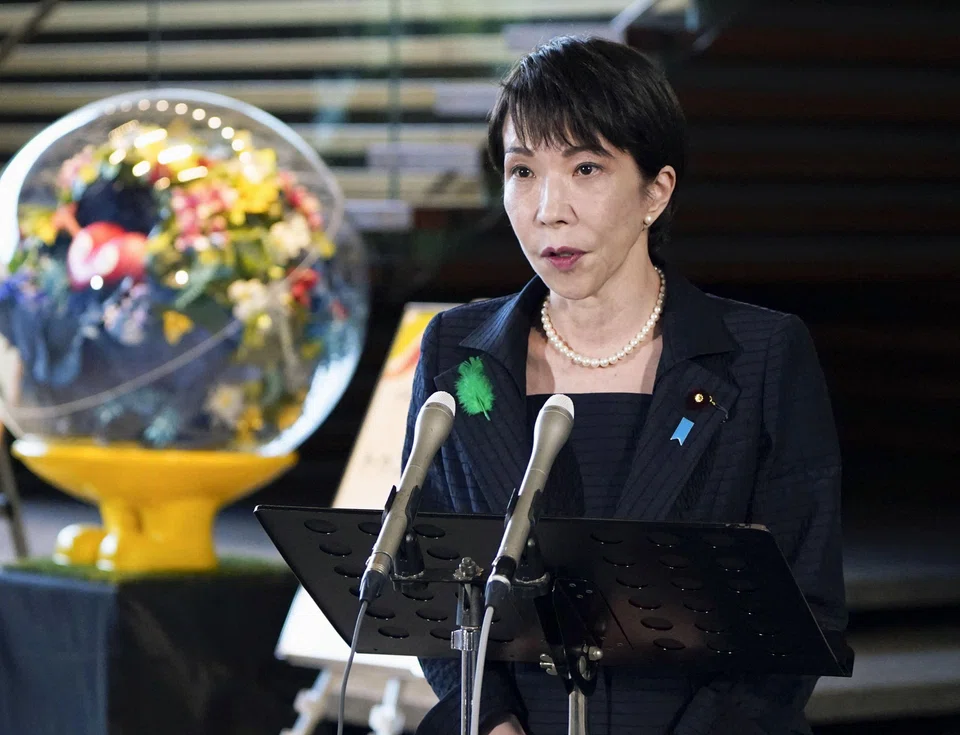
[TOKYO] Japan is considering rolling out a two-year cut to its tax on food sales from April next year, the Mainichi newspaper reported, a move that could draw renewed investor attention to the country’s worsening finances.
The government is considering lowering the 8 per cent levy to 1 per cent from April next year, the newspaper said on Monday (Jun 1), citing an unnamed government executive, a timeframe that would allow dovish Prime Minister Sanae Takaichi to promote the move ahead of municipal elections slated that month.
Key to the move would be knowing how to fund the temporary tax cut as bond vigilantes continue to test Takaichi’s resolve to pursue her expansionary fiscal policies without relying too heavily on new debt issuance.
“The biggest problem with this tax cut debate is that there has been almost no progress in discussions on how to fund it,” said Takahide Kiuchi, an economist at Nomura Research Institute.
“Pushing the tax rate back up again after two years may also prove difficult as households may oppose the move as a de-facto tax hike,” he said.
Back in January, Japanese government bond yields spiked on concern over additional debt sales when Takaichi pledged to scrap the 8 per cent levy on food sales for two years to help households weather the pain from rising living costs.
Since then, details of the plan have been discussed in a meeting of ruling and opposition parties with the findings expected to be announced by the government this month.
The sales tax rate is likely to be cut to 1 per cent instead of the initially planned 0 per cent to avoid the lengthy time needed to fix cash register systems to recognise a zero tax rate, the paper reported.
Economy Minister Minoru Kiuchi declined to comment, when asked about the media report in a news conference.


Japan levies an 8 per cent consumption tax on food and a 10 per cent rate on other goods and services, key sources of funding for rising social welfare costs among a rapidly ageing population.
Of Japan’s record US$764 billion 2026 budget, about a quarter is funded by debt issuance and nearly 22 per cent by consumption tax, the biggest tax revenue source.
Suspending the 8 per cent food sales levy, which Takaichi described as her “long-cherished dream,” would cost 5 trillion yen (S$39.9 billion) per year, roughly equivalent to spending on education. A cut to 1 per cent would likely cost 4 trillion yen annually.
The bond market selloff in January was also driven in part by the lack of clarity on how Japan would fund the tax cuts.
The Nikkei newspaper reported on Tuesday (Jun 2) the government may seek to fund the sales tax cut with an expected increase in overall tax revenues, to avoid issuing additional debt.
Japan’s economic recovery and inflation have led to a steady increase in tax revenues. The government expects to reap tax revenues of 83.7 trillion yen in the current fiscal year ending March 2027, up 25 per cent from five years ago, the Nikkei said. REUTERS
Decoding Asia newsletter: your guide to navigating Asia in a new global order. Sign up here to get Decoding Asia newsletter. Delivered to your inbox. Free.
Share with us your feedback on BT's products and services
TRENDING NOW
LTA proposes combining car COE categories, adding rebate-surcharge system
StarHub to acquire MyRepublic’s mobile business amid ongoing telco consolidation

DBS, OCBC, UOB rout lops billions off STI as inflation, rate concerns spook investors

Grab CEO’s wife Chloe Tong on life with Anthony Tan and finding her purpose

