

Japan may see more yen intervention, faster BOJ rate hikes: former top currency diplomat
Intervention only buys time with more fundamental steps needed to reverse the yen’s downtrend, said Mitsuhiro Furusawa
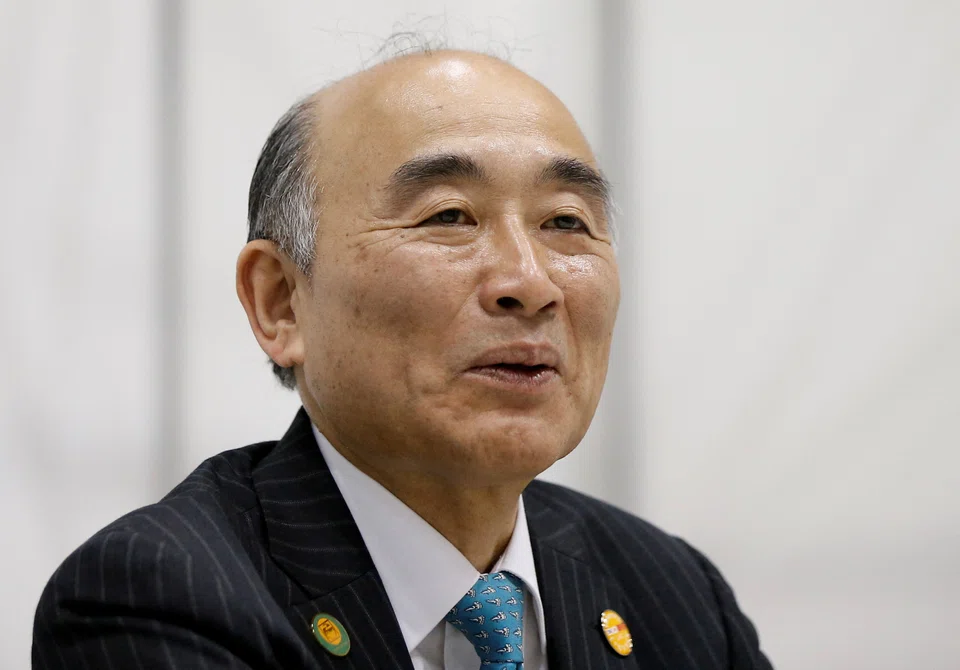
[TOKYO] Japan may conduct joint yen intervention “at any time” and signal the chance of faster-than-expected interest rate hikes to stem the currency’s falls, said Tokyo’s former top currency diplomat Mitsuhiro Furusawa.
The yen is “clearly too weak” at current levels and hurting the economy by boosting import costs, Furusawa said, adding that Tokyo and Washington could step in again if the yen returns to levels hit before their joint intervention in July.
“It is probably not a matter of intervening specifically at, say, 160 or 162 yen per (US) dollar. But intervention could take place again at any time, including coordinated action with the United States,” he told Reuters in an interview on Thursday (Aug 13).
Tokyo’s coordinated intervention with Washington drove up the yen to around 155.20 per US dollar from a 40-year low of 163.99. It has since slid back to around 159.50.
Intervention only buys time with more fundamental steps needed to reverse the yen’s downtrend, such as faster rate hikes by the Bank of Japan (BOJ), said Furusawa, who retains close contact with Japanese and overseas incumbent policymakers.
“Most market players believe the BOJ will raise rates in September and I think it should,” though what is more crucial is for the central bank to communicate the likelihood of a faster pace of rate hikes, Furusawa said.
Since exiting a massive, decade-long stimulus in 2024, the BOJ has raised interest rates at a pace of roughly twice a year including in June, when it took rates to a 31-year high of 1 per cent.
“My guess is that the BOJ would like to raise rates to around 1.5 to 1.75 per cent judging from its estimate that Japan’s neutral rate - or the level that neither cools nor overheats growth - sits in a range of 1.1 to 2.5 per cent,” Furusawa said.
“After September, the next move would likely come in December or January, followed by another hike sometime in the next fiscal year (beginning in April 2027), provided that the economy does not lose momentum,” he added.


A nudge from US Treasury Secretary Scott Bessent and a slew of hawkish BOJ communications have locked in a rate hike in September. Markets now see a 76 per cent chance of a hike in September, according to Tokyo Tanshi data, compared with 24 per cent on Jul 30.
Furusawa said it was important that Prime Minister Sanae Takaichi’s administration does not get in the way of the BOJ’s rate hikes and meet its pledge on fiscal sustainability.
“The ideal outcome would be to use monetary and fiscal policy to move away from a situation where the yen is excessively sold, while growth strategies begin to bear fruit and strengthen the Japanese economy,” Furusawa said. “That would allow the yen to appreciate gradually over time.”
After his stint at Japan’s finance ministry, Furusawa served as deputy managing director of the International Monetary Fund until 2021 and is currently president of Sumitomo Mitsui Banking Corp’s Institute for Global Financial Affairs. He met Bessent in 2025 as a member of Abac, a group of business executives advising Asia-Pacific Economic Cooperation leaders. REUTERS
Decoding Asia newsletter: your guide to navigating Asia in a new global order. Sign up here to get Decoding Asia newsletter. Delivered to your inbox. Free.
Share with us your feedback on BT's products and services
TRENDING NOW

Once staunchly pro-China, Malaysian Chinese businesses are now distancing themselves from Beijing

‘How many will survive?’: Bubble fears arise as China’s humanoid robotics face reality check

Philippine power giant First Gen rebuffs foreign offers, plans up to US$2.6 billion in expansion
Indonesia imposes US$116 million in fines over manipulation of Sinar Mas, Prajogo-linked stocks

