

Japan’s economy grows at solid pace in Q1, but Iran war set to upend momentum
On a quarter-to-quarter basis, the economy grows 0.5%
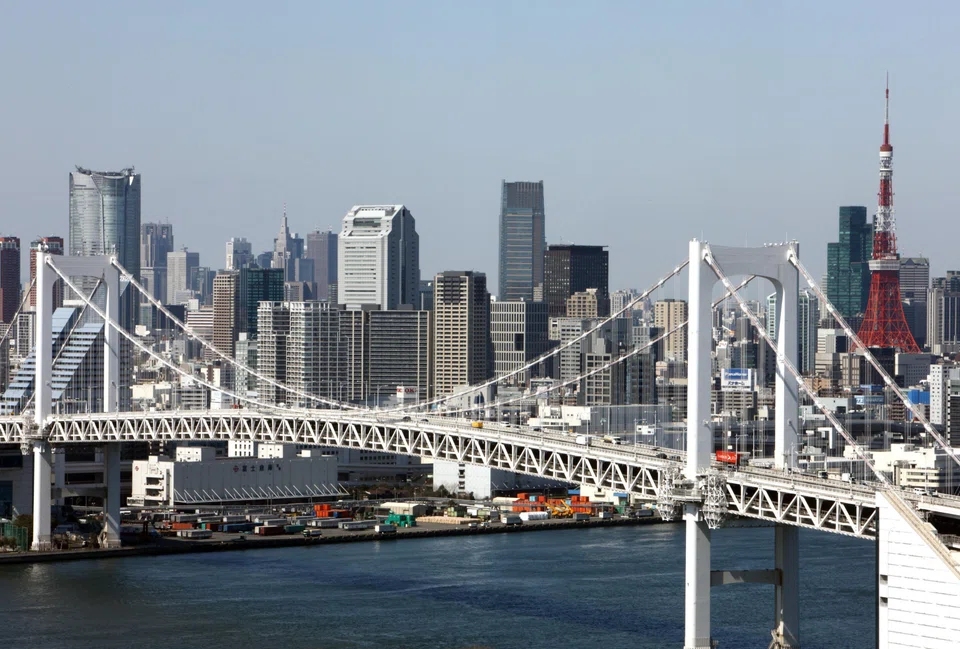
[TOKYO] Japan’s economy grew at a faster-than-expected pace in the first quarter, though that momentum now faces a severe test as the full force of the energy shock from the Iran war filters through businesses and consumers.
Japan’s real gross domestic product (GDP) increased an annualised 2.1 per cent, data showed on Tuesday, outstripping the median market forecast for a 1.7 per cent gain and a revised 0.8 per cent rise in the previous October-to-December quarter.
On a quarter-to-quarter basis, the economy grew 0.5 per cent compared with the median market forecast for a 0.4 per cent gain.
Analysts expect growth to slow in the coming quarters as the fallout from the Middle East conflict, which has caused an unprecedented disruption to global energy supplies, intensifies.
“Today’s data shows the economy was on a solid footing before the Iran war, which means it has some buffers to weather the energy shock,” said Yoshiki Shinke, senior executive economist at Dai-ichi Life Research Institute.
“The economy may contract in the second quarter but if it’s just about prices rising overall, it can probably resume a recovery thereafter. If there’s huge supply disruptions, the damage to growth could be so severe the BOJ may not have scope to raise interest rates,” he said.
Private consumption, which accounts for more than half of Japan’s GDP, rose 0.3 per cent, compared with market forecasts for a 0.2 per cent gain, the government data showed.
Net external demand, or exports minus imports, added 0.3 percentage point to growth. Analysts polled by Reuters had projected a 0.2 percentage point contribution.
Capital expenditure grew 0.3 per cent in January-to-March quarter compared with market forecasts for a 0.2 per cent gain, the data showed.
SEE ALSO





While the data suggests domestic demand and business spending were holding up, risks to the economy have heightened since the Middle East conflict erupted on Feb 28.
Iran effectively shut the Strait of Hormuz in response to US-Israeli attacks, sending oil prices soaring and stoking fears of severe supply disruptions.
Japan is particularly vulnerable to the energy shock due to its heavy reliance on oil imports from the Middle East, with surging fuel costs driving up inflation, while weighing on corporate profits and the broader economy.
The shift in the outlook is already rippling through policy expectations. The Bank of Japan has dialled up hawkish signals that had prompted markets to price in a strong chance of an interest-rate hike in June. REUTERS
Decoding Asia newsletter: your guide to navigating Asia in a new global order. Sign up here to get Decoding Asia newsletter. Delivered to your inbox. Free.
Share with us your feedback on BT's products and services
TRENDING NOW

LTA proposes combining car COE categories, adding rebate-surcharge system

StarHub to acquire MyRepublic’s mobile business amid ongoing telco consolidation

DBS, OCBC, UOB rout lops billions off STI as inflation, rate concerns spook investors

Grab CEO’s wife Chloe Tong on life with Anthony Tan and finding her purpose

