

Japan’s government blueprint nudges BOJ to fuel demand, clouding rates path
It calls for the central bank to align its decisions with Prime Minister Sanae Takaichi’s drive to reflate growth
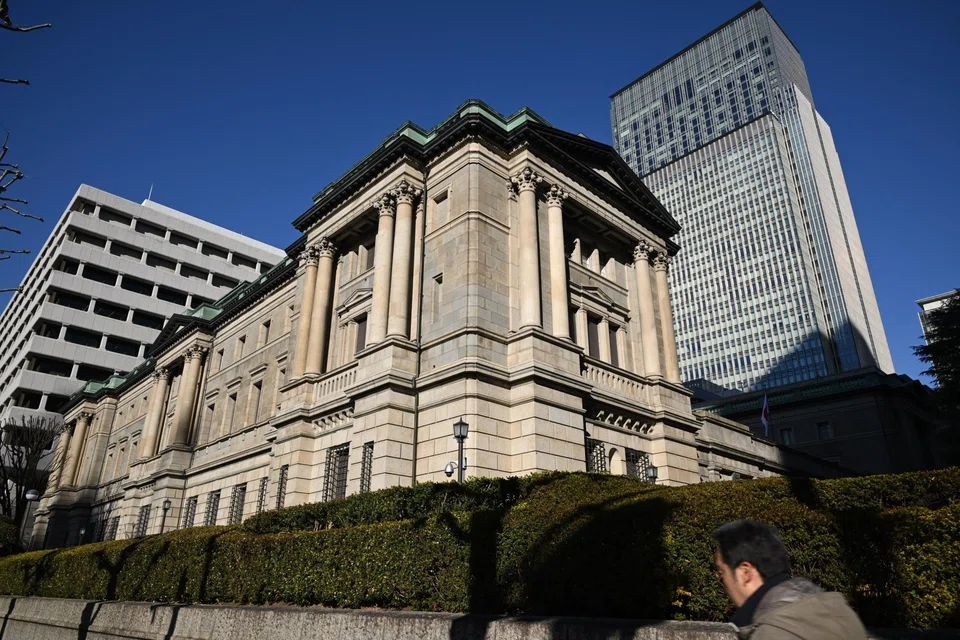
[TOKYO] Japan’s government will call for monetary policy that bolsters private demand, a draft of its long-term economic blueprint reviewed by Reuters on Wednesday (Jun 24) showed, signalling a preference for keeping borrowing costs low and setting up potential policy tensions with the central bank.
The draft urges the Bank of Japan (BOJ) to align its decisions with Prime Minister Sanae Takaichi’s drive to reflate growth, citing legal provisions requiring the central bank to coordinate policy with the government.
The unusually explicit language underscores the Takaichi administration’s growing unease with further rate hikes, as the BOJ exits years of ultra-loose policy, and signals a stronger push for coordination that can shape the timing and pace of tightening in the months ahead.
It also pledges the government will take “nimble and sufficient” steps to prevent a return to deflation while lifting long-term growth.
“As the government seeks to achieve strong growth under its economic and fiscal policy, appropriate monetary policy that supports private demand through stable price rises is extremely important,” the draft said.
It has long been customary for administrations to include a paragraph on monetary policy in the blueprint, though most have kept the language deliberately vague, typically only urging the BOJ to guide policy appropriately to achieve price stability.
The draft of Takaichi’s blueprint breaks from that practice, explicitly calling for policy to support private demand and invoking the legal requirement for the BOJ to align with government policy.
It also echoes “Abenomics”-style stimulus while recognising a changed environment of inflation hovering around the 2 per cent target, driven in part by the Iran-linked energy shock.
Takaichi is known as a fan of “Abenomics”, a mix of big fiscal spending and bold monetary easing deployed by former premier Shinzo Abe to pull Japan out of prolonged deflation.

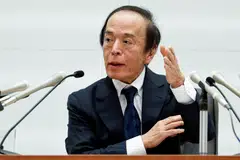

Former BOJ board member Takahide Kiuchi said: “While the phrasing is indirect, the language appears to push back against rate hikes and underscores the government’s caution against downside risks to the economy associated with any premature rate increases.”
Global central banks are facing increasing pressure from their governments over monetary policy, as the Iran war-induced energy shock heightens the risk of stagflation – an unwelcome mix of low growth and high inflation.
Stubbornly high US inflation has left the US Federal Reserve’s new chairman Kevin Warsh with little scope to deliver the rate cuts that President Donald Trump has said he expects.
BOJ independence in focus
The blueprint, to be finalised in July, will be the first to be compiled by Takaichi, who has in the past voiced reservations over the BOJ’s efforts to wean the economy off deflation-era stimulus.
While Japanese law guarantees BOJ independence, it also mandates close coordination with the government to ensure policy alignment.
Citing that requirement, the draft urges the BOJ to “work closely with the government to sustainably and stably achieve its 2 per cent inflation target”, while monitoring progress towards a “positive cycle” of wage and price gains.
The benchmark 10-year government bond yield slid to 2.625 per cent, as the report offset hawkish remarks from BOJ board member Naoki Tamura.
The yen hovered near a four-decade low, trading at 161.73 per US dollar, while Japan’s Nikkei 225 index share average jumped more than 3.5 per cent.
Political pressure complicates BOJ’s job
The BOJ next meets on Jul 30 to 31, when it is widely expected to hold rates steady and update quarterly forecasts that markets will parse for signals on the timing of the next hike.
Since taking office in October last year, Takaichi has emphasised fiscal spending to revive growth, a stance that has pushed up bond yields amid concerns about Japan’s worsening finances.
Takaichi’s new growth strategy targets more than 370 trillion yen (S$3 trillion) in investment through fiscal 2040 in 17 strategic sectors such as artificial intelligence and chips.
Such ambitious spending will benefit from low rates, but mounting inflationary pressures have pushed the BOJ to exit ultra-loose policy and lift borrowing costs.
The central bank raised its policy rate to a 31-year high of 1 per cent this month and has signalled readiness to tighten further, as higher fuel costs linked to the Iran war keep inflation near its target for almost four years.
Hawkish board member Tamura on Thursday called for raising rates once every few months, highlighting the central bank’s focus on inflationary risks from the Middle East conflict.
But political pressure can complicate further tightening.
A government representative who attended the June meeting said a summary of opinions showed that the BOJ must take “proactive and appropriate action” if the economy worsens, in a sign of the administration’s displeasure over rate hikes.
“The Takaichi administration has been refraining from making explicit comments pushing back against rate hikes so far this year. But the language of this draft offers a glimpse of its true feelings,” Kiuchi said. REUTERS
Decoding Asia newsletter: your guide to navigating Asia in a new global order. Sign up here to get Decoding Asia newsletter. Delivered to your inbox. Free.
Share with us your feedback on BT's products and services
TRENDING NOW

Government to bring forward raising of retirement age, give employers more financial support to create flexi-load jobs
Former minister Maliki Osman, Revolut chairman join Asia Gulf Holdings advisory board

Is Manila Asia’s new dining hot spot?

Simba at risk of losing operating licence over spectrum misuse

