Maduro capture: What’s at stake for China’s economic interests in Venezuela
Maduro and his wife are currently in New York following air strikes by the US
[CHONGQING/BEIJING] Venezuelan President Nicolas Maduro’s last publicly reported meeting – just hours before his capture – was with a Chinese special envoy to reaffirm Beijing’s support for the Latin American country and champion for a new multipolar world order.
In his farewell to Qiu Xiaoqi, China’s special representative for Latin American Affairs, at the Miraflores Presidential Palace, he described the relationship between Beijing and Caracas as “the perfect union to the test at all times, always victorious and at full speed”.
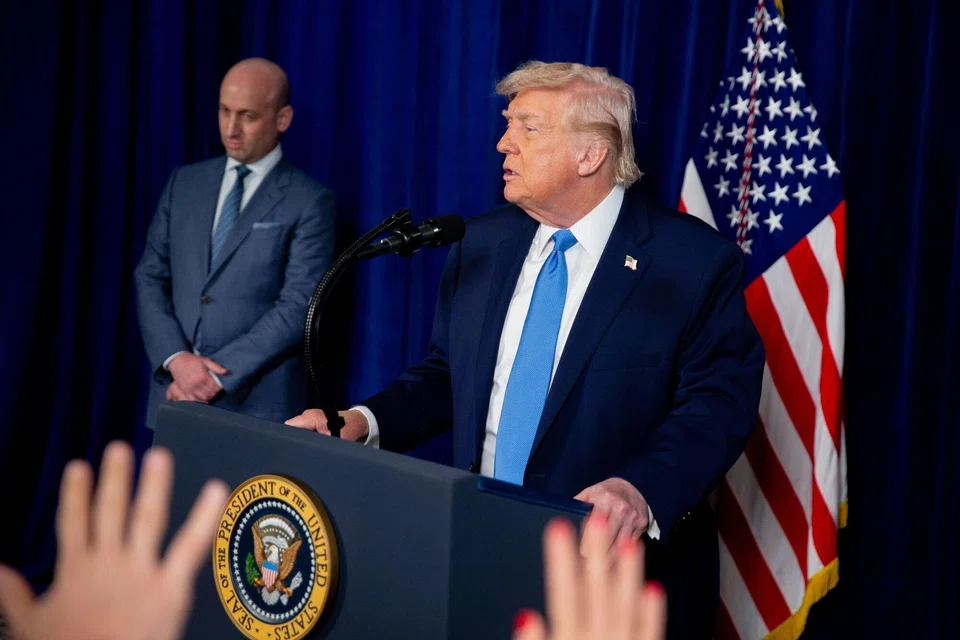
Now, US President Donald Trump’s orders on Jan 3 to capture Maduro have raised questions about how the resulting political instability could affect China’s significant economic interests in Venezuela, Beijing’s key partner in Latin America.
Maduro and his wife are currently in New York following air strikes by the US. They are facing drug-trafficking and weapons charges, among other allegations, levelled against them by Trump.
Beijing has courted Caracas as part of China’s expansion of influence in Latin America in recent decades. The region, traditionally considered the US’ backyard, has experienced renewed US foreign policy interest under Trump.
China and Venezuela elevated bilateral relations to an “all-weather strategic partnership” in 2023 when Maduro met President Xi Jinping in Beijing. China shares this highest-tier of bilateral relationship with only a handful of close partners, including Belarus and Pakistan.
Venezuela is the only country in Latin America with this designation, which is meant to reflect high political trust and mutual support in international issues.
During the two leaders’ last meeting in Moscow in May 2025, Xi told Maduro that “China has always viewed and developed relations with Venezuela from a strategic and long-term perspective”.
“It will, as always, firmly support Venezuela in safeguarding state sovereignty, national dignity and social stability,” he added then.
SEE ALSO

Professor Jiang Shixue of Shanghai University told The Straits Times that “China’s greatest concern would be that its investment in Venezuela would be adversely affected by the current political crisis caused by the US”.
One possible risk for China, should a pro-US government eventually take over Venezuela, is “potential restrictions on Chinese oil companies, while the doors of convenience for American oil firms will be widely opened”, said Jiang, director of the university’s Centre for Latin American Studies.
“But this is a special period, so it is hard to make guesses,” he added.
Currently, Delcy Rodriguez, who was Maduro’s executive vice-president, has become the country’s interim leader, following a Venezuelan court ruling.
Trump had said after the attack that the US will temporarily “run” Venezuela while tapping the country’s oil reserves by bringing in American companies and keeping oil flowing to China. It is unclear for now whether Beijing would have to buy Venezuelan oil through the US, or if the current arrangements between China and Venezuela will continue.
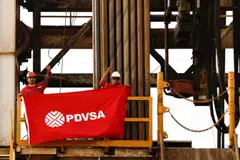
China is Venezuela’s largest creditor and, by far, its largest buyer of oil, accounting for more than 80 per cent of crude exports. China is also a major investor in mining and infrastructure under Xi’s signature Belt and Road Initiative. In 2024, bilateral trade in goods reached US$6.4 billion, a year-on-year increase of 52.5 per cent.
Data by Beyond The Horizon, an independent think-tank in Belgium, estimated in December 2025 that Venezuela still has some US$12 billion outstanding debts with China as part of an oil-for-loans programme by China Development Bank.
Financial magazine Forbes reported on Jan 3 that the amount “is the largest single-country commodity-backed position in Beijing’s portfolio, out of the US$60 billion extended since 2007”.
Venezuela has the world’s largest proven oil reserves. In May 2024, private firm China Concord Resources Corp signed a rare 20-year deal to develop two Venezuelan oilfields, in a project with a planned investment of US$1 billion.
The Chinese concern was formalised in an agreement signed in Caracas that month. China’s international trade representative Wang Shouwen signed an agreement on “mutual promotion and protection of investments” with Rodriguez.
International relations scholar Jin Canrong of Renmin University in Beijing said the next issue to watch is whether Trump is able to prop up a pro-US regime in Venezuela and control its energy resources.
If he is able to completely control the Western Hemisphere, to the extent that countries there have to consider the US’ views in economic cooperation, then China’s interests in this area will definitely be affected, he said in his post on Weibo, a popular Chinese micro-blogging platform, on Jan 4.
“But in the longer term, we should continue to actively push for economic cooperation because Latin American countries have a common interest in development,” he added.
Jiang said “the US’ latest military action fully demonstrates that international law, the United Nations Charter, and multilateralism no longer exist in their previous sense”.
“The situation where power politics has replaced international law and the UN Charter is, of course, extremely unfavourable for China. China does not wish to see such a situation arise,” he added.
“What China hopes to see is the promotion of building a community with a shared future for mankind and the strengthening of cooperation between nations.”
Beijing has, in recent years, positioned itself as a defender of multilateralism, international law and the UN Charter, to win influence with non-Western states that have similarly been critical of US foreign policy.
On Jan 4, China’s Foreign Ministry expressed “serious concern” over the US detention of Maduro, adding that US actions “clearly violate international law and the basic norms governing international relations”.
“China calls on the US to ensure the personal safety of President Maduro and his wife, immediately release him and his wife, cease its efforts to subvert the Venezuelan regime, and resolve the issue through dialogue and negotiation,” added a spokesman.
Jiang said that “while the US concerns itself with affairs in its own sphere of influence, it will also not completely abandon the Indo-Pacific, where it has operated in for many years, and will not relinquish its influence in the region”.
“We must continue to observe the expansion of the US military presence in the Western Hemisphere,” he added.
The US has, however, “completely shattered the Latin American region’s beautiful aspiration to be a ‘zone of peace’,” a declaration that the Community of Latin American and Caribbean States made in 2014, Jiang said.
With the latest US attack, he expects “the relationship between the US and Latin American countries to undergo changes, including having more Latin American countries and more Latin American people see through the true essence of US hegemonism”.
Netizens on Weibo have been following the US attack on Venezuela closely, with more than 10 hashtags on the invasion, making it to the social media app’s hottest-searched list.
Netizens condemned the attack in their comments and called the US “the world’s largest terrorist organisation” for “kidnapping a president” and for “causing so many wars, in its quest to take over other countries’ natural reserves, such as oil”. THE STRAITS TIMES
Decoding Asia newsletter: your guide to navigating Asia in a new global order. Sign up here to get Decoding Asia newsletter. Delivered to your inbox. Free.
Share with us your feedback on BT's products and services