

Middle and smaller powers have ‘limited leverage’ against Trump’s tariffs: Expert
Unlike China, other countries such as Singapore may be less equipped to negotiate with the US
[SINGAPORE] While Beijing has cards to play against US President Donald Trump’s latest round of tariffs aimed at alleged manufacturing overcapacity, smaller countries may find themselves less equipped to negotiate for better deals.
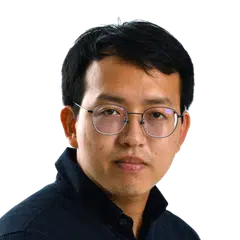
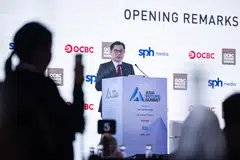
This was the assessment of Zhao Minghao, professor and deputy director at Fudan University’s Center for American Studies, when asked about the impact of Trump’s latest round of tariffs against 14 economies at SPH Media’s Asia Future Summit on Friday (Nov 27).
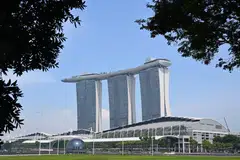
OCBC is the presenting sponsor for Asia Future Summit 2026, with Marina Bay Sands as the official venue partner and Amazon Web Services as the official cloud partner.
While US Democrats might want to focus Trump’s tariffs on China rather than on American allies, China can play the rare earths card, as well as negotiate with greater purchases of US agricultural goods and Boeing airplanes, Zhao said.
“But sadly for middle powers, for small powers, I think you have very limited leverage. My estimate is that after January (2027), the truce between the US and China can be sustainable … But I would say Singapore, among other Asean countries, you have very difficult challenges to negotiate with the US side.”
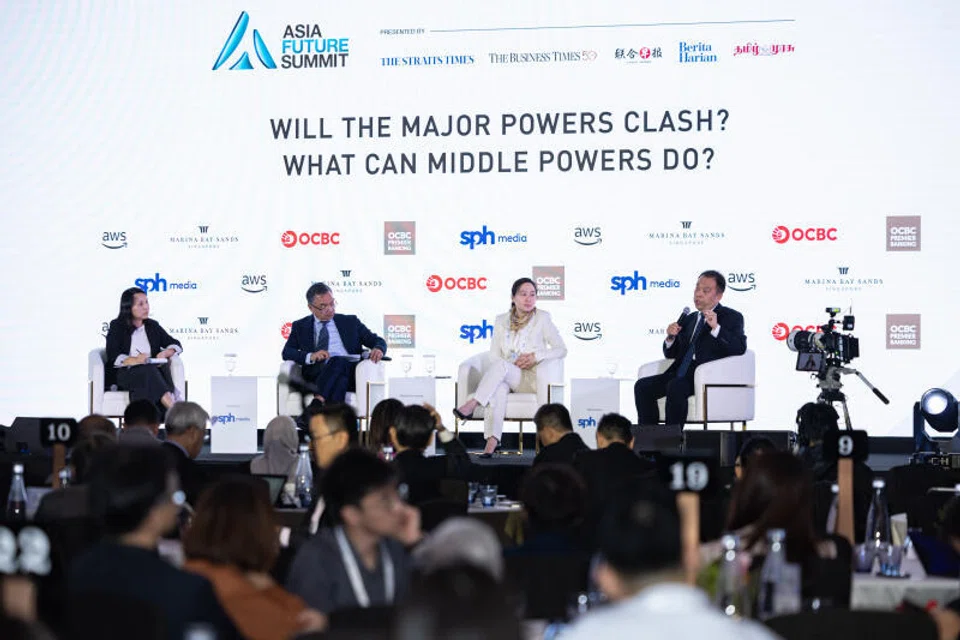
Zhao gave his prognosis at a 90-minute panel discussion on geopolitical developments at the forum, titled “Will The Major Powers Clash? What Can Middle Powers Do?”, moderated by Lianhe Zaobao associate editor Ng Hui Min.

A key theme of the panel discussion, which also featured Dino Patti Djalal, founder of the Foreign Policy Community of Indonesia, and political economist June Park, was the impact of US policies on Asia.
Ng asked about a new rule by the US Commerce Department’s Bureau of Industry and Security, which on Nov 16 announced new US government licence requirements for exports or transfers of advanced computer chips to Singapore, Malaysia, Indonesia, Thailand, and Brazil.
This and other measures were aimed at closing loopholes for China’s access to US technology, such as US computing power being used remotely by Chinese firms through tapping data centres in the region that employed these advanced chips.
SEE ALSO


Impact on South-east Asia
Dino noted that the tighter controls, which took effect on Nov 19, will have a heightened impact on South-east Asia, especially Malaysia, where data centres and related projects accounted for 44 per cent of its foreign direct investment in 2026.
He added that US trade agreements with Malaysia and Indonesia already incorporate commitments to be aligned with US export controls, sanctions and technology transfer restrictions.
Park, who is senior resident for the Frontier AI Security Residency at ERA Cambridge, said that outsourced semiconductor assembly and testing, or OSAT, could also be affected.
Countries involved in OSAT in the semiconductor supply chain include Malaysia, Philippines, Thailand and Vietnam.
“South-east Asian players may feel a crunch when it comes to compliance because they may have to rush for the licence applications,” said Park, who is also External Research Fellow at SMU’s Centre for Digital Law.
Asked about outcomes of the Nov 19 trilateral meeting between Trump, Chinese President Xi Jinping and Russian President Vladimir Putin during the Asia-Pacific Economic Cooperation summit, she noted that it featured no commitment to any guidelines or policy suggestions to end the two major wars in Iran and Ukraine.
“And if you consider there are still three aircraft carriers in the Gulf, and there is still speculation that there may be a launch, a surgical strike maybe, it sends shivers down the spine to think that there would be more damage to the energy supply chains.”
Asean needs to reshape trust
On Asean, Ng asked about a view among Asean sceptics that the regional grouping is not united, hampered by issues ranging from the civil war in Myanmar to the South China Sea territorial disputes.
Dino said that few regions in the world have the political will and capital to do regional integration the same way as the EU, with a common currency.
“So I think something like the Asean model where there is some degree of integration, but it’s more an association to coordinate policies, that’s more preferable and realistic to most regions in the world,” he added.
He said he was “a bit worried” about Asean in 2026, because of issues such as the transboundary haze and the “Indonesia-Singapore row”.
“I was, like, look, out of all the countries in the world, there’s only three or four that are closest to us … We have built up that trust over the years. Why do you beat up on that relationship?” he said, without naming specific parties.
That formed the backdrop of the Asean summit meeting, not to mention the Cambodia-Thai conflict and other issues, he said. “I think Asean needs to work to re-earn and reshape that trust.”
On the recent stability between the US and China, Zhao believes that China had done well to secure the White House’s agreement to “constructive strategic stability” as the basis for bilateral ties. Trump and Xi agreed to this framework during their Beijing summit in May 2026.
But this is a stability based on mutual vulnerabilities rather than goodwill, he stressed. “I think there’s a very, very low level of trust — even very sweeping distrust between these two countries.”
A major challenge is to institutionalise this strategic stability because it can be very personal, given the role Trump played in this process, said Zhao.
“Beijing has to find pathways to persuade the new US president in January 2029 to sustain this new framing. And I think it’s very challenging given Democrats’ control (of the) US Congress.” THE STRAITS TIMES
Decoding Asia newsletter: your guide to navigating Asia in a new global order. Sign up here to get Decoding Asia newsletter. Delivered to your inbox. Free.
Copyright SPH Media. All rights reserved.
TRENDING NOW

JPMorgan, BlackRock among those making bid to manage CPF savings

Andrew Lim to step down as CLI group COO and head of its private funds business from Dec 31
BN-PN’s Melaka election landslide puts spotlight on jobs, investments and political divides
GIC in talks to lease bulk of 88,000 sq ft CapitaSky space to be vacated by Allianz

