

Middle East war hangs over Europe as earnings season kicks off
Lower growth, supply-chain disruptions, uncertainty and higher inflation threaten firms’ performance
[BRUSSELS] European companies are likely to deliver resilient first-quarter earnings despite the Middle East conflict.
Investors, however, say this could mask mounting risks from higher energy prices, supply-chain disruption and weakening growth – that could weigh on forecasts for the rest of the year.
The US-Israel conflict with Iran and escalating regional tensions have roiled markets, raising concerns that a prolonged conflict will result in further oil price rises, raising inflation and dampening consumer demand.
Hopes for a swift resolution to the conflict diminished after the breakdown of US-Iran negotiations and Washington’s move to enforce a blockade around the Strait of Hormuz.
“Relatively solid”
Ciaran Callaghan, head of European equity research at asset management company Amundi, said that despite the conflict affecting roughly one-third of the first quarter, European companies are expected to report “relatively solid” earnings for the period.
“It takes a while for higher oil prices to feed through into the economy, so activity levels shouldn’t have fallen off a cliff,” he added.
Though investors estimate the direct exposure of European blue-chips to the Middle East to be in the low single digits, lower economic growth, supply-chain disruptions, uncertainty and higher inflation are the real dangers.
Still, the magnitude of the impact will hinge on the duration of the war. European stocks took a hit in the first weeks of the war, but they have since recovered as sentiment has improved.
Ben Ritchie, head of developed markets’ equities at Aberdeen, said: “I don’t think the Q1 numbers will disappoint, but the Q1 outlook for the rest of the year might.”

Some early reports from the chip industry have already appeared to support analysts’ expectations of relatively solid earnings for the quarter.
ASML, the world’s largest supplier of chipmaking tools, on Wednesday (Apr 16) reported better-than-expected quarterly earnings and raised its annual outlook as the artificial intelligence boom continues.
German chip-systems manufacturer Aixtron also posted strong orders for the period, hiking its revenue guidance for 2026 on Tuesday.
Energy up, consumers down
The conflict is having contrasting impacts on different sectors.
Companies included on Europe’s benchmark Stoxx 600 index are expected to report 4.2 per cent growth in first-quarter earnings, going by a London Stock Exchange Group (LSEG) Institutional Brokers’ Estimate System report published on Apr 9.
The growth, however, is mostly due to the energy sector.
Higher crude prices have buoyed energy companies, and European majors’ Q1 profits are expected to be 24 per cent higher than the same period a year earlier.
Renewables are also set to benefit.
Hansjorg Pack, senior portfolio equity manager at German-based asset management company DWS, told Reuters that the crisis highlighted Europe’s dependence on fossil-fuel imports.
“The conclusion can only be to further accelerate the instalment of alternative energy sources and investments in the grid,” he added.
Callaghan said that though higher inflation could hurt consumer-related companies and luxury companies, it could benefit banks.
“There’s a lot of talk about central banks potentially hiking rates and the European Central Bank doing it another two times by 50 basis points in total, which could be quite helpful for the European banking system,” he said.
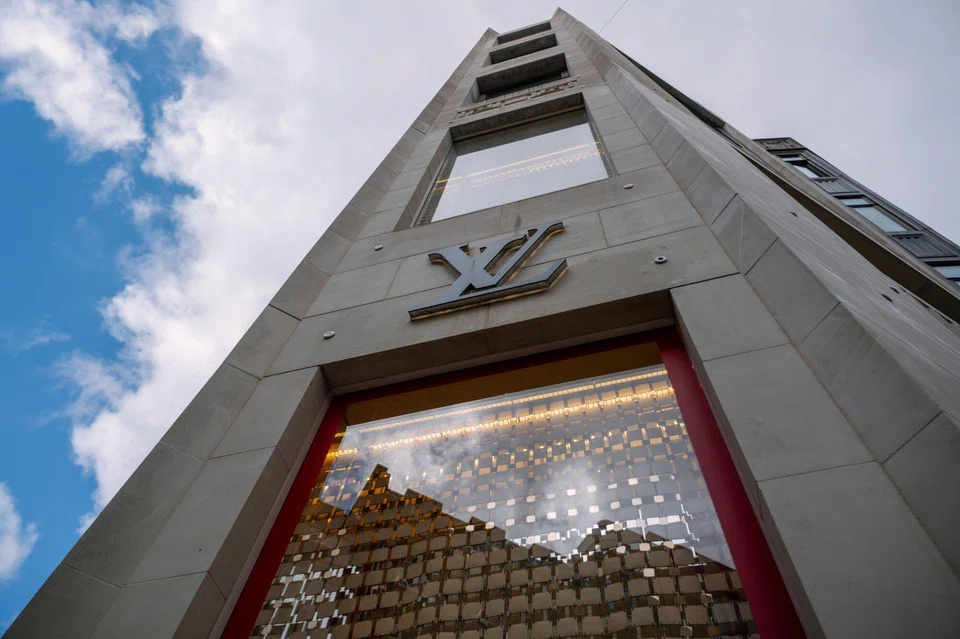
Luxury names, including LVMH and Hermes, have flagged that their first-quarter sales were hit by the conflict in the Middle East, as the war in Iran dented spending in the region, further delaying a long-awaited recovery for the sector.
“Selective winners”
Christoph Berger, chief investment officer for European equities at Allianz Global Investors, said that despite the existence of some “selective winners”, the conflict is not supportive to European earnings overall.
Having predicted high-single-digit to double-digit growth for European corporates before the war started, he added that he still expected earnings growth for Q1, but not to the same extent as before.
He forecast “solid”, but not double-digit growth.
However, the LSEG report showed that first-quarter revenues are expected to fall 0.6 per cent on average – excluding the energy sector – showing that companies’ efforts to cut costs and restructure businesses could be paying off.
Share buybacks
Though some companies have slashed their dividend proposals due to the heightened uncertainty, no signs indicate this to be a trend yet, said investors.
Marcus Morris-Eyton, portfolio manager at Alliance Bernstein, said that in fact, the opposite might be true, as companies have stepped up buybacks to stop the recent share sell-off.
“We have seen a noticeable step up in share buybacks, with current valuations offering a great return on investment for many companies,” he said. REUTERS
Decoding Asia newsletter: your guide to navigating Asia in a new global order. Sign up here to get Decoding Asia newsletter. Delivered to your inbox. Free.
Share with us your feedback on BT's products and services
TRENDING NOW

Britain’s mansion tax shows the difficulty of targeting wealth

Once staunchly pro-China, Malaysian Chinese businesses are now distancing themselves from Beijing

The only common thing in S-E Asia is that we all eat rice: Cisco’s Asean president

Singapore data centre operator DayOne opts for US IPO at likely US$20 billion valuation

